


Upgrading Original Halogen Headlight Bulbs to LED: Pros and Cons You Should Know
Follow us now:
Upgrading Original Halogen Headlight Bulbs to LED: Pros and Cons You Should Know
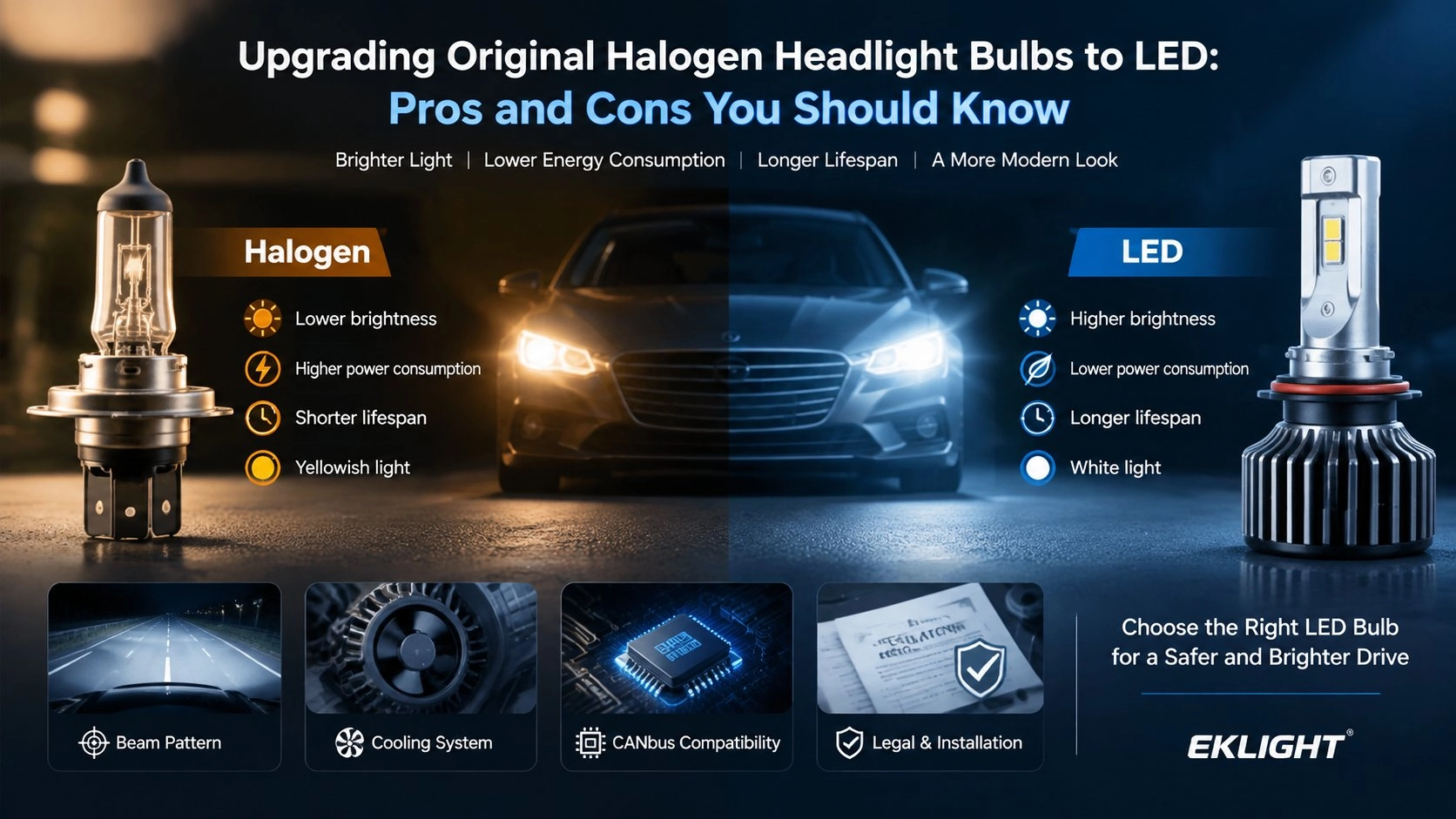
For decades, halogen bulbs have been one of the most common lighting solutions used in automotive headlights. They are affordable, easy to replace, and have been widely used by vehicle manufacturers around the world.
However, with the continuous development of LED technology, more and more drivers are choosing to upgrade their original halogen headlight bulbs to LED bulbs. The main reasons include better brightness, improved appearance, lower power consumption, and longer service life.
But does replacing halogen bulbs with LED always bring better results?
The answer depends on the LED bulb quality, optical design, compatibility, and installation. In this article, we will analyze the main advantages and disadvantages of upgrading original halogen bulbs to LED headlight bulbs.
Advantages of Upgrading Halogen Bulbs to LED
1. Brighter Light Output and Better Night Visibility
One of the biggest reasons drivers choose LED headlight bulbs is improved lighting performance.
Traditional halogen bulbs use a tungsten filament to generate light, while LED bulbs use semiconductor technology. Compared with halogen bulbs, high-quality LED bulbs can provide higher light output and a clearer, whiter illumination effect.
The advantages include:
-
Improved visibility at night
-
Better recognition of road signs and obstacles
-
More comfortable driving experience
-
A more modern appearance
However, brightness is not the only factor that determines headlight performance.
A common misunderstanding is that higher lumens always mean better lighting. In reality, a good headlight upgrade also depends on:
-
Beam pattern
-
Cutoff line
-
Light distribution
-
Actual road illumination
A well-designed LED bulb should accurately simulate the position of the original halogen filament, allowing the reflector or projector housing to create the correct light pattern.
2. Lower Energy Consumption
LED technology is more energy-efficient than traditional halogen lighting.
Halogen bulbs generate light by heating a tungsten filament, which causes a large amount of electrical energy to be converted into heat. LED bulbs are able to convert more energy into usable light, achieving higher efficiency.
This means LED bulbs can provide strong illumination while consuming less power.
Lower power consumption can be beneficial for:
-
Modern vehicles with sensitive electrical systems
-
Vehicles with upgraded accessories
-
Drivers looking for more efficient lighting solutions
3. Longer Lifespan and Better Durability
Another major advantage of LED headlight bulbs is their longer service life.
Halogen bulbs rely on a fragile tungsten filament, which can break over time due to vibration, heat, and frequent use.
LED bulbs do not use a filament structure, making them more resistant to vibration and environmental changes.
However, the actual lifespan of an LED bulb depends heavily on:
-
LED chip quality
-
Driver stability
-
Cooling performance
-
Operating temperature
A high-quality LED bulb with an effective thermal management system can provide much longer-lasting performance compared with traditional halogen bulbs.
4. More Modern Appearance
Many vehicle owners upgrade their headlights not only for better performance but also for appearance.
Most factory halogen bulbs produce a yellowish light, while LED bulbs usually provide a cleaner white light that gives vehicles a newer and more premium look.
Popular color temperature options include:
-
6000K white light for a modern appearance
-
4300K warm white light for better comfort and penetration
-
3000K yellow light for special weather conditions
LED upgrades allow drivers to personalize their vehicle lighting style while improving overall appearance.
Disadvantages of Upgrading Halogen Bulbs to LED
1. Not Every LED Bulb Can Provide Perfect Lighting Performance
One of the biggest challenges when upgrading from halogen to LED is that not all LED bulbs are designed equally.
The original headlight reflector or projector is designed around the exact position and size of the halogen filament.
If the LED light source does not match the original filament position, problems may occur, such as:
-
Poor beam pattern
-
Uneven brightness
-
Dark areas
-
Excessive glare for oncoming drivers
Therefore, simply installing a brighter LED bulb does not guarantee better lighting performance.
A professional LED headlight bulb should focus on:
-
Accurate LED chip positioning
-
Proper light source size
-
Optical design
-
Stable beam distribution
The goal is not only to produce more light, but also to put the light in the correct place.
2. Heat Management Is More Important Than Many People Think
Many people believe that LED bulbs do not generate heat because they are more efficient than halogen bulbs.
This is not completely correct.
Although LED bulbs produce less wasted heat compared with halogen bulbs, LED chips are still sensitive to high temperatures.
Without proper cooling, excessive heat can cause:
-
Reduced brightness
-
Shorter lifespan
-
Unstable performance
High-quality LED headlight bulbs usually use advanced cooling solutions, such as:
-
High-speed cooling fans
-
Aluminum heat sinks
-
Copper heat pipes
-
Intelligent temperature control systems
A good cooling design is one of the most important factors that separates premium LED bulbs from low-quality products.
3. Possible CANbus Compatibility Issues
Modern vehicles are equipped with intelligent electronic systems that monitor lighting performance.
After replacing halogen bulbs with LED bulbs, some vehicles may experience:
-
Bulb warning messages
-
Flickering
-
Radio interference
-
Electrical compatibility issues
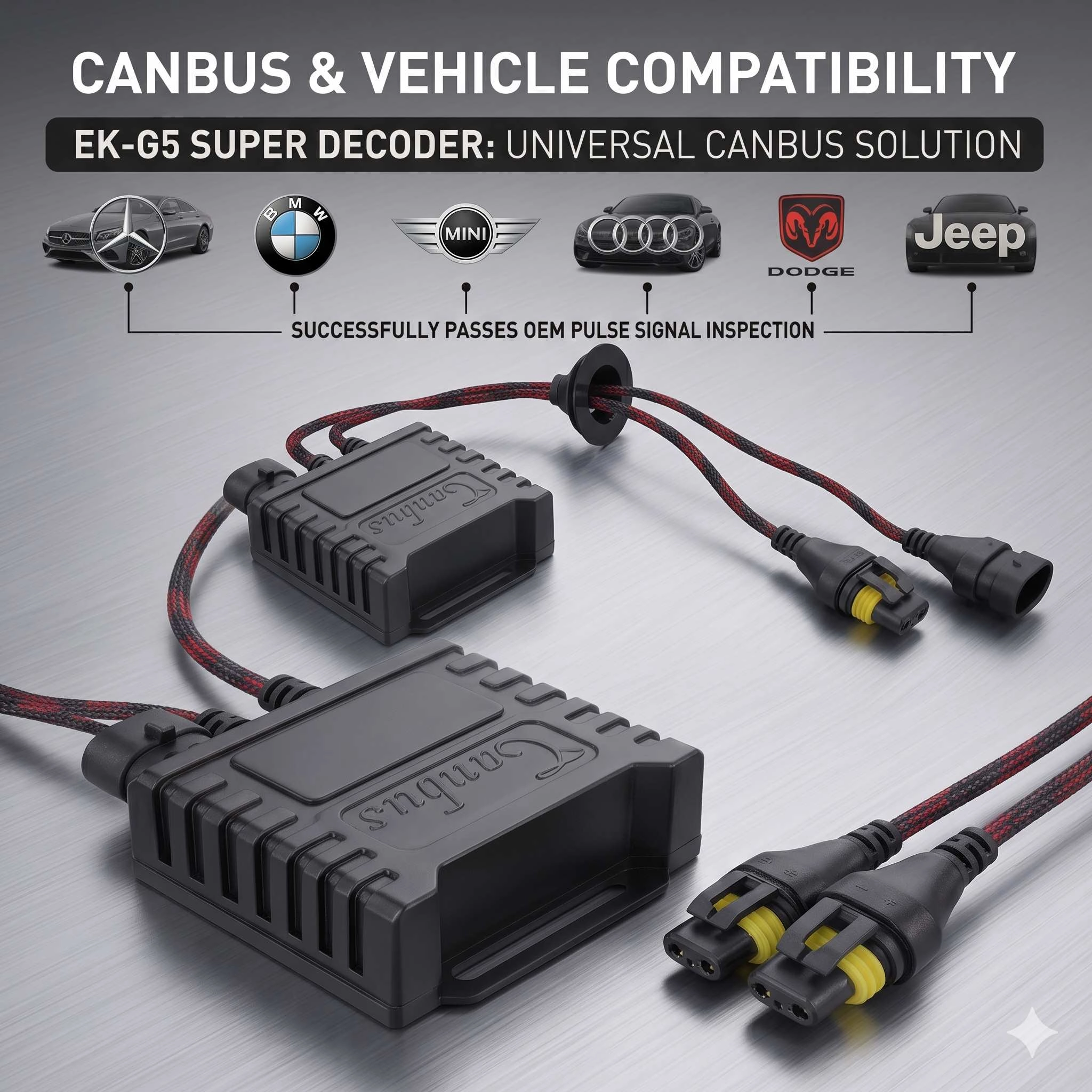
For these vehicles, LED bulbs with CANbus compatibility or additional decoding solutions may be required.
A properly designed LED bulb should provide stable operation without affecting the vehicle's original electronic system.
4. Legal and Installation Considerations
Before upgrading headlights, vehicle owners should also consider local regulations.
Different countries and regions have different requirements regarding automotive lighting modifications.
Because original headlight housings are designed and certified for specific light sources, an unsuitable LED conversion may affect:
-
Beam alignment
-
Road safety
-
Compliance requirements
To achieve the best result, drivers should choose a reliable LED bulb, install it correctly, and adjust the headlight aiming when necessary.
What Should You Consider Before Buying an LED Headlight Bulb?
Before choosing an LED upgrade, drivers should pay attention to several important factors:
1. Beam Pattern
A powerful LED bulb with a poor beam pattern may create glare instead of improving visibility.
Always check whether the bulb can produce a clear cutoff line and proper light distribution.
2. LED Chip Design
The position and size of the LED chips directly affect the optical performance.
A high-quality LED bulb should replicate the original halogen filament position as closely as possible.
3. Cooling System
Good heat dissipation is essential for maintaining brightness and extending lifespan.
Look for products with reliable cooling structures and temperature control.
4. Vehicle Compatibility
Make sure the bulb type matches your vehicle, such as:
-
H4
-
H7
-
H11
-
9005
-
9006
-
9012
-
Other bulb types
For vehicles with CANbus systems, choose a compatible solution.
Conclusion: Is Upgrading Halogen Bulbs to LED Worth It?
For many vehicles, upgrading original halogen bulbs to LED headlight bulbs can provide significant improvements in brightness, appearance, efficiency, and durability.
However, a successful LED upgrade is not simply about choosing the bulb with the highest lumen number.
The most important factors are:
-
Correct optical design
-
Accurate beam pattern
-
Effective cooling system
-
Stable electronic performance
-
Proper vehicle compatibility
A well-designed LED headlight bulb can transform the driving experience by providing brighter, clearer, and more reliable lighting.
When choosing an LED upgrade, focus on real-world lighting performance rather than only marketing specifications. The right LED bulb can help drivers enjoy safer and more comfortable night driving.
- Upgrading Original Halogen Headlight Bulbs to LED: Pros and Cons You Should Know
- Advantages of Upgrading Halogen Bulbs to LED
- 1. Brighter Light Output and Better Night Visibility
- 2. Lower Energy Consumption
- 3. Longer Lifespan and Better Durability
- 4. More Modern Appearance
- Disadvantages of Upgrading Halogen Bulbs to LED
- 1. Not Every LED Bulb Can Provide Perfect Lighting Performance
- 2. Heat Management Is More Important Than Many People Think
- 3. Possible CANbus Compatibility Issues
- 4. Legal and Installation Considerations
- What Should You Consider Before Buying an LED Headlight Bulb?
- 1. Beam Pattern
- 2. LED Chip Design
- 3. Cooling System
- 4. Vehicle Compatibility
- Conclusion: Is Upgrading Halogen Bulbs to LED Worth It?
How to Choose High-Quality LED Headlight Bulbs?

How to Choose a Projector Headlight Bulb for Your Vehicle?
Contacts
EKLIGHT
WhatsApp/Phone
EK-G5 CANbus LED Headlight Decoder and Anti-Flicker Harness | Wholesale
EK-G5 CANbus LED Headlight Decoder and Anti-Flicker Harness | Wholesale
Mini H4 Bi-LED Projector Lens with Custom Optical Design | OEM Supply
Mini H4 Bi-LED Projector Lens with Custom Optical Design | OEM Supply
EKLIGHT M16-H4 Mini Bi-LED Projector Headlight Bulb | Wholesale
EKLIGHT M16-H4 Mini Bi-LED Projector Headlight Bulb | Wholesale
High-Lumen H4 Motorcycle LED Headlight Conversion Kit | Wholesale
High-Lumen H4 Motorcycle LED Headlight Conversion Kit | WholesaleDon’t Miss Our Latest Insights
Enjoying this article?
Subscribe to receive more industry insights, product updates, and automotive lighting innovations from EKLIGHT.
Stay informed and ahead of the market.
EKLIGHT delivers innovative, high-quality LED lighting solutions trusted by global partners.
We empower businesses with reliable products that enhance performance and drive success.
Contact EKLIGHT
Address : Building C, Dehuiwanggang Industrial Zone, No. 38 Wanggang Industrial three road, Baiyun district, Guanghzou, Guangdong province, China.
© 2026 EKLIGHT. All Rights Reserved.
EKLIGHT
EK
EK
EK
EK