


Fog Light Lens vs Headlight Projector Lens: What Is the Optical Difference?
Follow us now:
Fog light lenses and headlight projector lenses can look similar because both use optical components to shape and direct light. But from a B2B sourcing perspective, they are designed around different lighting tasks.
A headlight projector lens is typically part of the vehicle’s primary forward-lighting system. Its job is to create a controlled main beam with the required combination of cutoff, hotspot, forward reach, and beam width.
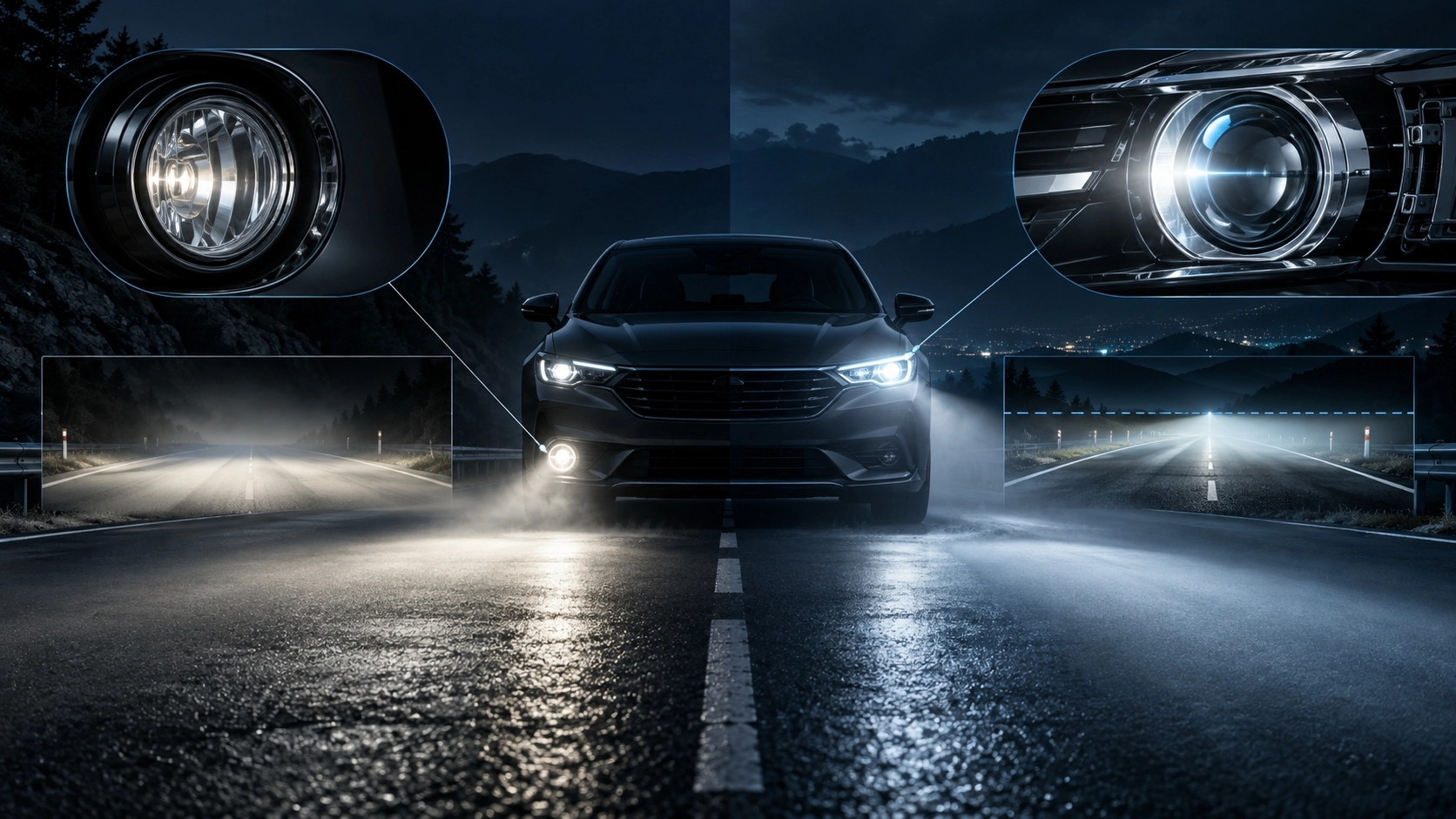
A fog light lens, by comparison, is generally intended for a lower mounting position and a broader near-field lighting function. The optical target is usually less about projecting concentrated light far ahead and more about controlling useful illumination closer to the vehicle and across a wider lateral area.
For distributors, wholesalers, retrofit brands, and OEM/ODM buyers, the important question is not simply which lens is brighter. The better question is whether the optical system places useful light in the right area for the intended vehicle application.
Fog Light Lens and Headlight Projector Lens Serve Different Jobs
The biggest difference starts with the role each optical system is expected to perform.
A headlight projector normally works within the main headlamp assembly and may support low beam, high beam, or a combined Bi-LED configuration depending on the optical design.
Its beam must balance forward reach, beam width, hotspot structure, and vertical control across the primary driving field.
A fog-oriented optical system is generally designed around a lower mounting position and broader illumination closer to the vehicle.
Its priorities are typically more closely related to horizontal spread, near-field coverage, and controlled low-position beam distribution.
Two products can have a similar lens diameter and still create very different beam behavior because the lens itself is only one part of the optical system. For primary headlamp projects, the confirmed Bi-LED Projector Lens category is the more relevant commercial starting point.
The Main Optical Difference Is Beam Distribution
The most useful way to compare fog light lenses and headlight projector lenses is to look at where each system is trying to place light.
Mounting Height Changes the Optical Requirement
Mounting position has a direct effect on how the beam interacts with the road. A headlight projector is normally mounted higher than a fog light, and that difference changes the geometry between the lamp, road surface, and driver’s viewing field.
For B2B sample evaluation, mounting height should therefore be treated as part of the optical test rather than only as a fitment measurement. Review low-mounted fog-light beam coverage in the actual installation. A wall test can reveal beam structure, but the sample should also be evaluated at a realistic installation height.
Cutoff, Hotspot and Width Matter Differently
Cutoff, hotspot, and beam width are useful ways to describe optical behavior, but their importance changes according to the lighting application.
Why These Two Optical Systems Are Not Interchangeable
One of the most common sourcing mistakes is to treat optical modules as interchangeable because they look similar or have similar dimensions.
Lens diameter alone is also not enough to make a sourcing decision. A 1.5-inch, 2.0-inch, 2.5-inch, or 3.0-inch projector size mainly tells the buyer something about physical format and fitment. It does not guarantee a particular beam pattern or performance level.
How B2B Buyers Should Compare and Select Samples
For B2B buyers, the best sample is not simply the product that produces the brightest image in a single test. Follow fog light lens buying criteria for the intended application. The goal is to find a product whose optical behavior, physical format, and installation characteristics remain suitable for the target application across multiple units. Record consistent beam pattern and cutoff test conditions for the sample inspection.
Headlight projector samples should be evaluated around overall beam structure, including cutoff control, hotspot position, beam width, forward reach, optical alignment, and low/high beam behavior where applicable. For quotations, request the module drawing, defined low/high beam functions, applicable destination-market documentation, test conditions and an approved reference sample. Do not assume headlamp compliance from a visible cutoff alone. Fog-oriented samples should be judged more heavily on lateral coverage, near-field distribution, vertical control, mounting-height sensitivity, and bracket adjustment.
Final Selection
A fog light lens and a headlight projector lens should not be viewed as two versions of the same product. They solve different optical problems.
A headlight projector is designed around the requirements of the main forward beam, where cutoff, hotspot, width, and reach need to work together. A fog-oriented lens is generally designed around a lower mounting position and broader near-field illumination.
If the project is focused on primary headlamp retrofit or upgrade applications, the Bi-LED Projector Lens range provides the relevant commercial direction.
For lower-mounted lighting applications, buyers should verify the actual model and fitment. For example, compare the 2.0-inch dual-color fog-light projector with the required housing, bracket, input and beam functions. Product naming alone does not establish compatibility.
Start With the Lighting Function, Not the Lens Appearance
Compare the target vehicle, mounting position, available installation space, and required beam behavior before selecting an optical module.
FAQ About Fog Light Lens vs Headlight Projector Lens
What is the main optical difference between a fog light lens and a headlight projector lens?
A headlight projector lens is generally designed for the vehicle’s primary forward-lighting system, where cutoff, hotspot, beam width, and forward reach need to work together. A fog-oriented lens is typically intended for lower-mounted auxiliary lighting with broader near-field coverage and different vertical beam requirements.
Can a fog light lens be used as a headlight projector lens?
They should not be treated as interchangeable simply because the housings or lens sizes look similar. A fog-oriented optical module may not provide the forward reach, hotspot structure, or cutoff control required for a primary headlamp application.
Why does mounting height matter when comparing fog light and headlight projector lenses?
Mounting height changes the geometry between the optical module, road surface, and viewing area. A lower-mounted fog light can react more noticeably to small aiming changes, while a headlight projector is normally designed around a higher main-headlamp position.
Do cutoff, hotspot, and beam width matter equally for both optical systems?
No. Headlight projectors usually place greater emphasis on a structured relationship between cutoff, hotspot, width, and forward reach. Fog-oriented optics may place more emphasis on lateral coverage, near-field distribution, and controlled low-position illumination.
How should B2B buyers compare fog light lens and headlight projector lens samples?
Compare samples under consistent conditions and according to their intended application. For headlight projectors, evaluate cutoff, hotspot, width, reach, fitment, and optical alignment. For fog-oriented optics, focus more on lateral coverage, near-field distribution, vertical control, mounting-height behavior, fitment, and consistency across multiple units.
- Fog Light Lens and Headlight Projector Lens Serve Different Jobs
- The Main Optical Difference Is Beam Distribution
- Mounting Height Changes the Optical Requirement
- Cutoff, Hotspot and Width Matter Differently
- Why These Two Optical Systems Are Not Interchangeable
- How B2B Buyers Should Compare and Select Samples
- Final Selection
- Start With the Lighting Function, Not the Lens Appearance
- FAQ About Fog Light Lens vs Headlight Projector Lens
2025 Automotive Lighting Trends: Why LED Dominates the Market
Spot vs Wide Beam for Grille Lights: How to Choose the Right Beam Pattern
Contacts
EKLIGHT
WhatsApp/Phone
T10 194/168 CANbus LED Interior and License Plate Bulbs | Wholesale
T10 194/168 CANbus LED Interior and License Plate Bulbs | Wholesale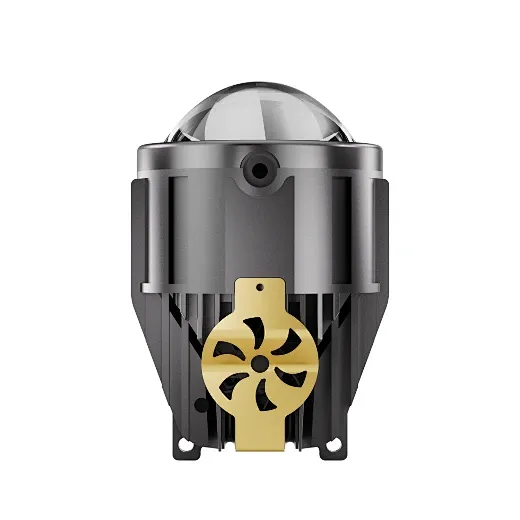
EK-12 PRO Tri-Color Bi-LED Fog Light Projector Lens
EK-12 PRO Tri-Color Bi-LED Fog Light Projector Lens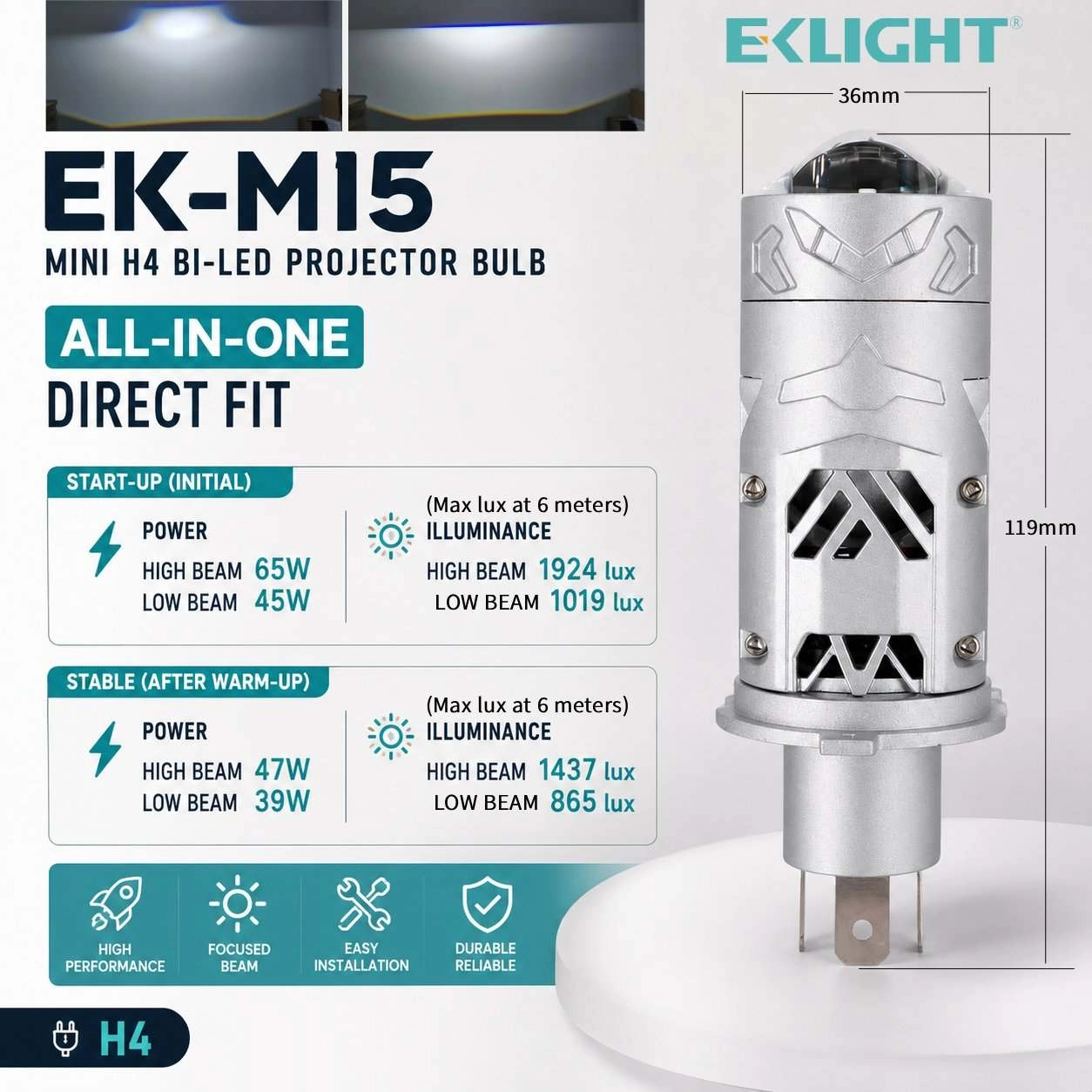
EKLIGHT M16-H4 Mini Bi-LED Projector Headlight Bulb | Wholesale
EKLIGHT M16-H4 Mini Bi-LED Projector Headlight Bulb | Wholesale
EK-V7S Fan-Cooled LED Headlight Bulb | OEM Wholesale
EK-V7S Fan-Cooled LED Headlight Bulb | OEM WholesaleDon’t Miss Our Latest Insights
Enjoying this article?
Subscribe to receive more industry insights, product updates, and automotive lighting innovations from EKLIGHT.
Stay informed and ahead of the market.
EKLIGHT delivers innovative, high-quality LED lighting solutions trusted by global partners.
We empower businesses with reliable products that enhance performance and drive success.
Contact EKLIGHT
Address : Building C, Dehuiwanggang Industrial Zone, No. 38 Wanggang Industrial three road, Baiyun district, Guanghzou, Guangdong province, China.
© 2026 EKLIGHT. All Rights Reserved.
EKLIGHT
EK
EK
EK
EK