


How to Choose LED Projector Lens Based on Beam Pattern ?
Maximize optical efficiency & compliance. Learn how to select the perfect LED projector lens based on spot, flood, elliptical, and custom beam patterns.

Follow us now:
What a Bi-LED Projector Beam Pattern Actually Shows
A projector beam pattern is the visible distribution of light produced by the optical system.
The pattern is influenced by several parts working together:
The low beam and high beam should be evaluated separately because they serve different functions.
The low beam needs controlled distribution. It should provide useful road illumination while maintaining a defined upper boundary. The high beam needs greater forward reach and broader usable illumination without depending on the same cutoff shape as the low beam.
A wall photo can show some of these characteristics, but it does not automatically show how the light will perform after installation in a vehicle. Beam photos are most useful when the testing conditions are known.
Low-Beam Cutoff: Shape, Level and Control
The cutoff is one of the most visible characteristics of a projector low beam. It is created by the relationship between the light source, optical bowl, cutoff shield, and projector lens.
A tilted cutoff can indicate a projector mounting problem rather than a projector-design problem.
A projector can produce a well-defined cutoff during bench testing and still look incorrect after installation if the projector is rotated or the headlamp is aimed incorrectly.
The Bi-LED projector retrofit process therefore needs to include temporary positioning and beam inspection before the projector is permanently fixed.
Beam Width, Hotspot and Foreground Distribution
Low-beam performance is not defined by cutoff alone. The light below the cutoff also needs to be distributed across useful parts of the road.
Beam width describes how far useful illumination extends across the left and right sides of the pattern. Width alone does not describe intensity.
The hotspot is the brighter concentration of light within the beam. Its position influences how much light is directed toward the road ahead.
Foreground light is the illumination close to the vehicle. Too much or too little can change how balanced the road lighting appears.
A very intense hotspot can look impressive in a wall photo while leaving the surrounding beam less useful. A very flat pattern with no useful concentration can have the opposite problem.
The balance between width, hotspot, and foreground distribution is more informative than a single lux value measured at one point.
The broader Bi-LED projector lens selection process should include all three.
High-Beam Pattern and Low/High Alignment
Bi-LED projectors commonly support both low beam and high beam in the same optical assembly.
In many designs, the high-beam function changes the position of an internal cutoff shield so more light passes through the projector.
The low beam can look acceptable while the high beam is positioned incorrectly. This can happen when the projector is rotated, the mounting point is not centered, or the adjustment range is insufficient.
The differences between Bi-LED and Bi-Xenon projector systems do not remove this requirement. Both technologies still depend on the projector optics and the final mounting position.
Installation Can Change the Beam Pattern
A projector beam pattern is not independent of the headlamp housing.
The same projector can produce different installed results when the mounting angle, optical center, housing depth, or adjustment range changes.
A projector mounted slightly off-axis can move the hotspot or change the cutoff angle. A mounting structure that allows movement can create inconsistent beam alignment after the vehicle has been driven.
The differences between 2.5-inch and 3-inch Bi-LED projector lens sizes can change the space available for mounting, adjustment, cooling clearance, and optical positioning.
For compact applications, H4 Mini Bi-LED projector fitment and compatibility depends on housing depth, rear clearance, socket-area mounting, cooling space, and final alignment rather than the H4 interface alone.
How to Compare Beam Photos and Test Conditions
Beam photos are useful only when the comparison conditions are reasonably consistent.
A camera can make two projectors look more similar or more different than they actually are. Exposure, white balance, wall distance, projector height, voltage, aiming position, and ambient lighting all affect the image.
A lux reading also needs context. A value measured at one distance cannot be directly compared with a value measured at another distance without additional information.
For B2B evaluation, consistent test conditions are more useful than one maximum brightness number. A practical comparison should combine beam photos, test conditions, projector dimensions, and application requirements.
What B2B Buyers Should Ask Suppliers to Provide
Distributors and retrofit businesses often need to compare several projector options before selecting samples or preparing an order. Beam-pattern information should be part of that comparison.
Cutoff photo, beam width, central intensity, foreground distribution.
High-beam photo, central reach, and low/high alignment.
Wall distance, test voltage, mounting position, camera or measurement conditions where available.
Projector dimensions, mounting structure, thermal design, driver configuration, intended headlamp type, housing space, and adjustment range.
The physical Bi-LED projector lens features should be evaluated together with the beam pattern.
A projector with a strong beam photo may still be difficult to use if the housing cannot provide enough rear clearance or adjustment space. A projector that fits mechanically still needs acceptable optical performance after final installation.
Choosing a Projector by Beam Pattern and Application
No single beam pattern is suitable for every retrofit application.
The selection depends on the headlamp, vehicle, mounting method, projector size, and intended lighting result.
At EKLIGHT, application information such as vehicle type, headlamp photos, housing dimensions, mounting restrictions, and target lighting requirements provides the basis for discussing suitable Bi-LED projector lens configurations.
If you are comparing Bi-LED projector lenses for a retrofit workshop, distribution program, automotive lighting brand, or private-label project, provide the available headlamp information, housing dimensions, installation method, and target beam requirements.
EKLIGHT can use the supplied application information to discuss projector formats, fitment conditions, and beam-pattern considerations.
- What a Bi-LED Projector Beam Pattern Actually Shows
- Low-Beam Cutoff: Shape, Level and Control
- Beam Width, Hotspot and Foreground Distribution
- High-Beam Pattern and Low/High Alignment
- Installation Can Change the Beam Pattern
- How to Compare Beam Photos and Test Conditions
- What B2B Buyers Should Ask Suppliers to Provide
- Choosing a Projector by Beam Pattern and Application
Is LED headlight brighter than halogen?

Eco-Bright Driving: High Performance & Savings of Next-Gen Fanless LED Headlights
Contacts
EKLIGHT
WhatsApp/Phone

M6 50W/60W IP68 LED Headlight Projector Lens 9–16V | OEM/ODM Supply
M6 50W/60W IP68 LED Headlight Projector Lens 9–16V | OEM/ODM Supply
T15 912/921 CANbus Error-Free White LED Bulbs | Wholesale
T15 912/921 CANbus Error-Free White LED Bulbs | Wholesale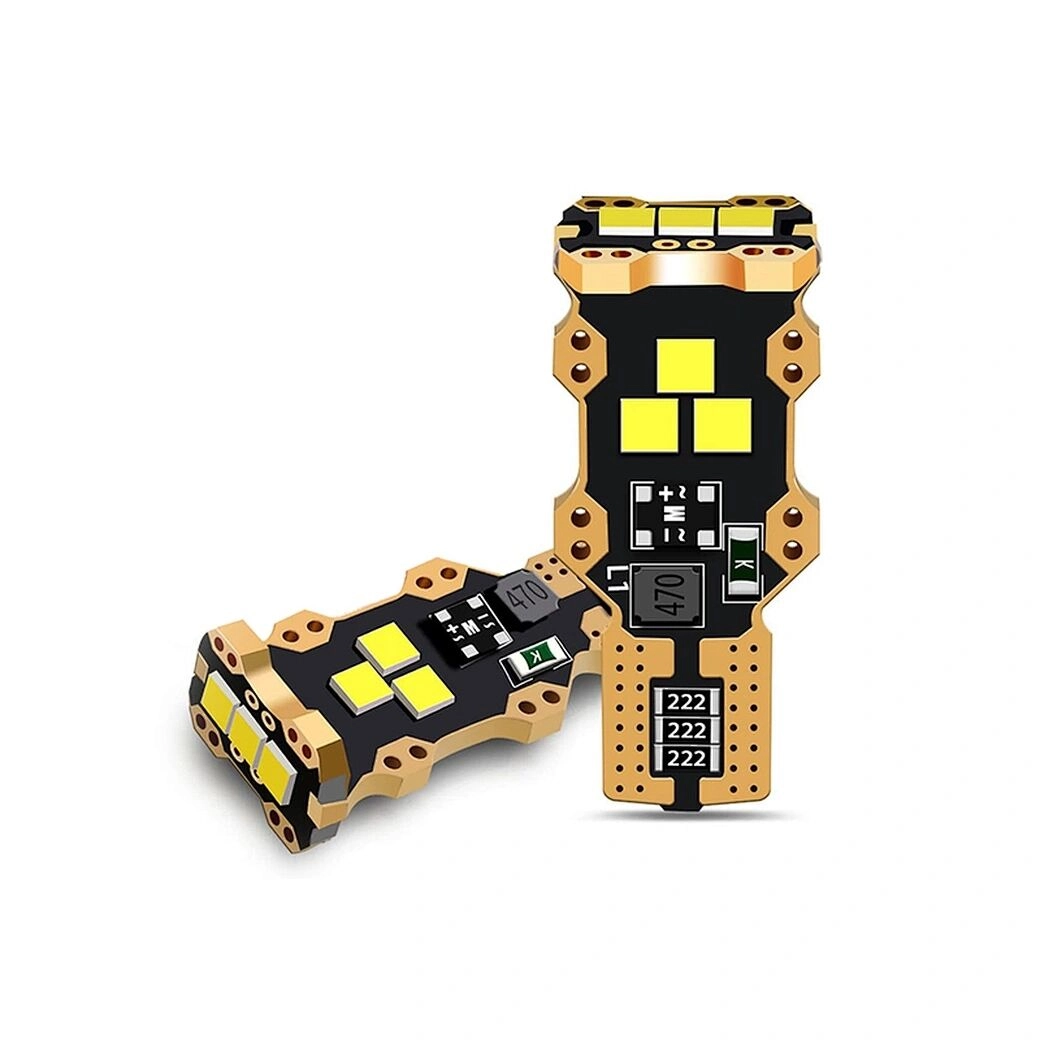
T15 912/921 High-Power CANbus LED Reverse Light Bulbs | Wholesale
T15 912/921 High-Power CANbus LED Reverse Light Bulbs | WholesaleDon’t Miss Our Latest Insights
Enjoying this article?
Subscribe to receive more industry insights, product updates, and automotive lighting innovations from EKLIGHT.
Stay informed and ahead of the market.
EKLIGHT delivers innovative, high-quality LED lighting solutions trusted by global partners.
We empower businesses with reliable products that enhance performance and drive success.
Contact EKLIGHT
Address : Building C, Dehuiwanggang Industrial Zone, No. 38 Wanggang Industrial three road, Baiyun district, Guanghzou, Guangdong province, China.
© 2026 EKLIGHT. All Rights Reserved.
EKLIGHT
EK
EK
EK
EK