


H4 Mini Bi-LED Projector Lens Fitment and Compatibility Guide
Follow us now:
What Does H4 Compatibility Actually Mean?
H4 commonly describes a dual-filament halogen bulb format that combines low and high beam functions in one bulb position. When an H4 Mini Bi-LED projector is used as an upgrade, the goal is usually to integrate low and high beam functions into a compact projector-based lighting system.
However, matching the H4 connection format is only one part of compatibility.
A projector-style replacement can include an optical lens, LED source, cutoff structure, heat sink, driver components, wiring, and a larger body than the original halogen bulb. These elements occupy space inside and behind the headlight housing.
- Does the product match the intended H4 mounting position?
- Is there enough room for the complete projector body and rear structure?
- Can the projector be installed without interfering with the housing or dust cover?
- Can the finished projector be positioned and aimed correctly?
H4 Socket Compatibility Is Not the Same as Housing Compatibility
One of the common misunderstandings in Mini Bi-LED projector selection is treating the socket code as a complete vehicle fitment standard.
The H4 socket helps identify the original bulb interface, but headlight housings vary significantly between vehicle models. The distance from the bulb seat to the dust cover can differ. Reflector depth can differ. Internal brackets, adjustment mechanisms, wiring, and housing walls can also reduce usable installation space.
A Mini Bi-LED projector that fits one H4 housing may therefore require more clearance in another.
Measure Rear Clearance Before Confirming Fitment
Rear clearance is one of the first dimensions we check in a Mini Bi-LED projector application.
A standard halogen bulb may occupy relatively little space behind the bulb seat. A projector-style LED replacement can extend farther into the rear area because of its optical body, thermal structure, wiring, or driver components.
If the available depth is too limited, the projector may contact the dust cover or another internal component. A product may enter the bulb opening but still create interference once it is fully seated.
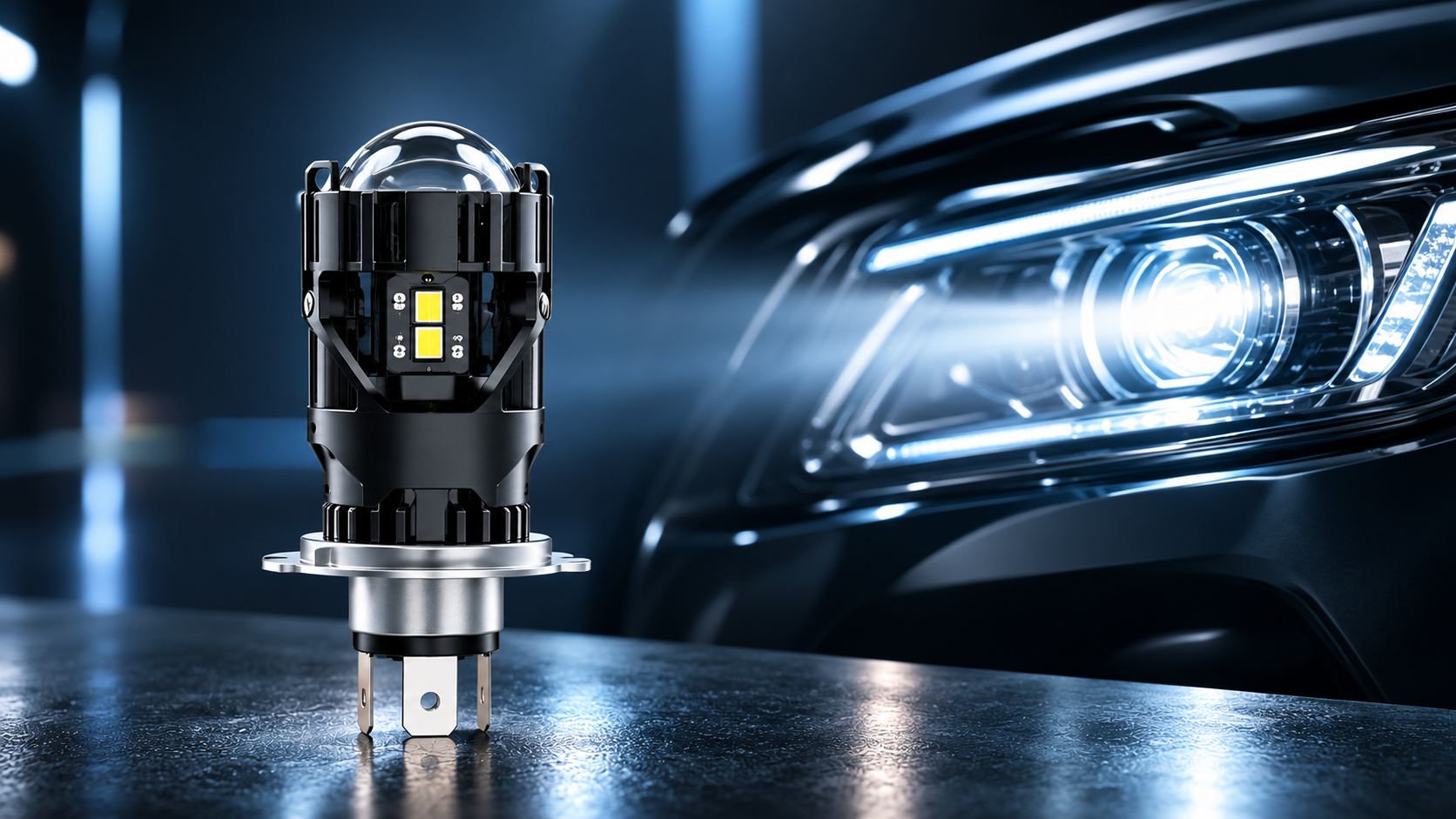
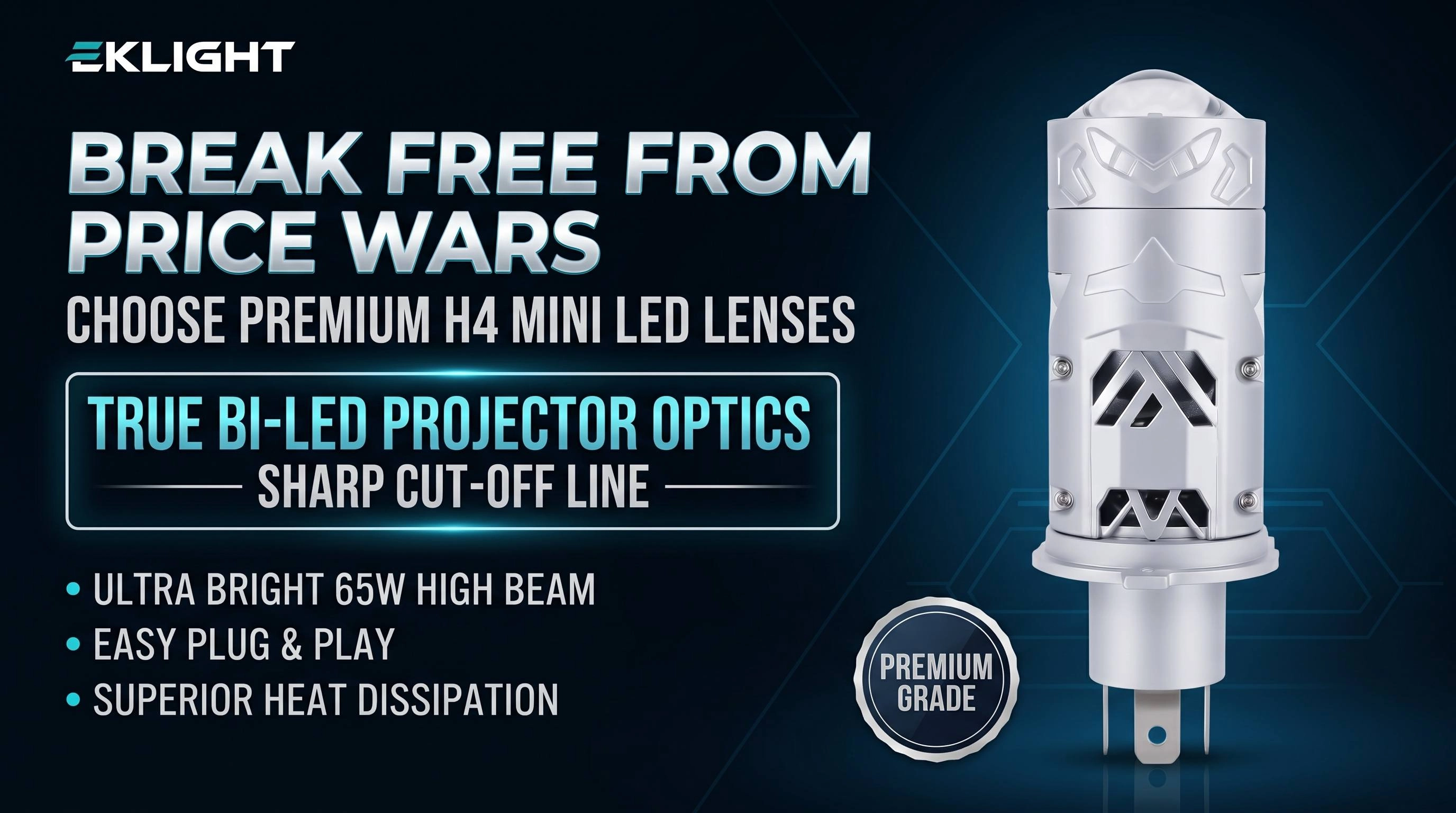
The M16-H4 Mini Bi-LED projector headlight bulb is one current H4 Mini Bi-LED configuration on the EKLIGHT site, but fitment in a specific vehicle still needs to be evaluated against the actual headlamp dimensions rather than assumed from the H4 designation alone.
Dust Cover Clearance Can Affect the Installation
Many headlamp housings use a rear dust cover to help protect the bulb area from moisture and contamination.
A Mini Bi-LED projector may require more rear space than the original halogen bulb. If the heat sink, wiring, or rear structure extends too far, the original dust cover may no longer close in the same way.
A dust cover that presses tightly against the projector can also create problems for wiring layout or thermal clearance. The correct solution depends on the headlamp design, so EKLIGHT does not treat dust-cover compatibility as universal across H4 vehicles.
- Distance from the bulb seat to the inside of the dust cover
- Available space around the rear cooling structure
- Cable routing once the projector is installed
- Whether the cover can close without pressing against components
Internal Housing Space Matters as Much as Rear Depth
Rear clearance is only one dimension.
Inside the headlamp, the projector body also needs enough width and height. Reflector geometry, internal frames, adjustment hardware, and decorative structures may interfere with the projector even if rear depth is sufficient.
A compact Mini Bi-LED design can reduce some of these packaging challenges, but “mini” should still be understood as a product format rather than a guarantee of universal fitment.
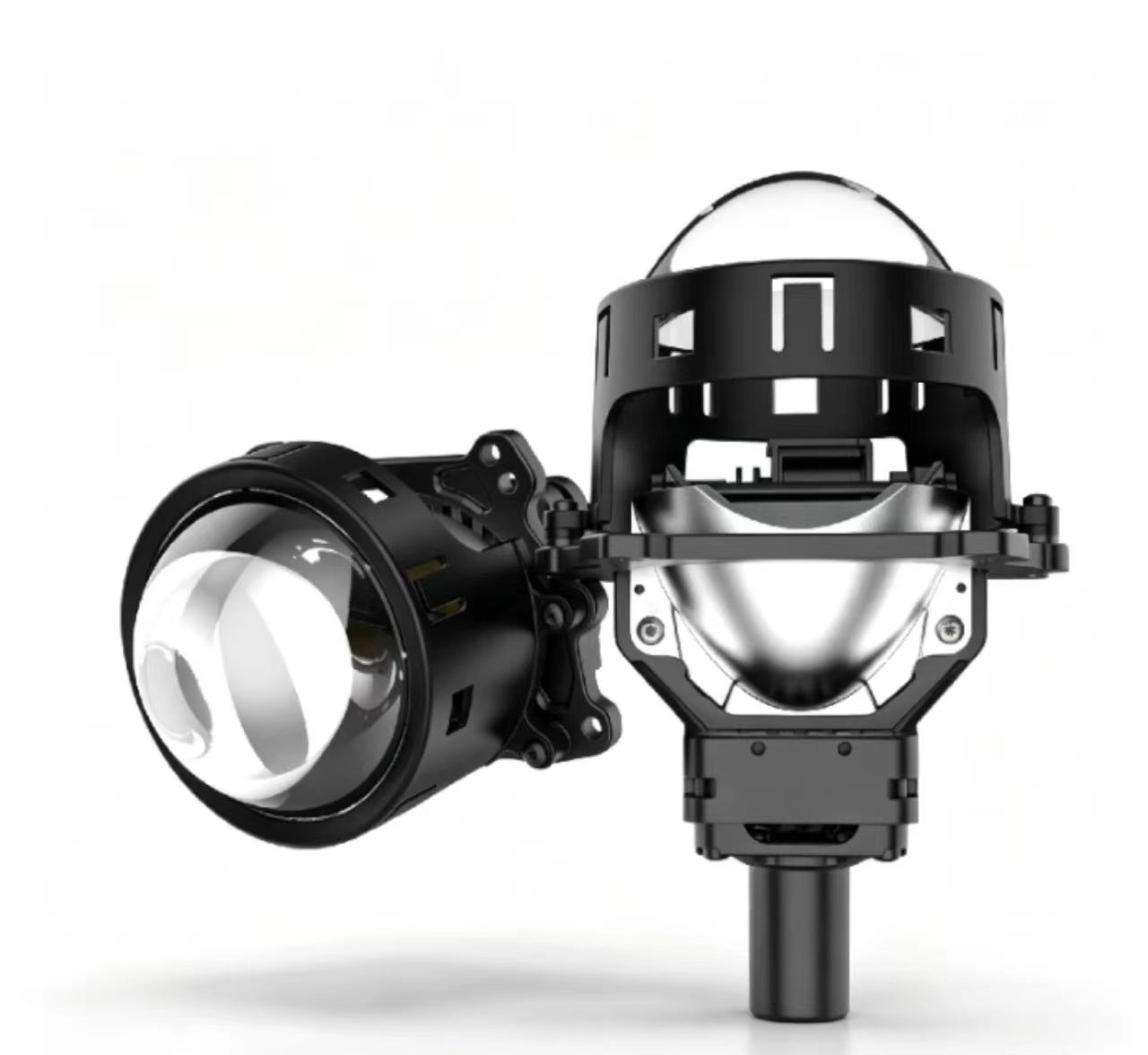
Projector body size also affects the installation envelope. Differences between 2.5-inch and 3.0-inch Bi-LED projector module dimensions can change the required housing space, mounting clearance, and front opening dimensions.
H4 Mini projector fitment should also be considered within the broader Bi-LED projector fitment and sourcing criteria, where housing dimensions, optical format, mounting conditions, and application requirements need to be evaluated together.
Mounting Position Affects Beam Alignment
Physical fit does not automatically mean optical fit.
The projector has to sit in the correct position and orientation so that the cutoff and beam distribution can be aimed properly.
If the projector rotates inside the mounting position, sits at an incorrect angle, or cannot reach the required adjustment range, the finished beam may not align as intended.
Correct projector orientation influences cutoff position, low-beam distribution, and high-beam alignment, so projector lens beam patterns should be evaluated together with mounting stability and final aiming.
Electrical Compatibility Should Be Checked Separately
An H4 application normally combines low and high beam functions within the same original bulb position, but projector-based LED replacements introduce their own electrical system.
The exact voltage range, connector configuration, switching method, driver design, and vehicle electronics depend on the selected product and vehicle.
Vehicle electrical systems can also behave differently when the original halogen load is replaced with an LED system. Some applications may require additional consideration for warning messages, flicker, or other vehicle-specific behavior.
- The intended input and connector arrangement
- Low-beam and high-beam switching requirements
- Available wiring space inside or behind the housing
- Any vehicle-specific electronic behavior that may affect installation
Cooling Clearance Is Part of Fitment
Bi-LED projectors generate heat that must be managed by the product's thermal structure.
For that reason, the area around the rear cooling section should not be treated as unused space. A projector tightly enclosed against the dust cover, wiring, or housing wall may not have the same thermal environment as one installed with adequate surrounding clearance.
Cooling design varies by product, so we do not use one universal clearance value for every H4 Mini projector. Instead, the selected model should be checked together with the actual headlamp space.
Can One H4 Mini Bi-LED Projector Fit Every H4 Vehicle?
H4 designation alone should not be treated as proof of universal fitment.
Vehicles using H4 bulbs can differ in several ways:
- Headlamp housing depth
- Reflector and internal frame structure
- Dust-cover dimensions
- Mounting geometry and adjustment mechanisms
Wiring position and available rear space can also vary. This is why a compatibility list should be built around verified applications rather than generated only from bulb socket information.
If a vehicle-specific application has not been confirmed, EKLIGHT prefers to evaluate the installation conditions before describing it as compatible.
What Information Helps EKLIGHT Check H4 Fitment?
For B2B buyers, a small amount of application information can make compatibility discussions much more precise.
- Vehicle make, model, and production year
- Original bulb type and headlamp configuration
- Photos of the bulb seat, rear housing, and dust cover
- Available installation dimensions or known space restrictions
If the project is for a private-label product or a recurring vehicle application, a dimensional drawing or physical lamp sample can provide additional fitment information. We may also need to understand whether the project is focused on direct bulb replacement, retrofit modification, or a custom headlamp design because these applications do not have the same installation constraints.
H4 Mini Projector Fitment for Distributors and Retrofit Businesses
Compatibility can affect returns, installation time, customer support, and the way a product is positioned in different markets.
A distributor selling an H4 Mini projector across multiple markets may serve vehicles with very different headlamp designs. A retrofit workshop may have more flexibility to modify or adapt the installation than a customer expecting a direct replacement.
For that reason, the same projector can have different commercial suitability depending on the sales channel.
For a distributor, the priority may be identifying which vehicle groups share suitable housing conditions. For a retrofit business, the priority may be determining how much installation space and adjustment flexibility are available. For an automotive lighting brand, compatibility documentation may need to be built around verified applications and product dimensions.
Selecting an H4 Mini Bi-LED Projector with EKLIGHT
H4 compatibility starts with the original bulb interface, but it should end with a complete fitment check.
At EKLIGHT, we evaluate the headlamp housing, available depth, internal clearance, mounting position, cooling space, electrical requirements, and beam alignment together.
Compact compact H4 Mini Bi-LED projector configurations and other full-size Bi-LED projector configurations can require different combinations of housing space, mounting clearance, and optical layout.
H4 Mini Projector Fitment Measurements and Acceptance Checks
The H4 designation identifies the original dual-filament bulb interface, but it does not establish the diameter, rear depth or alignment of the vehicle's headlamp assembly. Mini projector designs may integrate different adapters, locking structures or external drivers. EKLIGHT recommends comparing a dimensioned module drawing against representative target headlamps before sample approval.
| Fitment factor | Verification requirement |
|---|---|
| H4 seating and adapter | Confirm locking position, anti-rotation support and correct optical axis |
| Rear installation depth | Measure heat sink, fan where fitted, driver, wiring bend radius and dust-cover clearance |
| Inner housing space | Check front projection, reflector obstruction, shroud clearance and lens-to-cover distance |
| Electrical integration | Verify 12 V vehicle system compatibility where specified, connector polarity, low/high trigger and driver demand against the model datasheet |
| Final beam alignment | Check projector rotation, adjustment travel, cutoff orientation, hotspot position and high-beam transition |
LHD, RHD and traffic-side beam compatibility
Left-hand-drive (LHD) and right-hand-drive (RHD) identify the position of the steering wheel, while the low-beam cutoff must be suitable for the side of the road on which traffic operates. Buyers should confirm both the destination traffic rules and the supplier's actual beam configuration instead of relying on vehicle steering position or an H4 connector designation alone. Low-beam cutoff orientation, glare control and complete-headlamp compliance require market-specific verification.
Batch approval evidence
For wholesale or private-label orders, compare more than one unit under identical supply voltage, installation position and measurement conditions. Record approved model revisions, mounting dimensions, low/high beam functionality, thermal clearance and sample-to-sample variation. Supplier-provided compliance claims must match the exact product and intended application. Physical fitment alone does not establish that a retrofit is legal for on-road use. Wholesale orders should also define projector sample inspection and acceptance criteria for optical, electrical and mechanical consistency.
If you are evaluating an H4 Mini Bi-LED projector for distribution, retrofit work, private-label development, or a specific vehicle application, send us the available headlamp information and installation requirements.
We can use the provided vehicle details, housing dimensions, photos, and target application to discuss the relevant product configuration and fitment points.
FAQ
Does every H4 Mini Bi-LED projector fit every vehicle using an H4 bulb?
No. H4 describes the original bulb interface, not the complete housing geometry. Fitment also depends on mounting position, front and rear clearance, dust-cover space, wiring, cooling and beam alignment.
Which dimensions should be measured before ordering an H4 Mini projector?
Measure rear housing depth, heat-sink and driver space, internal reflector clearance, front projection, mounting interface, cable routing, dust-cover closure and available aiming adjustment.
Does H4 socket compatibility guarantee a correct beam pattern?
No. The projector's optical geometry, mounting rotation and aiming determine its projected beam. The low-beam cutoff, hotspot and high-beam operation must be verified in the intended headlamp.
What is the difference between LHD/RHD fitment and traffic-side cutoff?
LHD and RHD describe steering-wheel position. Low-beam cutoff orientation must match the market's traffic-side and headlamp requirements. A compatible connector does not confirm the required beam direction.
Can electrical compatibility differ between vehicles with H4 bulbs?
Yes. Trigger logic, polarity, connector design, voltage stability, vehicle control electronics and external drivers may vary. Check the projector datasheet and representative vehicle operation.
What can affect cooling and dust-cover compatibility?
Heat-sink dimensions, fan clearance where used, air circulation, cable routing and cover depth can affect installation. The final installation should not compromise housing seals or cooling performance.
Which records should wholesalers request before approving an H4 Mini projector?
Request exact model and revision, dimensioned drawings, target-vehicle fitment evidence, beam configuration, low/high switching tests, electrical details, thermal checks, sample results and applicable compliance documentation.
- What Does H4 Compatibility Actually Mean?
- H4 Socket Compatibility Is Not the Same as Housing Compatibility
- Measure Rear Clearance Before Confirming Fitment
- Dust Cover Clearance Can Affect the Installation
- Internal Housing Space Matters as Much as Rear Depth
- Mounting Position Affects Beam Alignment
- Electrical Compatibility Should Be Checked Separately
- Cooling Clearance Is Part of Fitment
- Can One H4 Mini Bi-LED Projector Fit Every H4 Vehicle?
- What Information Helps EKLIGHT Check H4 Fitment?
- H4 Mini Projector Fitment for Distributors and Retrofit Businesses
- Selecting an H4 Mini Bi-LED Projector with EKLIGHT
- H4 Mini Projector Fitment Measurements and Acceptance Checks
- LHD, RHD and traffic-side beam compatibility
- Batch approval evidence
- FAQ
How to Choose H4 Mini LED Projector Lenses: A B2B Buyer's Guide

Aftermarket Car LED Lens Upgrades: Why Drivers Are Making the Switch in 2026
Contacts
EKLIGHT
WhatsApp/Phone
H60 3.0-Inch Bi-LED Projector Lens Headlight 50W/60W
H60 3.0-Inch Bi-LED Projector Lens Headlight 50W/60W
U10S Canbus HID Ballast – 35W / 55W Error-Free Xenon HID Bulbs
U10S Canbus HID Ballast – 35W / 55W Error-Free Xenon HID Bulbs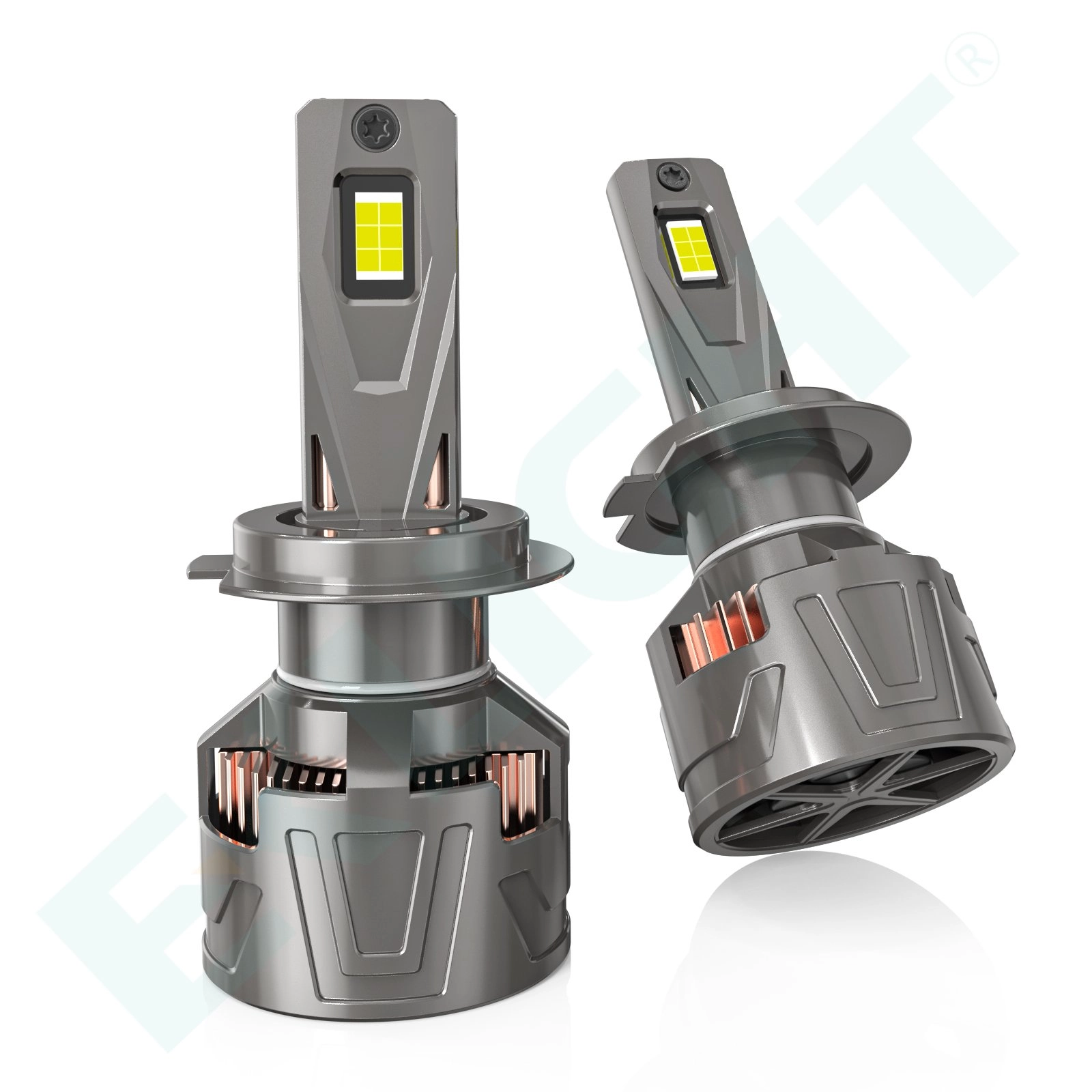
V90 65W Fan-Cooled LED Headlight Bulb with CANbus Decoder | OEM Supply
V90 65W Fan-Cooled LED Headlight Bulb with CANbus Decoder | OEM Supply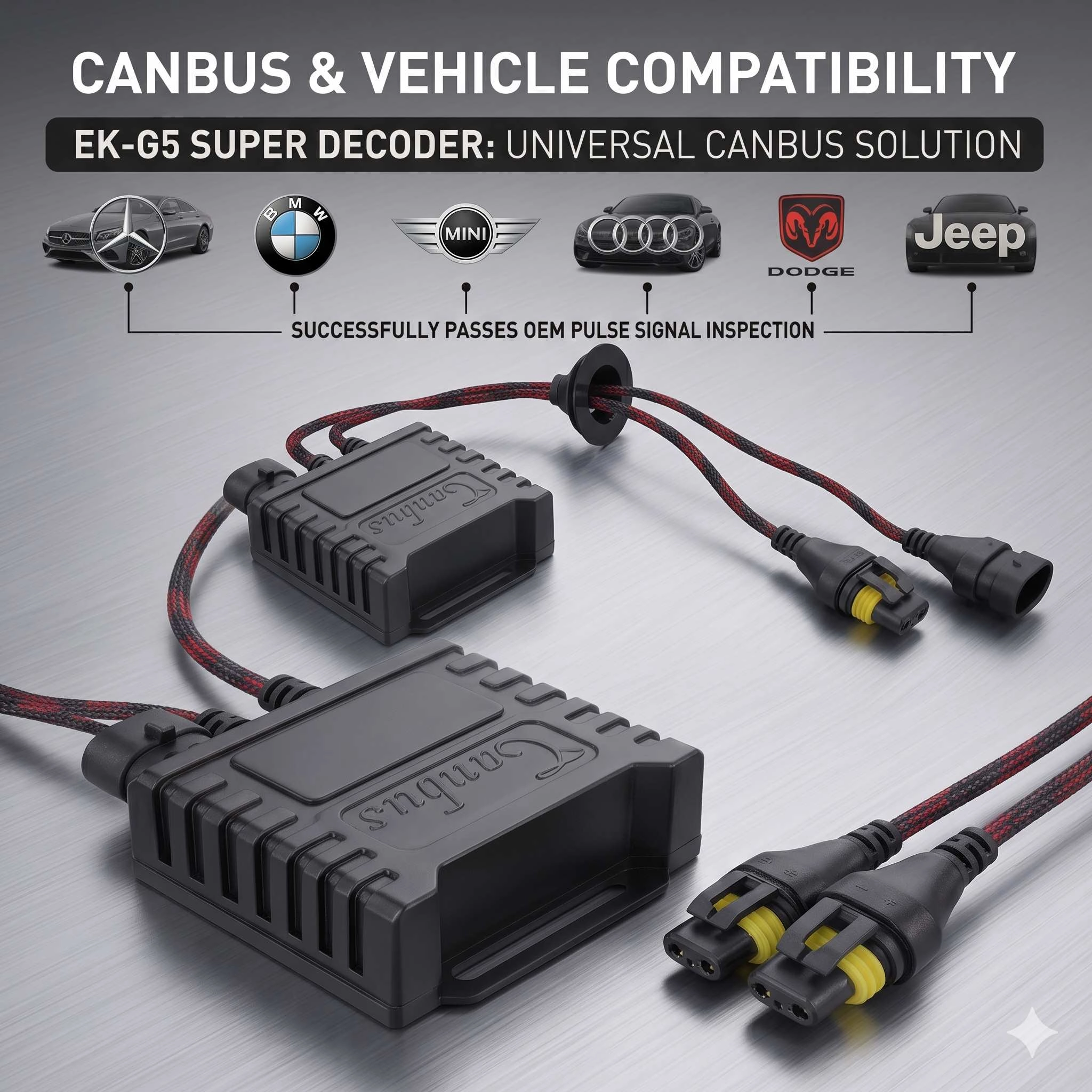
EK-G5 CANbus LED Headlight Decoder and Anti-Flicker Harness | Wholesale
EK-G5 CANbus LED Headlight Decoder and Anti-Flicker Harness | WholesaleDon’t Miss Our Latest Insights
Enjoying this article?
Subscribe to receive more industry insights, product updates, and automotive lighting innovations from EKLIGHT.
Stay informed and ahead of the market.
EKLIGHT delivers innovative, high-quality LED lighting solutions trusted by global partners.
We empower businesses with reliable products that enhance performance and drive success.
Contact EKLIGHT
Address : Building C, Dehuiwanggang Industrial Zone, No. 38 Wanggang Industrial three road, Baiyun district, Guanghzou, Guangdong province, China.
© 2026 EKLIGHT. All Rights Reserved.
EKLIGHT
EK
EK
EK
EK