


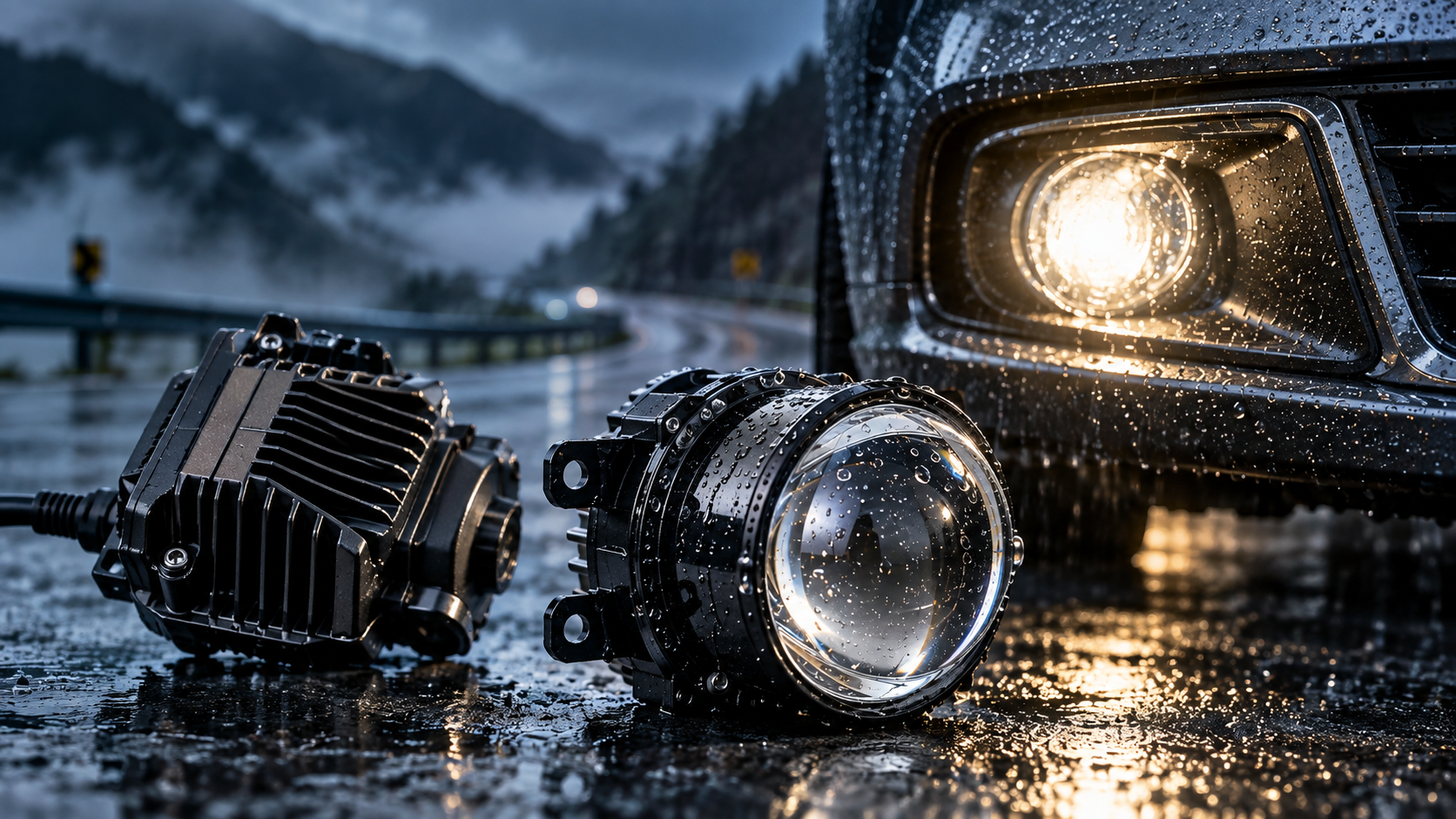
Thermal Management & Waterproofing in Fog Light Lenses
Follow us now:
Key Takeaways
Evaluate the product from heat generation through installation and environmental approval.
Evaluate the Complete Thermal Path
LED lighting systems generate heat as part of normal operation. For purchasing decisions, the useful question is not simply whether a projector has a large heatsink, but how heat moves away from temperature-sensitive components through the complete assembly.
Depending on the product architecture, the path may include the LED source, substrate, thermal interface, housing, heatsink, driver position, surrounding air, and the final installation environment.
Broader fog light lens sourcing criteria can help purchasing teams decide which thermal and environmental characteristics belong in the sourcing specification.
Installation Space Changes Thermal Conditions
Fog light modules may operate in confined areas behind a bumper or within a restricted housing. Rear clearance, surrounding structures, driver location, wiring position, and available airflow can influence the conditions around heat-generating components.
For space-limited applications, projector lens dimensions and installation clearance matter beyond mechanical fit because the available installation envelope can also affect the thermal environment.
These observations provide a clearer comparison basis than describing a sample only as “hot” or “not hot.”
Keep Thermal Evaluation Conditions Consistent
Supply conditions, operating mode, test duration, ambient environment, installation state, and measurement location can influence thermal observations. If those variables change substantially between samples, buyers may be comparing the test setup as much as the products.
Numerical limits should come from product-specific information or an agreed test specification. A temperature value established for one fog light configuration should not automatically be applied to another.
Look Beyond the Initial Power-On Check
Initial illumination confirms basic operation, but it does not show how the product behaves after heat has accumulated.
Where thermal behavior matters to the sourcing decision, sample evaluation can include an appropriate operating period under defined conditions. Buyers can then review operating stability, switching behavior, visible changes, interruption, or other characteristics relevant to the product.
Optical behavior may also be compared before and after operation. When that comparison is required, the same controlled setup used for beam pattern and cutoff evaluation helps separate product changes from test-condition changes.
Waterproofing Depends on the Complete Assembly
A housing that appears sealed does not by itself establish environmental performance. Moisture can interact with several interfaces depending on the construction.
Visible seals, gaskets, or joint geometry can support inspection, but appearance alone does not establish a particular waterproof rating.
Keep Environmental Evidence Product-Specific
Environmental terminology is useful only when it remains connected to the exact product being evaluated.
If an IP rating or another environmental specification matters to the sourcing program, the buyer can define the required condition and request supporting information associated with the proposed configuration.
The same product-specific approach supports production quality checks for fog light lenses because the inspection team can compare the supplied unit with an identifiable technical reference.
Keep Thermal and Environmental Checks Connected to Product Configuration
Different projector architectures, electrical arrangements, and operating modes can create different evaluation requirements.
Where buyers are comparing Bi-LED and LED fog light configurations, thermal and environmental characteristics should remain tied to the selected architecture rather than transferred automatically between product types.
The same principle applies when fog light color temperature options are part of a sourcing program. Color configuration, switching mode, electrical conditions, and thermal evaluation should refer to the same proposed product.
Distinguish Condensation From Water Ingress
Visible water entry, droplets, condensation, and temporary fogging should not automatically be recorded as the same condition. Their causes can differ depending on enclosure design, temperature change, humidity, ventilation strategy, sealing condition, and installation environment.
Defining moisture-related acceptance criteria during sourcing gives production inspection a clearer reference than creating a new interpretation after a difference appears.
Thermal and Sealing Design Can Interact
Thermal and environmental performance may be evaluated as separate categories, but both operate within the same assembly.
Housing structure, cable routing, driver position, sealing interfaces, materials, and installation clearance can affect more than one part of the evaluation. A structural change should therefore not automatically be treated as cosmetic.
A change to the housing, heatsink, cable exit, driver arrangement, sealing interface, or mounting component may justify renewed evaluation when it affects a characteristic that formed part of the approved reference.
Record Thermal and Environmental Requirements During Sample Approval
Sample approval is more useful when the purchasing team can identify the configuration, installation conditions, relevant environmental requirements, and supporting information reviewed during evaluation.
The same evidence can later support supplier qualification criteria for fog light sourcing when several suppliers propose different configurations or supporting information.
Use Production Inspection to Check Consistency
After sample approval, production inspection can focus on characteristics that indicate whether supplied units remain consistent with the approved configuration.
Thermal and waterproofing checks remain part of a broader quality decision. Fitment, beam behavior, electrical configuration, operating functions, color configuration, and workmanship may still be relevant to acceptance.
Define Thermal and Environmental Requirements in the RFQ
Environmental expectations are easier to compare when they are defined before suppliers prepare quotations.
Instead of requesting only a “waterproof fog light lens,” buyers can define the intended application, installation space, operating conditions, relevant environmental specification, sample approval expectations, and the type of supporting information required.
These fields can be carried into fog light lens RFQ requirements so quotations, samples, and production units can be evaluated against the same sourcing basis.
Connect Thermal, Sealing, and Product Approval
Thermal management, waterproofing, fitment, electrical configuration, and optical performance ultimately need to refer to the same product configuration.
Keeping those acceptance points connected reduces the risk of approving one characteristic from a sample while relying on unrelated information for another.
Thermal and Waterproofing Acceptance Evidence
Thermal stability and environmental protection require separate, model-specific evidence. Record the test configuration, installed enclosure, supply voltage, duration, ambient conditions and instrument locations so samples and production lots can be compared under equivalent conditions.
| Inspection item | Evidence and acceptance record |
|---|---|
| Thermal path | Identify LED board, interface material, housing, heat sink, driver and installation clearance |
| Warm-state output | Compare current, temperature and optical behavior after an agreed stabilization interval |
| Sealing interfaces | Inspect lens joint, rear cover, cable gland, connector and service access where applicable |
| Ingress protection | Verify the exact product's stated IP classification and relevant test evidence; do not transfer ratings between models |
| Moisture observation | Record water location, condensation timing, ambient humidity, operating mode and agreed pass/fail criteria |
| Production control | Retain approved sample revision, gasket and seal details, lot traceability and change approval requirements |
A stated IP code indicates testing against defined ingress conditions; it does not automatically prove resistance to every pressure-washing, thermal cycling or installation scenario. Water ingress, cosmetic condensation and venting behavior should be assessed against the actual design and buyer-approved criteria. Test severity, sample size and acceptance limits should be defined before the order rather than inferred from marketing specifications.
FAQ
How should B2B buyers evaluate thermal management in a fog light lens?
Buyers can review the complete heat path, installation environment, operating conditions, relevant measurement points, and thermal requirements associated with the identified product rather than judging performance from heatsink size alone.
Does a larger heatsink always mean better fog light lens thermal performance?
Not necessarily. Heatsink size is only one part of the thermal structure. Heat transfer from the LED source, thermal interfaces, housing design, driver position, installation clearance, and surrounding conditions can also influence thermal behavior.
What sealing points should be checked on a fog light lens?
Depending on the design, relevant areas can include lens-to-housing interfaces, rear housing joints, cable exits, connectors, driver connections, adjustment interfaces, fastener locations, and visible sealing materials.
How should buyers verify a fog light lens waterproof rating?
Buyers can identify the environmental specification required for the application and request evidence associated with the exact product configuration being evaluated rather than relying only on general terms such as waterproof.
Can one product's IP rating be applied to other fog light lens models?
No. An IP rating or environmental specification associated with one identified product should not automatically be applied to other products without supporting evidence.
What thermal and waterproofing information should be included in a fog light lens RFQ?
Relevant information can include the intended application, installation space, operating requirements, environmental conditions, requested waterproof specification, thermal evaluation requirements, and the evidence expected during sample approval.
- Key Takeaways
- Evaluate the Complete Thermal Path
- Installation Space Changes Thermal Conditions
- Keep Thermal Evaluation Conditions Consistent
- Look Beyond the Initial Power-On Check
- Waterproofing Depends on the Complete Assembly
- Keep Environmental Evidence Product-Specific
- Keep Thermal and Environmental Checks Connected to Product Configuration
- Distinguish Condensation From Water Ingress
- Thermal and Sealing Design Can Interact
- Record Thermal and Environmental Requirements During Sample Approval
- Use Production Inspection to Check Consistency
- Define Thermal and Environmental Requirements in the RFQ
- Connect Thermal, Sealing, and Product Approval
- Thermal and Waterproofing Acceptance Evidence
- Define Your Fog Light Lens Requirements With EKLIGHT
- FAQ
Thermal Management & Waterproofing in Fog Light Lenses
How to Choose a Bi-LED Projector Lens: 2026 Buyer’s Guide
Contacts
EKLIGHT
WhatsApp/Phone
Waterproof High-Performance H3 LED Headlight Bulbs | Bulk Supply
Waterproof High-Performance H3 LED Headlight Bulbs | Bulk Supply
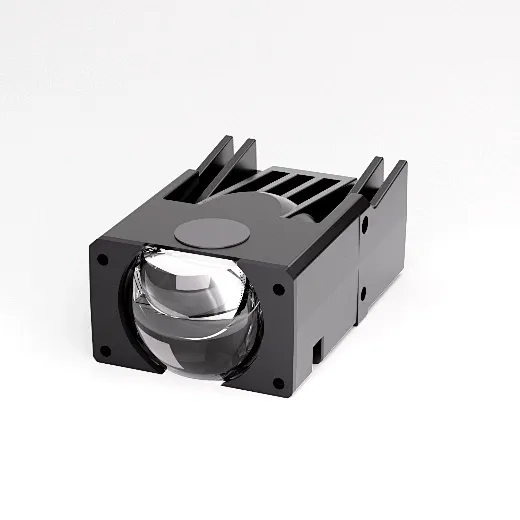
EK Mini Motorcycle Auxiliary LED Spotlights | OEM Wholesale
EK Mini Motorcycle Auxiliary LED Spotlights | OEM Wholesale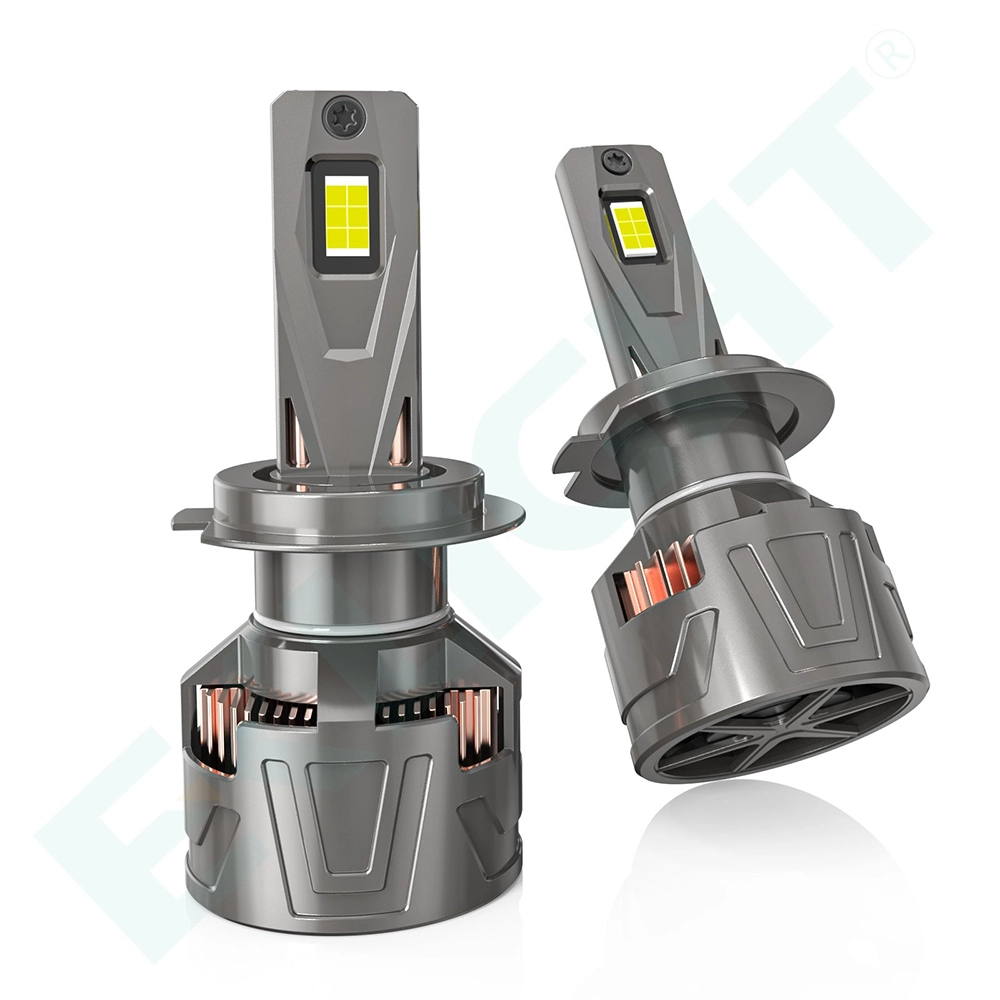
V90 65W Fan-Cooled LED Headlight Bulb with CANbus Decoder | OEM
V90 65W Fan-Cooled LED Headlight Bulb with CANbus Decoder | OEMDon’t Miss Our Latest Insights
Enjoying this article?
Subscribe to receive more industry insights, product updates, and automotive lighting innovations from EKLIGHT.
Stay informed and ahead of the market.
EKLIGHT delivers innovative, high-quality LED lighting solutions trusted by global partners.
We empower businesses with reliable products that enhance performance and drive success.
Contact EKLIGHT
Address : Building C, Dehuiwanggang Industrial Zone, No. 38 Wanggang Industrial three road, Baiyun district, Guanghzou, Guangdong province, China.
© 2026 EKLIGHT. All Rights Reserved.
EKLIGHT
EK
EK
EK
EK