


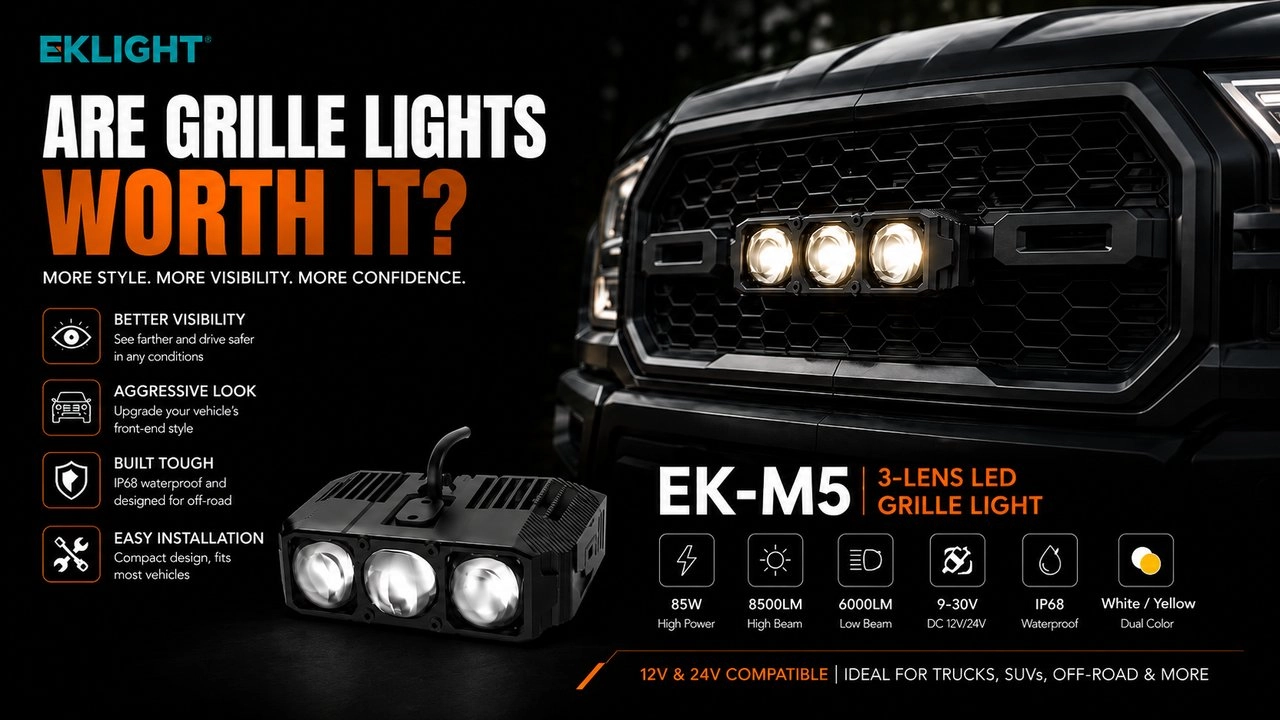
Are Grille Lights Worth It? Why More Truck & SUV Owners Are Adding LED Grille Lights
Follow us now:
LED grille lights can be worth adding when they support a clear purpose: improving front-end visibility, creating a specific vehicle appearance, supporting an auxiliary-lighting setup, or fitting into a repeatable truck or SUV build.
They are not automatically necessary for every vehicle.
If a vehicle is used mainly in well-lit urban conditions and the factory lighting already meets the driver’s needs, adding grille lights may provide more visual customization than functional benefit.
For vehicles used on dark rural roads, job sites, outdoor routes, off-road environments, or customized front-end builds, grille-mounted lighting can play a more practical role.
At EKLIGHT, we recommend evaluating the intended use, mounting position, vehicle fitment, wiring, and lighting function before deciding whether a grille-light setup is worthwhile.
Grille Lights Can Change the Front-End Appearance
One of the main reasons drivers add LED grille lights is visual.
Small lights integrated into the grille can change the way a truck or SUV looks without requiring a large external light bar or roof-mounted lighting system.
Depending on the vehicle and grille design, the lights can create a more defined front-end pattern, especially when several units are positioned symmetrically.
Appearance alone can be a valid reason for an accessory upgrade, but the layout should still be planned around the actual grille structure.
A visually balanced position may not be practical if there is not enough space behind the grille, if the mounting bracket cannot be reached, or if the light sits too deeply behind grille bars.
Appearance and fitment should therefore be evaluated together rather than as separate decisions.
Extra Lighting Can Be Useful in the Right Environment
Grille-mounted lights can provide additional illumination, but their value depends on how the vehicle is used.
Drivers operating on dark rural roads, unlit work areas, outdoor routes, or off-road environments may have more reason to consider auxiliary lighting than drivers who spend most of their time on well-lit city streets.
The intended lighting function should be defined before the product is selected.
Some grille-light installations are primarily intended to create a visible front-end lighting pattern. Others may be selected to support forward illumination.
The front-end lighting application differences between grille-mounted lights and driving lights should be considered when deciding what type of auxiliary lighting belongs on the vehicle.
A light should not be chosen simply because it appears bright in a product photo. Beam behavior, mounting angle, grille obstruction, and the intended use all affect the result after installation.
Grille Lights Are Not a Replacement for Every Lighting System
Adding more lights does not automatically create a better lighting setup.
Factory headlights remain the primary road-lighting system for normal driving conditions. Additional grille lights should be treated as auxiliary equipment selected for a defined application.
A grille-mounted light can also behave differently from a conventional driving light because its position is constrained by the grille opening, recess depth, mounting angle, and surrounding structure.
If the main goal is stronger forward-driving illumination, compare the available lighting formats rather than assuming a grille-integrated product is always the appropriate choice.
The grille-mounted versus forward-driving illumination comparison can help separate appearance-focused, visibility-focused, and forward-lighting applications.
Fitment Often Determines Whether the Upgrade Works
A grille light can look suitable in a catalog and still be difficult to install on the target vehicle.
The grille opening must provide enough space for the complete assembly, not only the visible front face of the light.
Rear depth, mounting brackets, fasteners, connectors, cable bends, vehicle supports, sensors, shutters, cameras, and cooling components can all affect the usable space.
Vehicle-specific grille fitment differences become relevant when comparing trucks and SUVs because front-end structures can vary even when the intended lighting layout looks similar.
Reviewing grille mounting position and clearance before ordering reduces the chance of selecting a location that looks suitable from the front but cannot accommodate the complete assembly.
For multi-light installations, consistent spacing and usable reference points also make the finished layout easier to reproduce.
Product Construction Matters More Than Brightness Alone
Brightness is only one part of a grille-light evaluation.
A product intended for vehicle installation also needs to be assessed by how its housing, bracket, connector, wiring, optical layout, and other components work together.
The complete assembly should fit the intended grille area and remain practical to install and service.
If environmental or performance claims are provided, buyers should check what those claims refer to and whether supporting product information is available for the exact configuration being considered.
The grille light construction and performance factors provide a more useful evaluation framework than selecting a product from one headline specification.
Installation Quality Affects the Final Result
Even a suitable grille light can perform poorly in the vehicle if the installation position or wiring route is not planned correctly.
Before installation, confirm where the bracket can be fixed, how the connector will sit behind the grille, and where the cable can be routed without being stretched, trapped, or pressed against sharp edges.
The installation should also leave enough access for adjustment or replacement after the grille is reassembled.
The mounting and wiring requirements should therefore be reviewed before the final position is fixed.
For vehicles using several grille lights, measure the positions rather than aligning each unit by eye. Consistent spacing, recess depth, and mounting angle produce a cleaner result and make later service easier.
When Are LED Grille Lights Worth Adding?
The answer depends on the application.
LED grille lights may make sense when the vehicle owner wants a more distinctive front-end appearance, needs an auxiliary-lighting configuration for a specific driving environment, or is building a truck or SUV setup where grille-integrated lighting fits the overall design.
They may provide less value when there is no clear lighting or styling objective, the grille does not offer practical mounting space, or the installation would interfere with existing vehicle components.
What Should You Check Before Buying?
Before ordering LED grille lights, check the application first.
Confirm the available grille opening, rear depth, mounting position, bracket access, connector space, wiring route, intended lighting function, and whether surrounding vehicle components remain clear.
Then evaluate the product configuration. The grille light selection criteria can help compare housing dimensions, mounting arrangement, wiring, operating requirements, lighting modes, and other details before ordering.
An automotive lighting sourcing workflow can be used to document the approved configuration, sample, accessories, packaging, and repeat-order requirements.
Decide Based on the Vehicle, Not the Trend
Grille lights have become a visible part of many truck and SUV builds, but popularity alone does not determine whether they are useful for a particular vehicle.
The better decision is based on what the driver wants the lights to do, whether the vehicle provides a suitable installation area, and whether the selected product can be mounted and wired properly.
For some vehicles, grille lights can combine styling and useful auxiliary lighting in a compact front-end installation. For others, the factory lighting system or another auxiliary-light format may already meet the requirement.
They can be, when the vehicle has a clear styling or auxiliary-lighting goal, suitable grille space, and practical mounting and wiring conditions.
If the upgrade is being considered mainly because grille lights are popular, inspect the vehicle and define the lighting purpose before ordering.
FAQ
Are LED grille lights worth it?
They can be worthwhile when they support a defined styling or auxiliary-lighting purpose and the vehicle provides suitable mounting, wiring, and clearance conditions.
Do grille lights replace headlights?
No. Factory headlights remain the primary lighting system for normal road use. Grille lights should be evaluated as auxiliary lighting for the intended application.
Where should LED grille lights be mounted?
The position should provide sufficient front visibility, rear clearance, bracket access, connector space, wiring access, and clearance from nearby vehicle components.
Can the same grille lights fit both trucks and SUVs?
Not automatically. Grille openings, rear depth, supports, sensors, brackets, and wiring routes can differ between vehicle models.
What should I check before buying grille lights?
Check the intended lighting function, grille opening, mounting depth, bracket arrangement, connector and wiring requirements, product configuration, and service access.
Are brighter grille lights always better?
No. Product suitability also depends on optical behavior, mounting position, grille obstruction, housing design, wiring, and the intended application.
- Grille Lights Can Change the Front-End Appearance
- Extra Lighting Can Be Useful in the Right Environment
- Grille Lights Are Not a Replacement for Every Lighting System
- Fitment Often Determines Whether the Upgrade Works
- Product Construction Matters More Than Brightness Alone
- Installation Quality Affects the Final Result
- When Are LED Grille Lights Worth Adding?
- What Should You Check Before Buying?
- Decide Based on the Vehicle, Not the Trend
- FAQ

2025 Automotive Lighting Trends: Why LED Dominates the Market
Is LED headlight brighter than halogen?
Contacts
EKLIGHT
WhatsApp/Phone
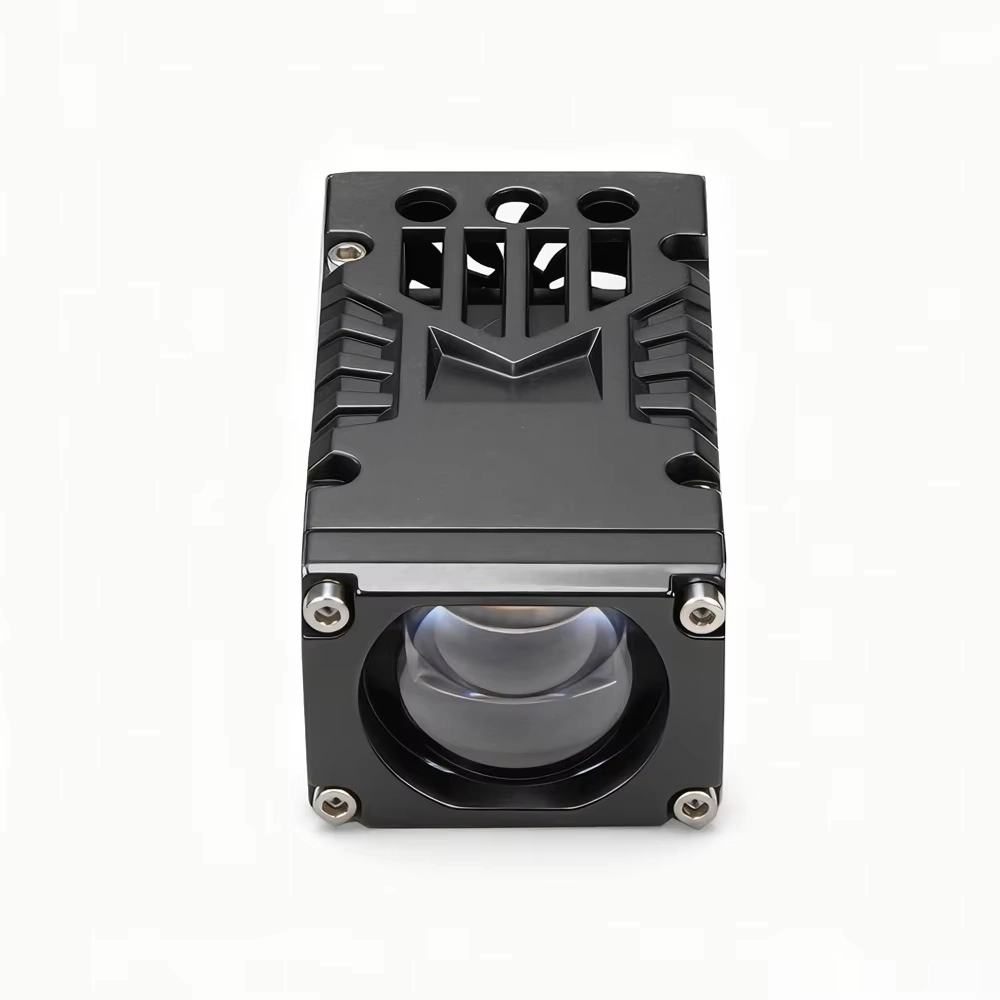
EK-M1PRO 120W Motorcycle LED Driving Lights | OEM Supply
EK-M1PRO 120W Motorcycle LED Driving Lights | OEM Supply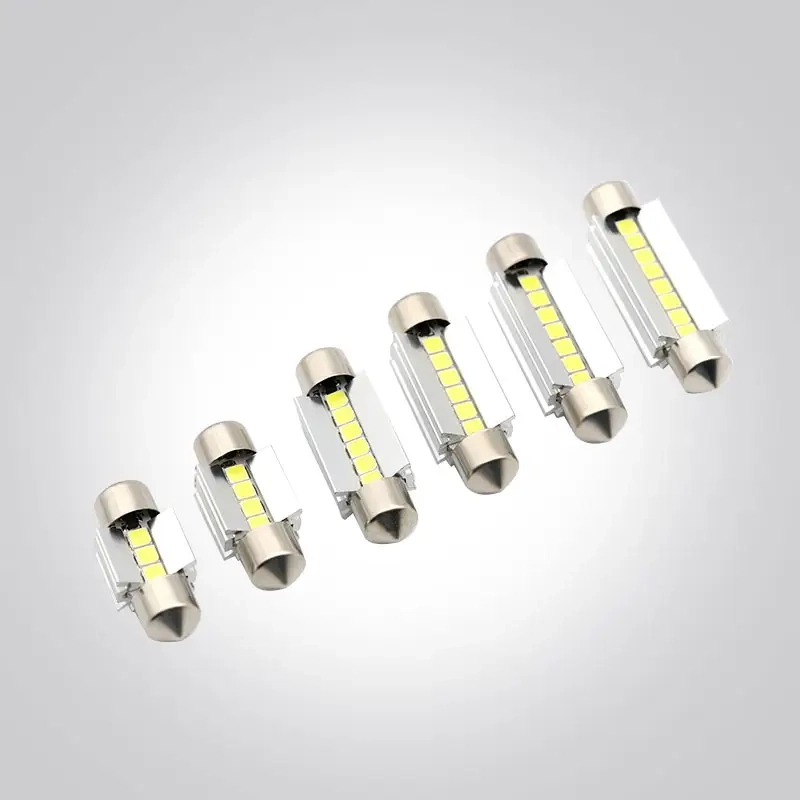
28–42mm Festoon LED Bulbs | Wholesale Auto Lighting
28–42mm Festoon LED Bulbs | Wholesale Auto Lighting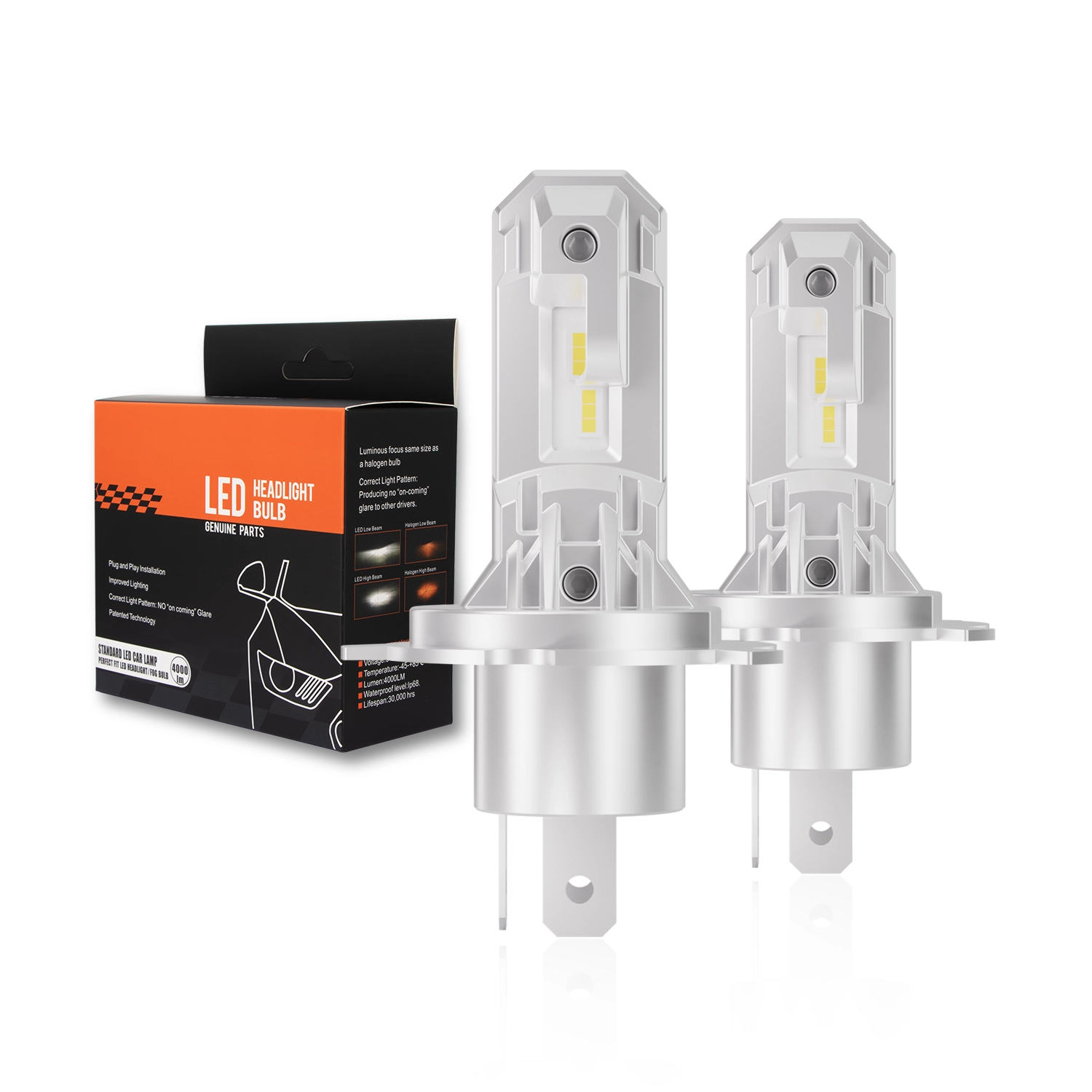
EKLIGHT V4 Fanless Direct-Fit LED Headlight Bulbs H4/H7/H11/HB4/H3 | Wholesale
EKLIGHT V4 Fanless Direct-Fit LED Headlight Bulbs H4/H7/H11/HB4/H3 | Wholesale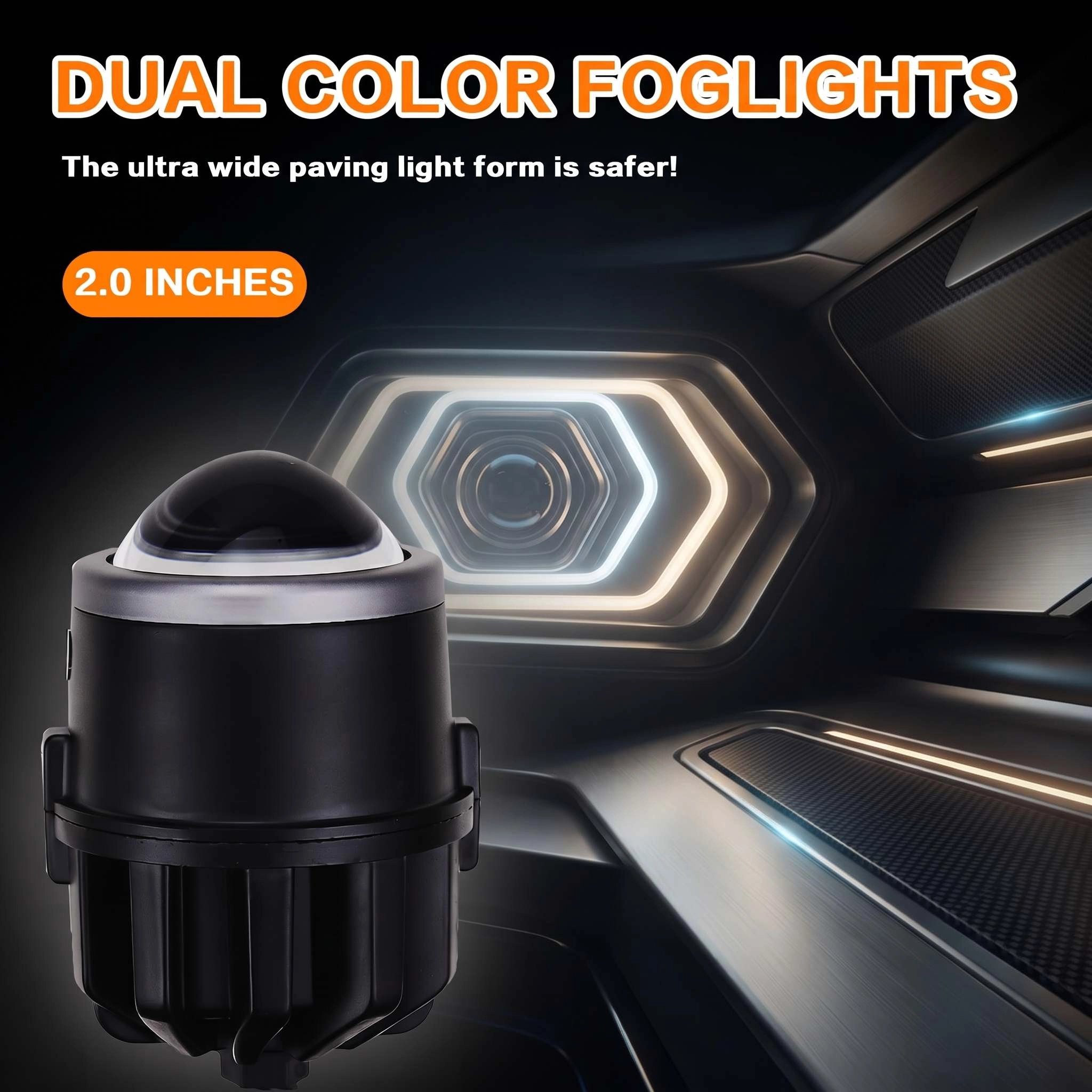
2.0-Inch Dual-Color Bi-LED Projector Fog Light 35W/45W | Wholesale
2.0-Inch Dual-Color Bi-LED Projector Fog Light 35W/45W | WholesaleDon’t Miss Our Latest Insights
Enjoying this article?
Subscribe to receive more industry insights, product updates, and automotive lighting innovations from EKLIGHT.
Stay informed and ahead of the market.
EKLIGHT delivers innovative, high-quality LED lighting solutions trusted by global partners.
We empower businesses with reliable products that enhance performance and drive success.
Contact EKLIGHT
Address : Building C, Dehuiwanggang Industrial Zone, No. 38 Wanggang Industrial three road, Baiyun district, Guanghzou, Guangdong province, China.
© 2026 EKLIGHT. All Rights Reserved.
EKLIGHT
EK
EK
EK
EK