


How to Choose a Bi-LED Projector Lens: 2026 Buyer’s Guide
Learn how to choose a Bi-LED projector lens by evaluating beam pattern, projector size, fitment, thermal management, electrical compatibility, and supplier documentation rather than relying on wattage or brightness claims alone.
Follow us now:
Start with the Headlamp and Application
The headlamp defines the space available for the projector.
Before comparing models, collect the dimensions and installation conditions that can limit the retrofit:
Vehicle model and original bulb type provide useful context, but they do not confirm projector compatibility by themselves.
Compact H4 applications demonstrate this clearly. H4 Mini Bi-LED projector fitment and compatibility depends on housing depth, rear clearance, mounting position, cooling space, electrical conditions, and beam alignment rather than the H4 socket alone.
Compare Beam Pattern Before Brightness Claims
A projector is useful only when its light is distributed effectively.
Low-beam performance should be evaluated by more than the brightest point on a wall. Useful road lighting depends on how the projector controls the entire beam.
Check cutoff position, horizontal spread, foreground distribution, central intensity, and the transition between brighter and darker areas.
Check forward reach, central concentration, width, and alignment with the low-beam optical axis.
A very intense hotspot can look impressive in a photograph while leaving other parts of the road poorly illuminated.
The projector lens beam pattern should be evaluated as a complete optical result. Beam photos are easier to compare when wall distance, camera exposure, operating voltage, projector height, and aiming position are known.
Select Projector Size from the Available Space
Bi-LED projector size affects fitment, but nominal diameter does not describe the full projector.
Common formats include 1.5-inch, 2-inch, 2.5-inch, and 3-inch projector lenses. The rear heat sink, driver, shutter mechanism, or mounting structure can add depth independently of lens diameter.
The differences between 2.5-inch and 3-inch Bi-LED projector lens sizes are relevant to both optical packaging and installation clearance.
Actual dimensions should decide the fitment, not the size label alone.
Check Mounting, Retrofit, and Beam Alignment Together
Mechanical installation affects optical performance.
A projector that is slightly rotated can produce a tilted cutoff. A mounting position that is too high, low, forward, or rearward can reduce the available adjustment range.
Bracket pattern, shaft dimensions, reflector modification, rear-cover clearance, and optical center should be reviewed as one installation system.
The Bi-LED projector retrofit process normally includes housing inspection, temporary positioning, mounting, wiring, functional testing, resealing, and final beam alignment.
For workshops handling repeated installations, a fitment record can include vehicle model, production year, headlamp type, projector model, mounting method, housing dimensions, and any modifications required.
Evaluate Thermal and Electrical Design
LED output and operating stability depend on thermal management.
Heat generated at the LED source needs to move through the substrate, projector body, heat sink, and any active cooling components used by the design. Rear clearance around a fan or heat sink affects both fitment and the environment around the cooling system.
Electrical requirements should be checked separately.
LED driver, low-beam connection, high-beam switching signal, and cooling-system wiring where applicable.
Operating voltage, connector configuration, polarity, lamp monitoring, PWM control, and CANbus-related behavior.
Mechanical compatibility does not confirm electrical compatibility.
The distinction becomes clearer when comparing Bi-LED and Bi-Xenon projector systems. Bi-LED uses an LED driver and thermal structure designed around LED emitters, while Bi-Xenon commonly uses an HID bulb and ballast architecture.
Treat Wattage, Lumens, Lux, and Color Temperature as Different Specifications
Automotive lighting specifications are often presented together even though they describe different properties.
A higher value in one category does not automatically mean better road-lighting performance. Optical efficiency, LED position, thermal control, driver behavior, and beam geometry also affect the result.
For B2B sourcing, consistent test conditions are more useful than isolated maximum numbers.
Review the Projector as a Complete Product
The LED chip name alone does not describe the quality of a projector.
Two products using similar LED packages can produce different results because the source position, optical bowl, lens, cutoff system, thermal structure, and driver design are different.
Physical Bi-LED projector lens features can be evaluated across several areas:
Distributors and retrofit businesses should consider replacement procedures, spare units, diagnostic methods, and after-sales documentation alongside initial installation.
What B2B Buyers Should Confirm Before Ordering
A purchase decision becomes more useful when the supplier has enough application information to evaluate the request.
Vehicle details, headlamp type, housing photos and dimensions, intended mounting method, rear clearance.
Low-beam configuration, high-beam requirements, traffic direction where relevant, beam-test method.
Vehicle voltage, driver and wiring conditions, cooling clearance, space around the projector.
Target quantity, packaging or branding needs, documentation, sample evaluation, target market.
The broader Bi-LED projector lens selection process should combine all four areas rather than reducing the purchase decision to projector diameter or wattage.
At EKLIGHT, the supplied application details provide the basis for discussing suitable Bi-LED projector lens configurations.
If you are sourcing Bi-LED projector lenses for a retrofit business, distribution program, automotive lighting brand, or private-label project, provide the available vehicle information, housing dimensions, photos, electrical requirements, and target application.
EKLIGHT can use the supplied project information to discuss relevant projector formats and fitment considerations.
FAQ
Is a 3.0-inch Bi-LED projector always better than a 2.5-inch projector?
No. A 3.0-inch projector is not automatically better. Housing space, optical design, beam pattern, mounting method, cooling, and application requirements should determine the appropriate size.
Do Bi-LED projectors need an HID ballast?
Normally, no. Bi-LED projectors use LED driver electronics rather than the high-voltage ballast used by HID lighting systems. The exact driver design depends on the projector.
Can a Bi-LED projector be installed in any halogen headlight?
Not automatically. The housing must be evaluated for mechanical clearance, mounting, electrical compatibility, beam alignment, heat management, and resealing requirements.
Does higher wattage mean a brighter and better projector?
Not necessarily. Wattage describes electrical power consumption. Optical efficiency, LED placement, beam distribution, thermal management, and operating conditions also affect usable lighting performance.
What projector size should I choose for a motorcycle?
The answer depends on available housing dimensions, mounting method, cooling clearance, wiring space, and required beam. Compact projector options may be easier to integrate where installation space is limited.
How should I compare beam-pattern claims from different suppliers?
Ask for the test distance, camera or meter position, operating voltage, low/high-beam mode, and measurement method. Comparisons are more useful when the test conditions are consistent.
- Start with the Headlamp and Application
- Compare Beam Pattern Before Brightness Claims
- Select Projector Size from the Available Space
- Check Mounting, Retrofit, and Beam Alignment Together
- Evaluate Thermal and Electrical Design
- Treat Wattage, Lumens, Lux, and Color Temperature as Different Specifications
- Review the Projector as a Complete Product
- What B2B Buyers Should Confirm Before Ordering
- FAQ

Is Upgrading to LED Turn Signal Lights the Key to Safer Driving ?

Eco-Bright Driving: High Performance & Savings of Next-Gen Fanless LED Headlights
Contacts
EKLIGHT
WhatsApp/Phone
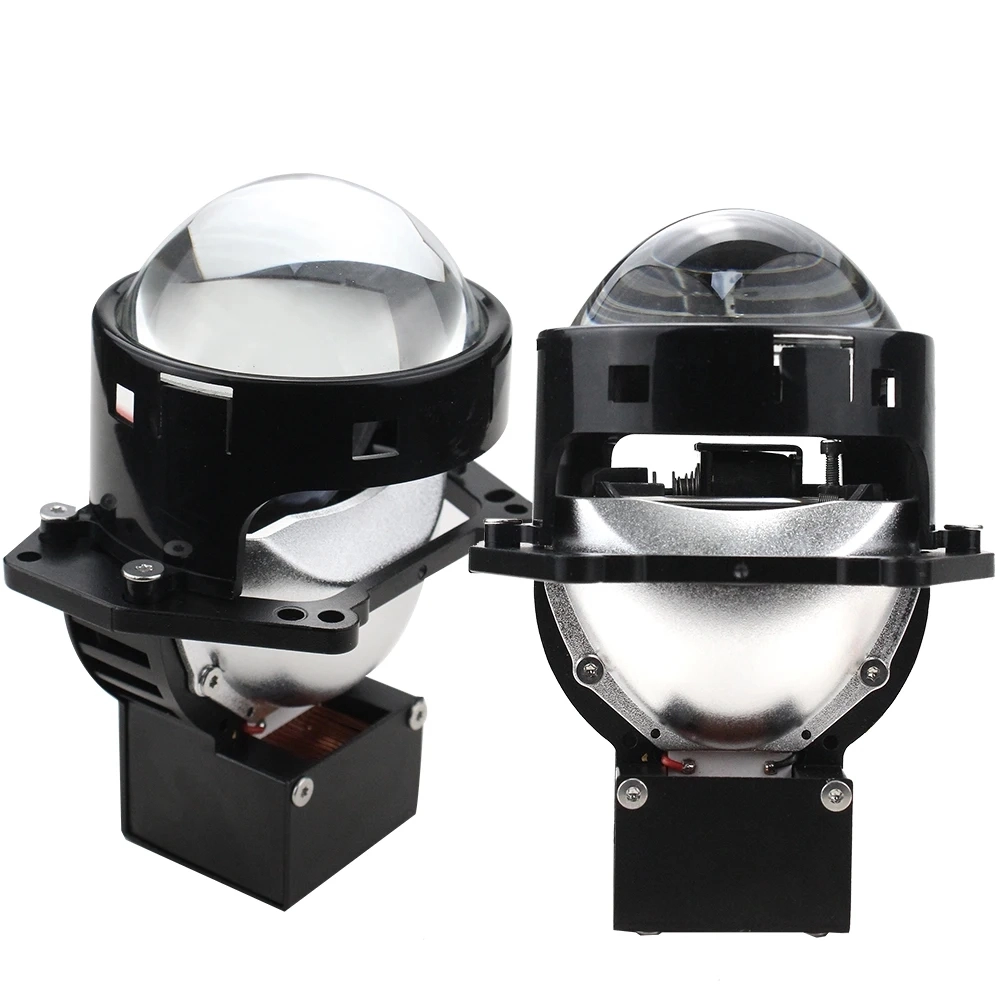
3.0-Inch 160W Dual-LED Projector Lens 12000LM 12V | OEM Supply
3.0-Inch 160W Dual-LED Projector Lens 12000LM 12V | OEM Supply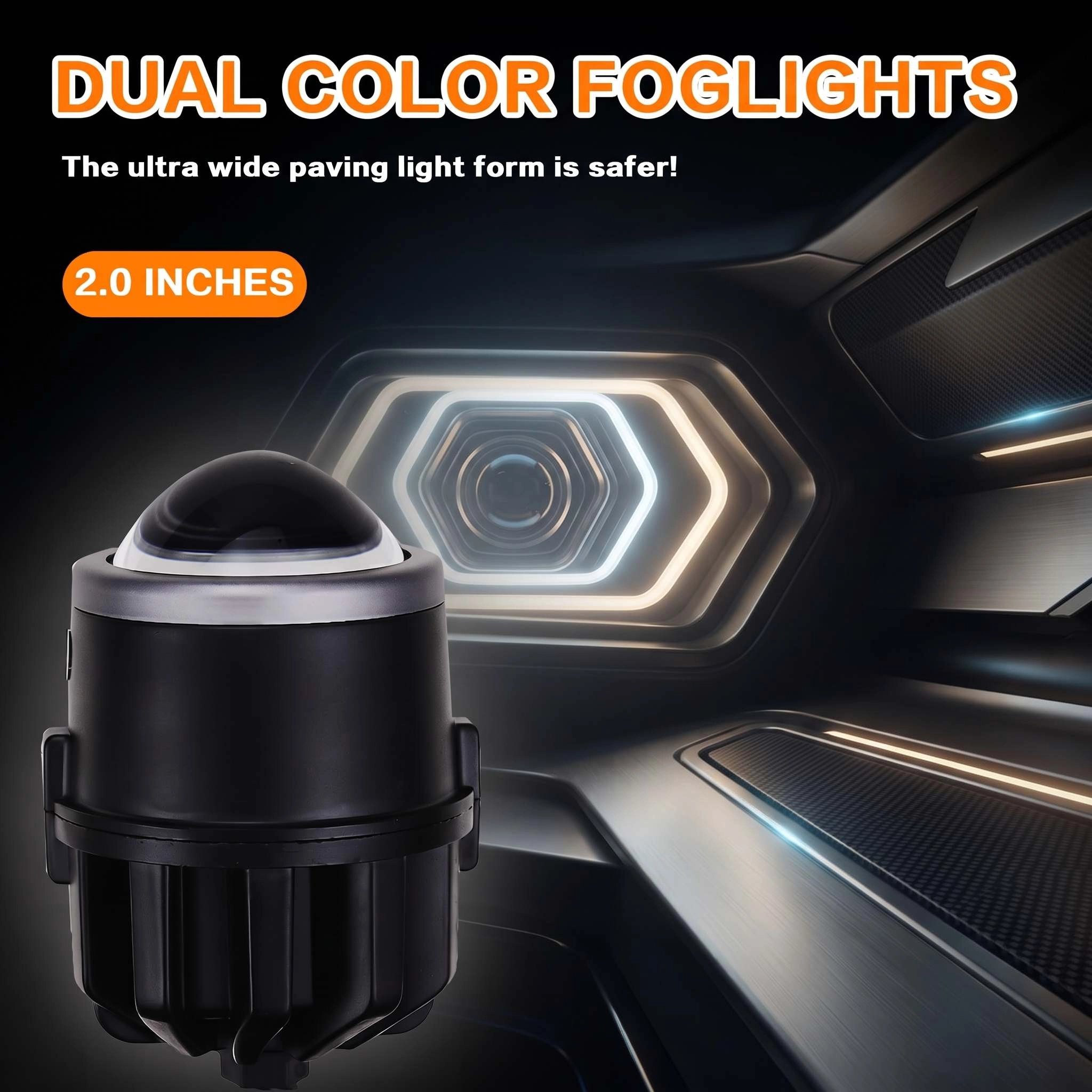
2.0-Inch Dual-Color Bi-LED Projector Fog Light 35W/45W | Wholesale
2.0-Inch Dual-Color Bi-LED Projector Fog Light 35W/45W | Wholesale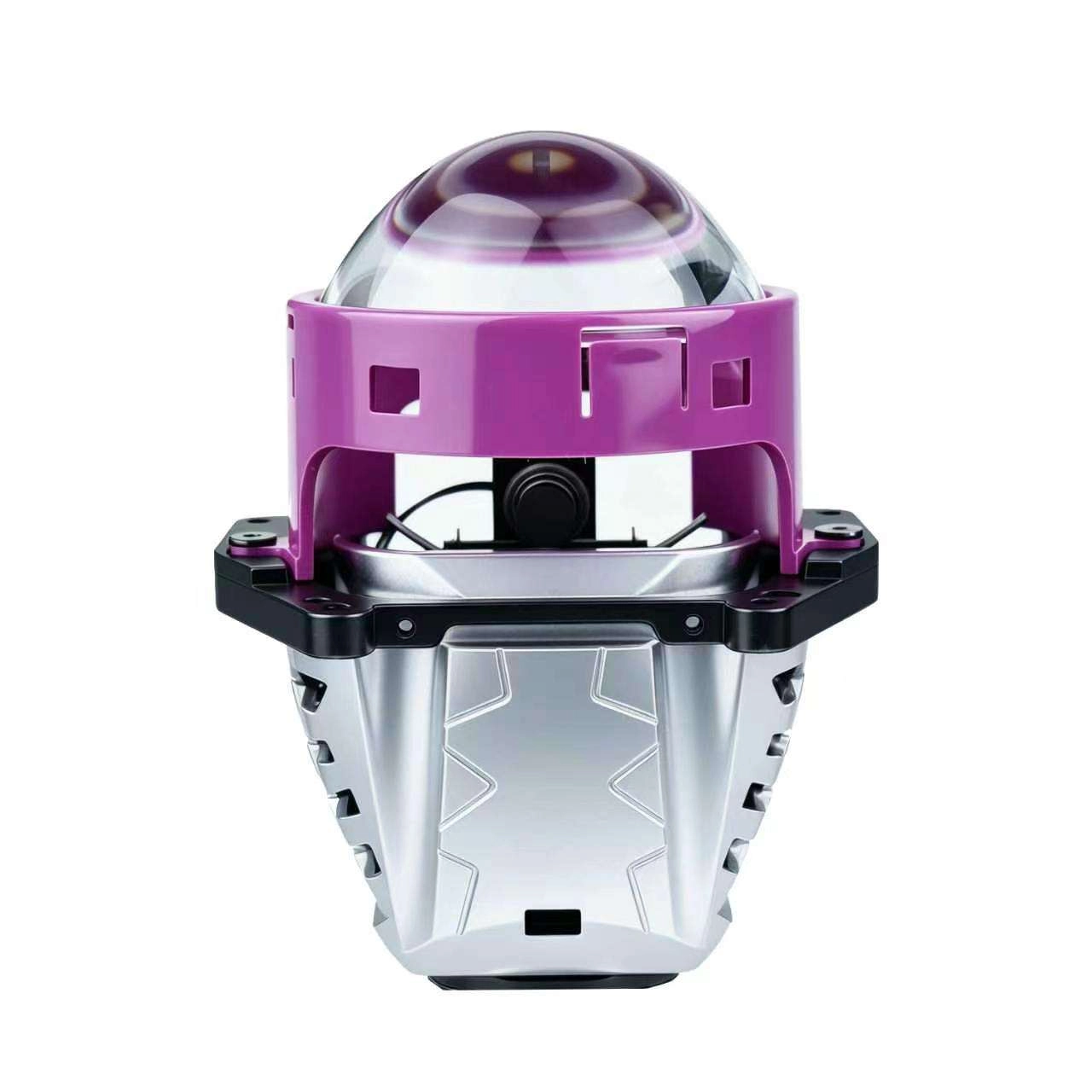
EK-18 3.0-Inch Bi-LED Projector Lens 65W/75W | Factory Supply
EK-18 3.0-Inch Bi-LED Projector Lens 65W/75W | Factory Supply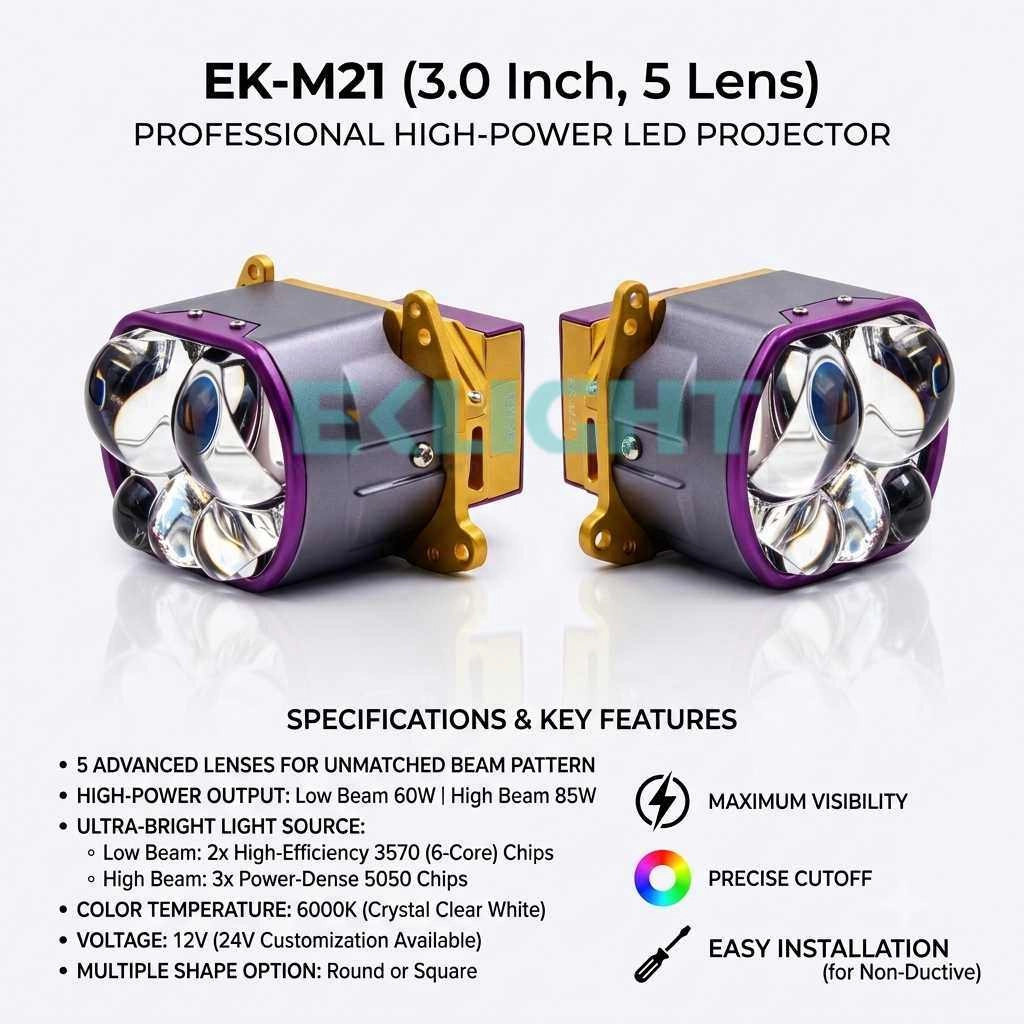
EK21 3.0-Inch Bi-LED Projector Lens 60W/85W | Factory Supply
EK21 3.0-Inch Bi-LED Projector Lens 60W/85W | Factory SupplyDon’t Miss Our Latest Insights
Enjoying this article?
Subscribe to receive more industry insights, product updates, and automotive lighting innovations from EKLIGHT.
Stay informed and ahead of the market.
EKLIGHT delivers innovative, high-quality LED lighting solutions trusted by global partners.
We empower businesses with reliable products that enhance performance and drive success.
Contact EKLIGHT
Address : Building C, Dehuiwanggang Industrial Zone, No. 38 Wanggang Industrial three road, Baiyun district, Guanghzou, Guangdong province, China.
© 2026 EKLIGHT. All Rights Reserved.
EKLIGHT
EK
EK
EK
EK