


How to Test Bi-LED Projector Lens Quality Before Bulk Ordering
Follow us now:
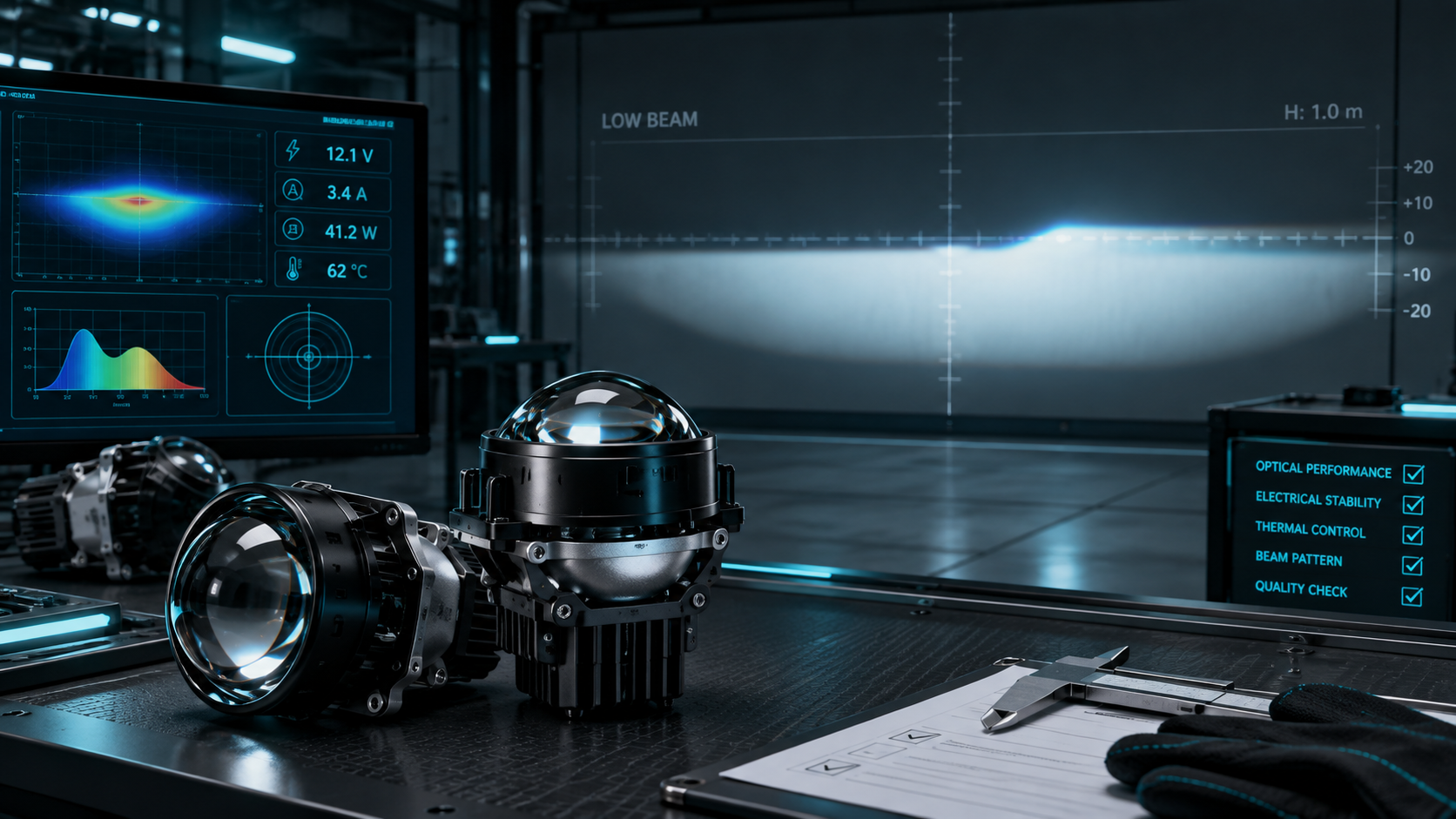
A good Bi-LED projector lens sample should not be judged by brightness alone.
For importers, distributors, automotive lighting brands and other B2B buyers, the more important question is whether the projector can deliver a controlled beam pattern, stable operation, suitable fitment and repeatable performance across multiple samples and future production batches.
Before approving a bulk order, buyers should evaluate a Bi-LED projector lens across optical performance, thermal stability, electrical behavior, mechanical construction, fitment and sample consistency. Supplier approval requires comparable test conditions, documented acceptance criteria, approved sample configuration and traceable production inspection.
Why Test Bi-LED Projector Lenses Before Bulk Ordering?
A specification sheet describes the intended product. A sample shows how the product actually behaves. Two Bi-LED projector lenses with similar stated specifications can perform differently once installed because overall performance depends on the interaction between multiple components.
- LED light source
- Reflector design
- Projector lens
- Cutoff shield
- High/low beam switching mechanism
- Thermal structure
- Driver electronics
- Housing dimensions
- Mounting design
The practical B2B question is not simply “Is this projector bright?”
Can this product consistently deliver the optical, mechanical and operating characteristics required for the target application?
Start With the Intended Vehicle and Application
Testing should begin before the projector is powered on. First define where the product is expected to be used.
- What type of headlamp assembly will the projector be installed in?
- How much installation space is available?
- What projector size is suitable?
- What mounting method is required?
- Is the product intended for retrofit, replacement or a custom lighting project?
- What low-beam and high-beam characteristics are important for the target application?
- Are there vehicle-specific electrical or installation constraints?
A projector with a strong beam on a test bench may still be unsuitable if the housing is too large, the mounting points do not match the application, or the optical position cannot be aligned correctly inside the headlamp.
Fitment requirements should therefore be defined before performance comparison begins.
Check the Low-Beam Cutoff
The low-beam cutoff is one of the first optical characteristics buyers should inspect. A useful cutoff should be clearly defined and visually stable rather than excessively blurred, distorted or irregular.
- Cutoff definition
- Left-to-right consistency
- Unwanted light above the cutoff
- Transition around the central beam area
- Symmetry between multiple units of the same model
Do not judge the cutoff from a single photograph alone. The projector should be positioned at the same distance, height and aiming angle when different samples are compared.
B2B evaluation point: if nominally identical samples produce noticeably different cutoff shapes under the same test conditions, investigate the variation before approving production.
Evaluate Hotspot, Beam Width and Light Distribution Together
A strong center hotspot can look impressive in a photo, but it does not tell the whole story. Bi-LED projector performance should be evaluated as a complete beam.
Hotspot
The hotspot is the concentrated high-intensity region of the beam. Check whether it is positioned where expected and whether it integrates naturally with the surrounding illumination.
Beam Width
Width affects lateral visibility. Compare how far useful illumination extends to both sides rather than evaluating only the center of the beam.
Foreground Distribution
The area immediately in front of the vehicle should also be considered. Excessive foreground light can make the nearby road appear very bright while reducing the driver’s perception of more distant areas.
Uniformity
Look for sudden dark zones, irregular patches or obvious imbalance between different parts of the beam.
The goal is not simply maximum brightness.
Ask whether the available light is distributed in a way that supports the intended driving application.
Repeatable Bi-LED projector beam pattern evaluation depends on consistent cutoff geometry, hotspot position, lateral coverage, aiming and equivalent supply and imaging conditions.
Test High-Beam Operation Separately
A Bi-LED projector integrates low beam and high beam in one optical assembly, so both modes should be tested independently.
- Check whether the switching mechanism operates reliably.
- Confirm that the beam changes immediately and consistently.
- Observe whether forward illumination expands as expected.
- Confirm that high-beam distribution remains aligned with the projector.
- Repeat switching to check for inconsistent mechanical behavior.
The high/low beam mechanism is both an optical and mechanical function, so inconsistent behavior can indicate an issue that may not be visible during a static low-beam test.
In solenoid-operated modules, low- and high-beam switching through the cutoff shield should return to the same low-beam position after repeated cycles.
Compare Brightness Stability, Not Just Initial Brightness
Initial output is easy to demonstrate. Stable output during extended operation is more useful for product evaluation.
- Visible output remains reasonably stable.
- The beam pattern changes as the product heats up.
- Flickering appears.
- Abnormal noise develops.
- The driver or housing becomes unusually unstable.
- High/low beam switching remains reliable.
Where measurement equipment is available, use the same equipment, power supply, distance and test environment for every sample. A repeatable method is more useful than an isolated peak measurement.
Evaluate Thermal Performance During Extended Operation
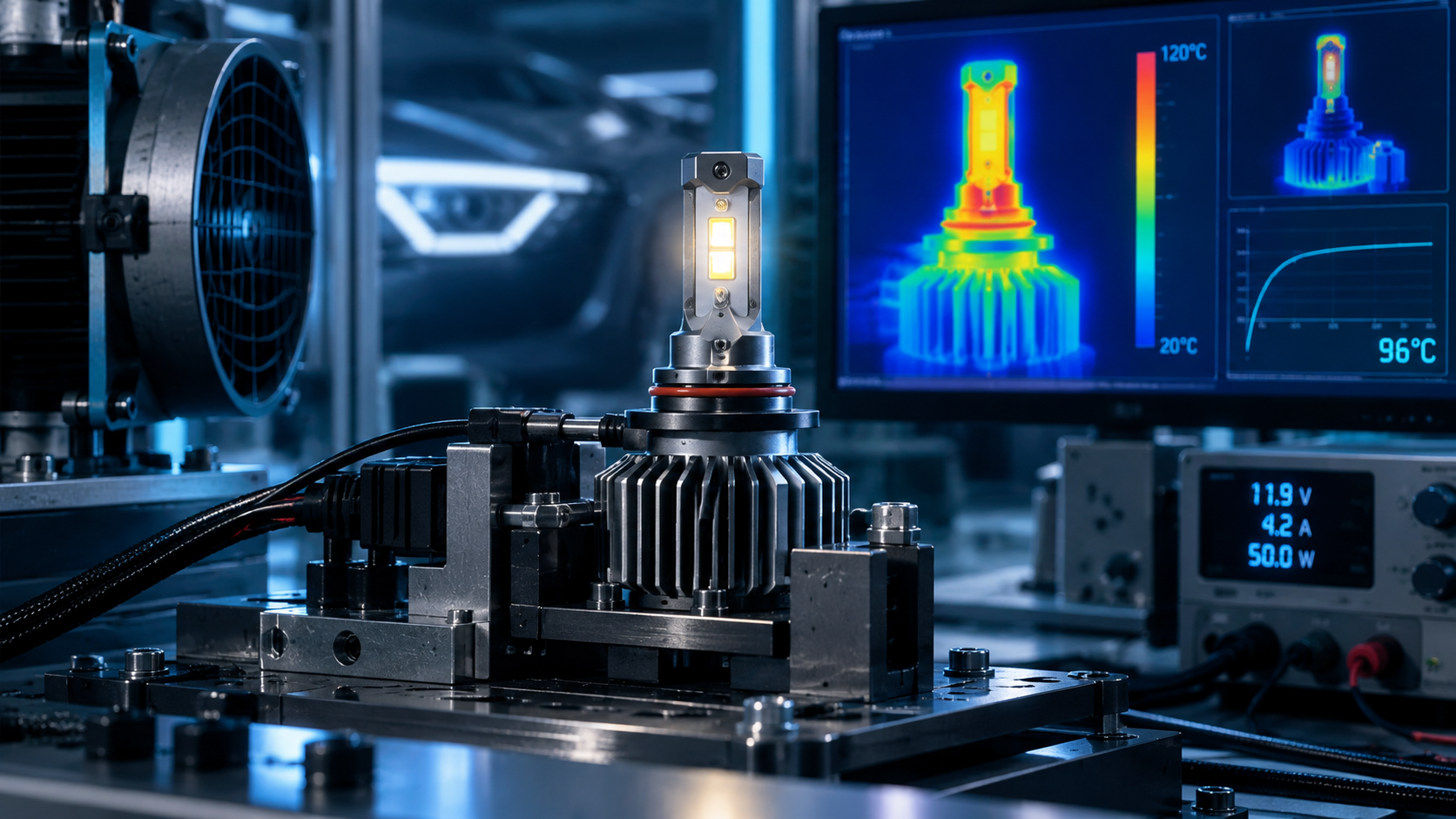
Heat management influences the operating stability of automotive LED lighting. Thermal evaluation should therefore be part of sample approval rather than treated as a separate technical detail.
- Observe where heat is concentrated.
- Check whether the cooling structure functions as intended.
- Check whether any fan operates normally, if the design uses one.
- Observe whether output changes significantly as temperature rises.
- Listen for unusual vibration or noise.
- Inspect surrounding components for signs of thermal stress.
- How is heat transferred away from the LED source?
- Which components are responsible for heat dissipation?
- Does the product use active or passive cooling?
- Which parts are most temperature-sensitive?
- How is thermal performance checked during product validation?
Inspect the Lens, Housing and Mechanical Construction
Optical performance is only part of product quality. Before bulk ordering, inspect the physical sample carefully.
Lens condition, reflector surface and cutoff shield alignment.
Housing finish, screws, fasteners and component alignment.
Mounting points, wiring, connectors and driver placement.
Small physical differences that appear insignificant on a desk can become major fitment or optical problems during installation.
Verify Dimensions and Fitment Before Approving the Product
Bi-LED projector lenses are available in different physical formats and sizes. A product should be checked against the actual installation environment rather than selected only from a product photograph or nominal lens diameter.
- Overall projector dimensions
- Lens diameter
- Rear clearance
- Mounting dimensions
- Connector position
- Driver location
- Available space around cooling components
- Potential interference with the headlamp housing
Where possible, conduct a trial installation in the intended headlamp or a representative fixture.
Check Electrical Stability
Electrical evaluation should be performed using controlled and appropriate test equipment. The goal is to confirm that the projector operates consistently under conditions relevant to its intended application.
- Startup behavior
- Low-beam operation
- High-beam operation
- Repeated switching
- Visible flicker
- Unexpected shutdown
- Driver noise
- Connector stability
- Behavior during extended operation
When comparing suppliers, use the same power source and test procedure. For OEM or customized projects, confirm electrical requirements and interface specifications before sample approval.
Test More Than One Sample
One excellent sample does not prove production consistency. For B2B sourcing, multiple samples should be compared whenever practical.
| Evaluation Area | What to Compare |
|---|---|
| Cutoff | Shape, definition and alignment |
| Hotspot | Position and concentration |
| Beam Width | Lateral distribution |
| Uniformity | Dark zones and uneven illumination |
| High Beam | Switching and forward distribution |
| Thermal Behavior | Stability after warm-up |
| Electrical Behavior | Startup, switching and flicker |
| Mechanical Construction | Fit, assembly and component alignment |
| Dimensions | Repeatability between units |
Do not only ask: “Is this sample good?”
Ask: “Are several samples good in the same way?”
Compare Supplier Samples Under the Same Test Conditions
Supplier comparison only works when the test conditions are standardized.
- Test distance
- Projector mounting height
- Aiming position
- Power supply
- Wall or test screen
- Camera settings, if photographs are used
- Measurement locations
- Warm-up period
- High/low beam test sequence
A repeatable setup creates a basic internal benchmarking system and makes future sample evaluations easier to compare.
Define Acceptance Criteria Before Mass Production
A common sourcing mistake is approving a sample because it “looks good” without defining what must remain consistent during production.
- Approved physical dimensions
- Mounting structure
- Visual workmanship
- Beam characteristics
- Cutoff appearance
- High/low beam function
- Electrical interface
- Thermal behavior
- Packaging requirements
- Labeling requirements
- Agreed customization details
The exact criteria will vary by project. The key is that the buyer and supplier share the same definition of what the approved sample represents.
Keep an Approved Reference Sample
Where appropriate for the sourcing process, an approved reference sample can provide a physical comparison point for future production.
- Optical differences
- Construction changes
- Fitment issues
- Component substitutions
- Production deviations
- Quality complaints
A stronger purchasing reference combines:
Approved Physical Sample + Documented Specifications + Agreed Acceptance Criteria
What Should Buyers Ask the Manufacturer Before Bulk Ordering?
Sample testing should be combined with clear supplier communication.
- Which specifications define the current sample?
- Are production units intended to use the same key components and structure?
- Which dimensions are controlled during production?
- How is beam consistency checked?
- How is the high/low beam mechanism inspected?
- How is thermal performance evaluated?
- Which electrical tests are used?
- How are production changes communicated to the buyer?
- What customization details need to be confirmed before production?
- What information should the buyer provide for fitment or OEM requirements?
Bi-LED Projector Lens Sample Evaluation Checklist
Repeatable Test Conditions and Acceptance Records
Record the projector model, hardware revision, individual sample ID, beam configuration, test distance, mounting height, aiming reference, input voltage at module terminals, warm-up time, ambient conditions and instrument calibration. Fixed camera exposure is necessary for comparable beam photographs; photographs alone are not a substitute for measured illuminance.
| Test | Recorded evidence |
|---|---|
| Optical | Low-beam cutoff, hotspot, lateral spread, high-beam alignment |
| Electrical | Supply voltage, current draw, driver stability, switching cycles |
| Thermal | Warm-state output, temperature points, cooling behavior |
| Mechanical | Module dimensions, shield alignment, mounting, connectors |
| Production | Approved sample, revision, lot traceability, change control |
Define sampling quantities, defect categories and acceptance tolerances with the supplier before production. A single acceptable unit does not establish lot consistency. Screen-based optical checks do not establish road legality or replace applicable complete-headlamp approval requirements.
Application
- Target application
- Projector size
- Installation space
- Mounting requirements
Optical Performance
- Low-beam cutoff
- Hotspot position
- Beam width
- Uniformity
- High-beam distribution
Operating Stability
- Extended operating test
- Output stability
- Flicker
- Switching consistency
- Thermal behavior
Mechanical Quality
- Lens and reflector
- Shield alignment
- Housing and fasteners
- Wiring and connectors
- Mounting points
Consistency
- Multiple sample comparison
- Optical variation
- Dimension variation
- Construction consistency
Production Readiness
- Acceptance criteria
- Customization details
- Approved configuration
- Reference sample
Quality Evaluation Is a Process, Not a Single Specification
There is no single specification that proves a Bi-LED projector lens is suitable for a B2B order. Brightness, lens size and appearance can each provide useful information, but purchasing decisions should be based on how the complete product performs.
Optics + Thermal Behavior + Electrical Stability + Mechanical Fit + Consistency + Production Readiness
For distributors, importers and automotive lighting brands, this approach reduces dependence on marketing specifications and creates a more repeatable method for comparing supplier samples before moving toward bulk production.
Supplier approval should include Bi-LED projector selection criteria such as target application, fitment dimensions, optical requirements, thermal behavior and documented configuration.
View Projector LensContact UsFAQ
Is brightness enough to approve a Bi-LED projector lens?
No. Approval should also examine low-beam cutoff, hotspot, usable width, high-beam switching, thermal stability, electrical performance, fitment and sample consistency.
What test conditions must remain consistent across Bi-LED projector samples?
Use the same projector-to-screen distance, mounting and aiming reference, voltage, warm-up interval, ambient conditions and fixed camera exposure. Record equipment calibration and measurement positions where relevant.
How should low- and high-beam switching be tested?
Verify the specified electrical trigger, repeat switching cycles, compare both beam distributions and confirm that the cutoff shield reliably returns to its low-beam position.
Why is warm-state performance important?
LED output, driver stability and cooling behavior may change as temperature rises. Compare optical and electrical performance after a defined operating interval under representative conditions.
How many samples should buyers test before a bulk order?
There is no universal sample count. Agree on a sampling plan, defect categories, critical dimensions and acceptance limits based on project risk, intended application and production volume.
What is an approved reference sample?
A retained, identified unit with an agreed model revision and documented optical, electrical, mechanical and cosmetic acceptance characteristics. The sample complements measurable specifications rather than replacing them.
Can a wall beam test confirm road legality?
No. Wall tests are useful for comparison but do not substitute for required photometric approval or final headlamp installation compliance in the destination market.
What should be documented before mass production?
Document the approved configuration, drawings, sample identifiers, test conditions, acceptance limits, supplier inspection plan, change-control process and traceability requirements.
- Why Test Bi-LED Projector Lenses Before Bulk Ordering?
- Start With the Intended Vehicle and Application
- Check the Low-Beam Cutoff
- Evaluate Hotspot, Beam Width and Light Distribution Together
- Hotspot
- Beam Width
- Foreground Distribution
- Uniformity
- Test High-Beam Operation Separately
- Compare Brightness Stability, Not Just Initial Brightness
- Evaluate Thermal Performance During Extended Operation
- Inspect the Lens, Housing and Mechanical Construction
- Verify Dimensions and Fitment Before Approving the Product
- Check Electrical Stability
- Test More Than One Sample
- Compare Supplier Samples Under the Same Test Conditions
- Define Acceptance Criteria Before Mass Production
- Keep an Approved Reference Sample
- What Should Buyers Ask the Manufacturer Before Bulk Ordering?
- Bi-LED Projector Lens Sample Evaluation Checklist
- Repeatable Test Conditions and Acceptance Records
- Application
- Optical Performance
- Operating Stability
- Mechanical Quality
- Consistency
- Production Readiness
- Quality Evaluation Is a Process, Not a Single Specification
- FAQ
How to Choose High-Quality LED Headlight Bulbs?
How to Test the Thermal Performance of LED Headlights Before Bulk Ordering
Contacts
EKLIGHT
WhatsApp/Phone
EK-V7S Fan-Cooled LED Headlight Bulb | OEM Wholesale
EK-V7S Fan-Cooled LED Headlight Bulb | OEM Wholesale
EK-V2 Fan-Cooled HGL3 5530 LED Headlight Bulbs H4/H7/H11/9006 | OEM
EK-V2 Fan-Cooled HGL3 5530 LED Headlight Bulbs H4/H7/H11/9006 | OEM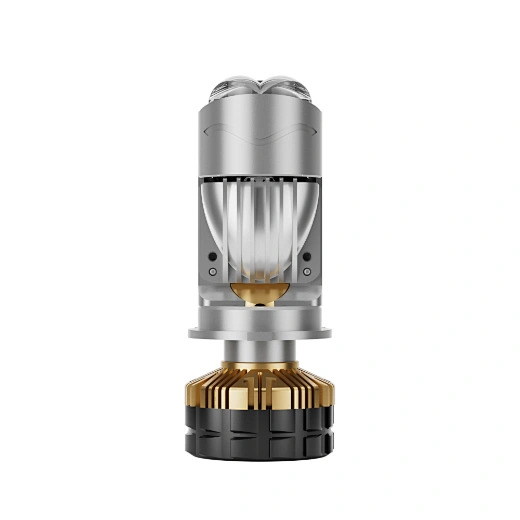
Mini H4 Bi-LED Projector Lens with Custom Optical Design | OEM Supply
Mini H4 Bi-LED Projector Lens with Custom Optical Design | OEM Supply
T10 194/168 CANbus LED Interior and License Plate Bulbs | Wholesale
T10 194/168 CANbus LED Interior and License Plate Bulbs | WholesaleDon’t Miss Our Latest Insights
Enjoying this article?
Subscribe to receive more industry insights, product updates, and automotive lighting innovations from EKLIGHT.
Stay informed and ahead of the market.
EKLIGHT delivers innovative, high-quality LED lighting solutions trusted by global partners.
We empower businesses with reliable products that enhance performance and drive success.
Contact EKLIGHT
Address : Building C, Dehuiwanggang Industrial Zone, No. 38 Wanggang Industrial three road, Baiyun district, Guanghzou, Guangdong province, China.
© 2026 EKLIGHT. All Rights Reserved.
EKLIGHT
EK
EK
EK
EK