


How to Test the Electrical Performance of Automotive LED Headlights Before Bulk Ordering
Follow us now:
Automotive LED headlights can appear normal during a quick visual check while still showing electrical differences that may affect long-term use, installation compatibility or batch consistency.
For B2B buyers, electrical evaluation should go beyond simply confirming that the light turns on.
A practical electrical test helps buyers compare samples, identify unstable behavior and establish clearer expectations before bulk ordering.
Start With a Consistent Electrical Test Setup
Electrical comparisons are only meaningful when the test conditions are controlled.
Different power supplies, wiring resistance, connector quality or input settings can influence the result. Before comparing samples, keep the basic setup consistent.
Use the same power source, wiring arrangement, connectors and measurement method whenever possible so differences between samples are easier to identify.
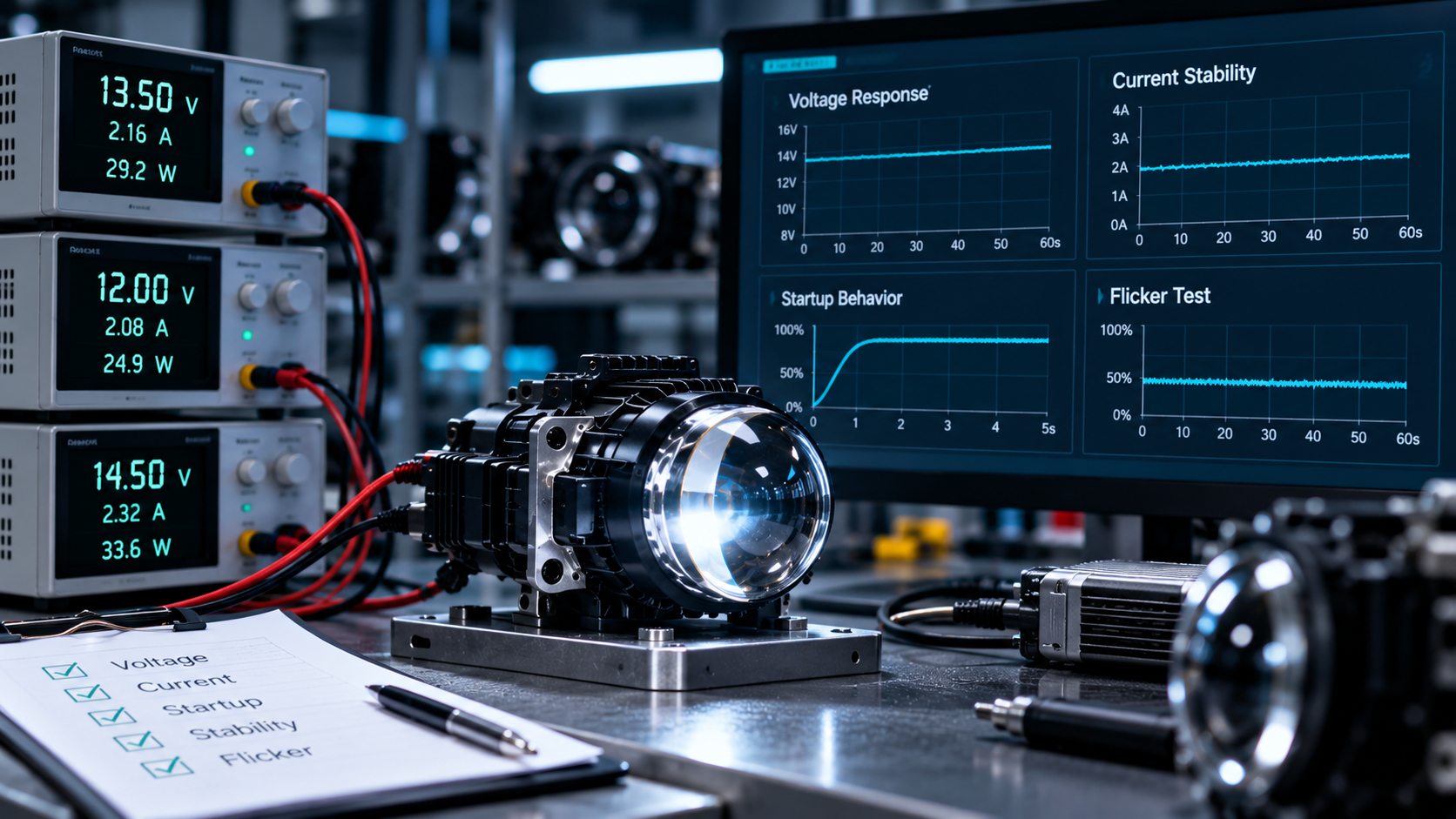
Observe Startup Behavior
Startup is one of the first electrical behaviors to check.
A product should power on in a predictable way without obvious delay, repeated restarting or unstable initial output.
Similar units power on consistently under the same test conditions.
Noticeable delay, repeated restart or unstable initial output deserves further investigation.
Check Voltage Response Within the Intended Operating Range
Automotive electrical systems do not always operate at one perfectly fixed voltage.
It is therefore useful to observe whether the product remains stable across the voltage range relevant to the intended application.
The goal is to confirm that normal input variation does not create unexpected flicker, restart behavior or obvious instability.
Buyers should use the supplier-confirmed operating range as the basis for evaluation rather than inventing unsupported test limits.
Monitor Current Behavior
Current behavior can provide useful information about how consistently the product and driver operate.
A single current reading is not enough to judge the entire electrical system.
Check whether current remains reasonably stable after startup.
Similar products should show reasonably comparable behavior under the same conditions.
Large or unexplained variation may indicate differences in driver behavior, component selection or assembly.
Check for Flicker or Repeated Instability
Visible flicker is one of the clearest signs that an electrical system may not be operating consistently.
However, instability may also appear intermittently rather than continuously. Buyers should therefore observe the product during extended operation rather than only during the first few seconds.
If flicker, restart behavior or irregular output appears only after warm-up, the electrical result should be considered together with thermal behavior.
Electrical stability after warm-up should be evaluated alongside temperature stabilization and cooling-system performance, because thermal protection can change current and light output during sustained operation.
Compare Driver Behavior Across Multiple Samples
For many automotive LED products, the driver is a critical part of the electrical system.
Multiple samples can be checked for similar startup behavior, current stability and response under the same input conditions.
Compare tested units against identical supplier sample evaluation conditions, including input voltage, startup state, operating duration and fixture wiring.
Do Not Evaluate Electrical Performance in Isolation
Electrical behavior interacts with thermal performance, optical output and mechanical design.
One product may remain electrically stable while thermal conditions change its light output. Another may maintain acceptable temperature behavior but show inconsistent startup or driver operation.
| Electrical Check | What to Observe |
|---|---|
| Startup | Delay, restart or abnormal initial behavior |
| Voltage Response | Stability across intended input conditions |
| Current Behavior | Trend and consistency after startup |
| Flicker | Visible or intermittent instability |
| Driver Operation | Repeatable behavior across samples |
| Extended Operation | Changes after the product has been running |
| Repeatability | Variation between multiple units |
Compare Electrical Results Across Production Units
Electrical testing becomes even more valuable after sample approval.
Once production begins, selected units can be compared against the approved reference to determine whether driver behavior, startup characteristics and current patterns remain consistent.
The goal is not to inspect every unit with the same depth as a development sample. The goal is to preserve the electrical characteristics that were accepted during evaluation.
Repeated differences between approved samples and production units require batch traceability and change-control checks for driver revisions, components, assembly and production test results.
Electrical Quality Is About Stable, Repeatable Operation
The strongest electrical product is not necessarily the one with the highest current reading or the most aggressive output at startup.
For B2B buyers, the more useful characteristics are stability, predictability and repeatability.
Verify basic startup and correct connector identification.
Check repeatable startup, voltage response, warm operation and unit-to-unit consistency against approved limits.
Electrical Test Matrix for Bulk-Order Sample Approval
A defensible test plan uses the supplier-confirmed voltage range, product revision, wiring layout and approved reference sample. The table below defines what to record, not universal pass/fail values. Current, power and voltage limits must come from the purchased model specification, not from nominal wattage printed on packaging.
| Test point | Method and evidence | Potential nonconformity |
|---|---|---|
| Product and wiring | Confirm SKU, base/connector, polarity rules, driver revision, supply and load connections | Wrong configuration, loose terminal or unsuitable fixture |
| Startup and cycling | Record cold start, restart behavior, delays and repeatability across samples | Repeated reset, delayed startup, intermittent operation |
| Input-voltage response | Measure at agreed low, nominal and high input within the rated range, recording at the product terminals | Unexpected flicker, drop-out, uncontrolled current |
| Current and input power | Log voltage and current together at defined times; calculate input power for a stable DC test as P = V × I | Variation beyond approved limits, unexplained drift |
| Warm operation | Observe stabilized operation and repeat current, power and output checks in the intended cooling setup | Thermal-related restart or unexpected instability |
| Flicker and vehicle interface | Check visible instability and, where applicable, driver ripple and vehicle-system compatibility using agreed methods | Repeatable flicker, warning, or interface fault under specified conditions |
Supply voltage should be measured at the product terminals whenever possible, since long or undersized leads may introduce voltage drop. A lab DC power supply does not reproduce every vehicle-network condition, and a simple visual flicker check is not a substitute for an agreed electrical or photometric waveform measurement.
Recording Results and Making a Supplier Approval Decision
Record each sample by SKU, lot, driver revision and fixture ID. The minimum record contains supply model, input voltage at the terminals, startup condition, current and input power at defined time points, ambient and operating conditions, observed flicker or restart events, operator and date. Where a beam or light-output claim is evaluated, the optical measurement equipment and geometry must also be controlled.
How to Handle Abnormal Readings
First exclude fixture errors: verify wiring, connectors, supply current capacity, voltage drop and measurement instrument settings. Repeat the test under the same documented conditions. If a fault remains, separate the affected samples, check whether it appears across the lot, and request driver-component traceability and production test records from the supplier.
Accept or reject a lot only against the agreed specifications, defect classification and buyer-approved sampling plan. Do not infer that all units are defective from one unverified anomaly, and do not replace a failed measurement without retaining the original record. The incoming lot inspection procedure should connect the technical finding to quarantine, supplier investigation, corrective action and release authorization.
Test Boundaries That Matter
Steady-state DC bench checks do not automatically verify transient immunity, electromagnetic compatibility, environmental durability or regulatory approval. Those requirements need a separate test plan appropriate to the target vehicle and sales market. Likewise, a stable electrical input does not prove acceptable glare or beam distribution; cutoff, hotspot and beam-width acceptance require a controlled optical setup.
Example LED Headlight Configurations for Electrical Sample Testing
Fan-cooled and fanless bulbs have different operating constraints. The EKLIGHT examples below illustrate what should be checked in the approved test fixture; product-page specifications must be verified for the exact SKU and ordered revision.


Electrical Stability Matters Before Bulk Ordering
A practical electrical evaluation should confirm that startup behavior, voltage response, current trends and driver operation remain stable and repeatable under the intended test conditions.
Stable Startup + Predictable Response + Driver Consistency + Multi-Unit Verification
That provides a more useful basis for sourcing decisions than simply confirming that the product powers on.
Electrical quality is about stable, predictable and repeatable operation.
Explore Bi-LED Projector LensesContact UsFAQ
Why is electrical testing important before bulk ordering automotive LED headlights?
Electrical testing helps B2B buyers verify that the product starts, operates and responds consistently under intended electrical conditions. It can reveal unstable startup, flicker, irregular driver behavior or variation between samples that may not be obvious during a quick visual check.
What should remain consistent during an automotive LED electrical test?
The power source, wiring arrangement, connectors and measurement method should remain as consistent as possible. A repeatable setup makes differences between samples easier to identify and reduces the chance that the test setup itself is causing the variation.
What should buyers observe during LED headlight startup?
Buyers can observe whether the product powers on predictably without unusual delay, repeated restarting or unstable initial output. Comparing several units under the same conditions helps show whether startup behavior is repeatable.
How should voltage response be evaluated?
The product should be evaluated within the supplier-confirmed operating range for the intended application. The goal is to see whether normal input variation causes unexpected flicker, restart behavior or other obvious instability, rather than forcing the product outside its designed range.
Is one current reading enough to judge electrical performance?
No. A single current reading provides limited information. It is more useful to observe the current trend after startup and compare multiple samples under the same conditions to see whether their behavior remains reasonably stable and consistent.
Why should flicker and instability be checked during extended operation?
Some electrical instability appears only after the product has been running and heat has built up. If flicker, restart behavior or irregular output appears after warm-up, the electrical result should be considered together with the product's thermal behavior.
Why should driver behavior be compared across multiple LED headlight samples?
The driver is a critical part of many automotive LED products. Comparing multiple samples can reveal whether startup behavior, current stability and response to the same input conditions are consistent or whether meaningful unit-to-unit variation exists.
What is the main goal of automotive LED headlight electrical testing?
The goal is to confirm stable, predictable and repeatable operation under the intended electrical conditions. For B2B sourcing, that is more useful than simply confirming that one sample can turn on.
- Start With a Consistent Electrical Test Setup
- Observe Startup Behavior
- Check Voltage Response Within the Intended Operating Range
- Monitor Current Behavior
- Check for Flicker or Repeated Instability
- Compare Driver Behavior Across Multiple Samples
- Do Not Evaluate Electrical Performance in Isolation
- Compare Electrical Results Across Production Units
- Electrical Quality Is About Stable, Repeatable Operation
- Electrical Test Matrix for Bulk-Order Sample Approval
- Recording Results and Making a Supplier Approval Decision
- How to Handle Abnormal Readings
- Test Boundaries That Matter
- Example LED Headlight Configurations for Electrical Sample Testing
- EK-V2 Fan-Cooled LED Headlights
- EK-V1 Fanless LED Headlights
- Electrical Stability Matters Before Bulk Ordering
- FAQ

Fog Light Lens Beam Pattern: How Wide Coverage and Low-Mounted Lighting Affect Visibility
Fog Light Lens Supplier Evaluation for B2B Buyers
Contacts
EKLIGHT
WhatsApp/Phone

3.0-Inch Bi-LED Projector Headlight Lens | Wholesale Retrofit Supply
3.0-Inch Bi-LED Projector Headlight Lens | Wholesale Retrofit Supply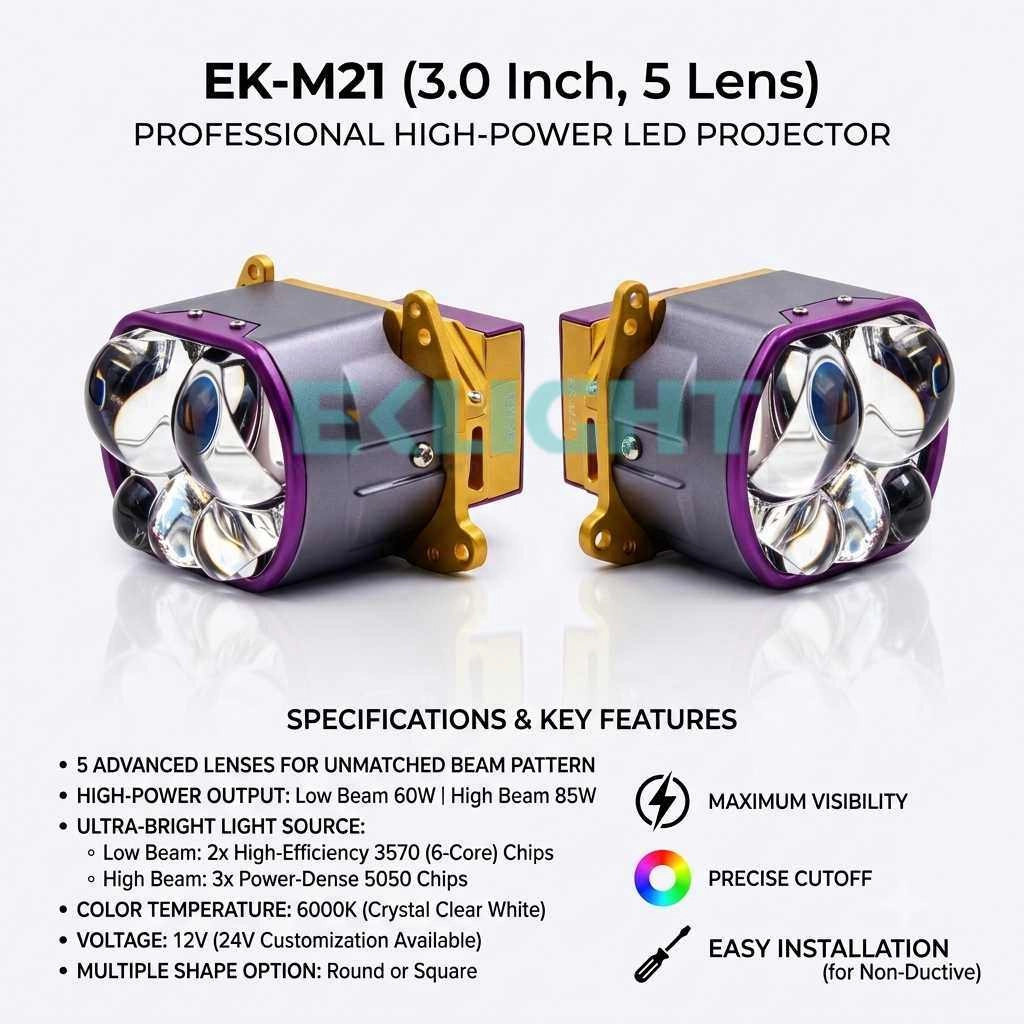
EK21 3.0-Inch Bi-LED Projector Lens 60W/85W | Factory Supply
EK21 3.0-Inch Bi-LED Projector Lens 60W/85W | Factory Supply
H11 LED Headlight Bulbs for Projector Headlamps | Wholesale
H11 LED Headlight Bulbs for Projector Headlamps | Wholesale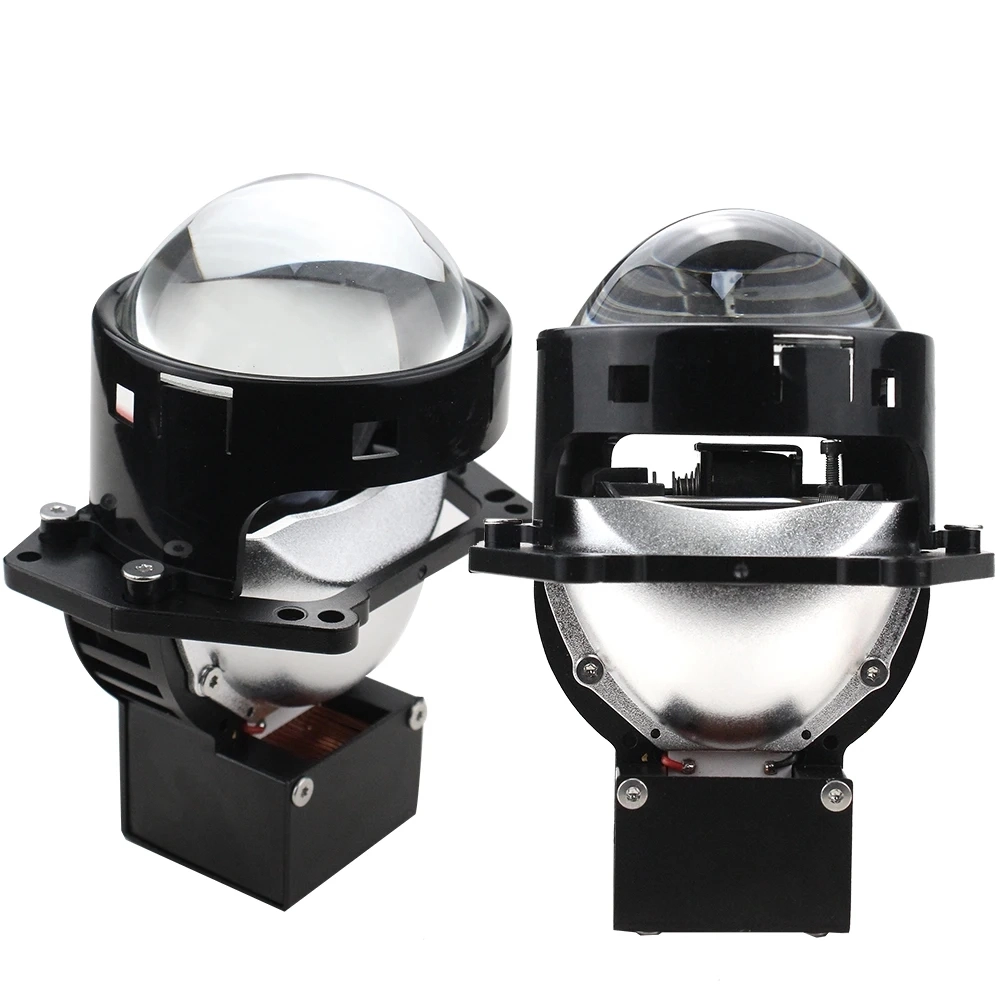
3.0-Inch 160W Dual-LED Projector Lens 12000LM 12V | OEM Supply
3.0-Inch 160W Dual-LED Projector Lens 12000LM 12V | OEM SupplyDon’t Miss Our Latest Insights
Enjoying this article?
Subscribe to receive more industry insights, product updates, and automotive lighting innovations from EKLIGHT.
Stay informed and ahead of the market.
EKLIGHT delivers innovative, high-quality LED lighting solutions trusted by global partners.
We empower businesses with reliable products that enhance performance and drive success.
Contact EKLIGHT
Address : Building C, Dehuiwanggang Industrial Zone, No. 38 Wanggang Industrial three road, Baiyun district, Guanghzou, Guangdong province, China.
© 2026 EKLIGHT. All Rights Reserved.
EKLIGHT
EK
EK
EK
EK