


Why Mini LED Headlight Bulbs Fit More Original Headlamp Housings

A mini LED headlight bulb can fit a wider range of original headlamp housings because its compact architecture reduces the space required around the bulb base, rear heat sink, fan, wiring connector, and protective dust cap. In automotive lighting procurement, compatibility is determined by the complete installation envelope rather than by the bulb socket alone. A reliable retrofit must preserve the original mounting interface, place the light-emitting surface close to the halogen filament position, maintain sufficient thermal clearance, and avoid interference with the reflector, projector shield, retaining spring, or rear cover. These characteristics make compact LED retrofit lamps attractive for distributors, workshops, vehicle accessory brands, and fleet operators seeking broad vehicle coverage without extensive housing modification.
How Compact LED Retrofit Architecture Improves Housing Compatibility
Reduced rear depth solves the most common installation constraint
Many original headlamp assemblies were designed around halogen capsules with relatively predictable rear dimensions. When a replacement lamp adds a large heat sink, external driver, rigid cable, or oversized cooling fan, the rear dust cap may no longer close. An enclosed headlamp can then face moisture ingress, contamination, condensation, and premature electronic failure. A compact LED replacement reduces rear projection and places more of the thermal and electrical system within the available envelope. This is particularly valuable in projector headlamps and modern engine bays where the lamp access opening is narrow and adjacent components leave little room for retrofit hardware.
For a buyer, the relevant specification is not simply overall lamp length. The installation drawing should identify the distance from the mounting flange to the furthest rear component, the maximum body diameter, connector orientation, cable bend radius, and the required clearance behind the housing. Suppliers that provide these dimensions help project owners map a product against vehicle applications before purchasing inventory.
Smaller bodies preserve retaining hardware and dust-cap access
Original headlamp housings commonly use spring clips, twist-lock collars, bayonet mounts, or dedicated adapters. A retrofit body that is too wide can block the retaining mechanism or prevent the bulb from reaching its designed seating position. A short, narrow base gives the installer more room to engage the original clip and reduces the risk of forcing the lamp into an incorrect angle. This matters because even a small rotational error can alter the cutoff line, hot spot, glare pattern, and road illumination.
Compact construction also helps preserve the factory dust cap. Maintaining the cap is an operational requirement, not a cosmetic preference: it protects the optical chamber from water, road dust, salt, and insects. A product that requires drilling the cap or leaving the rear opening exposed may create warranty disputes and inconsistent workshop results. Buyers should therefore request fitment information for both open-back and sealed headlamp assemblies.
Emitter placement is as important as physical size
The light source must be positioned accurately in relation to the original filament location or the optical focal point of a projector module. A very bright replacement can still produce poor road performance if its emitters are too far forward, too far back, too thick, or incorrectly rotated. Thin LED chips mounted on opposing faces can more closely reproduce the geometry of a traditional filament than bulky multi-directional light sources. This supports a sharper beam pattern and reduces uncontrolled light entering the upper part of the reflector.
Road lighting requirements differ by market, so compatibility should be assessed alongside photometric performance. The United Nations Economic Commission for Europe lighting regulations provide an important reference for approved lamp and headlamp performance in markets using UNECE vehicle regulations. A replacement part should never be evaluated only by claimed lumens; beam distribution, glare control, color stability, and legal application are equally important.
Engineering Factors Behind Broader Vehicle Fitment
Thermal management must fit inside the available envelope
LEDs convert a substantial portion of electrical input into heat at the junction and substrate even when they are more efficient than halogen technology in many applications. That heat must move through the circuit board, thermal interface, metal body, and cooling system. A compact lamp therefore requires a carefully designed heat path rather than simply a smaller heat sink. Aluminum bodies, conductive interfaces, high-temperature components, and optimized fin geometry can transfer heat without creating excessive rear bulk.
Active cooling can provide high thermal performance, but a fan increases depth, noise, moving-part exposure, and potential maintenance risk. Passive cooling can simplify the assembly, although it requires careful control of current, thermal resistance, and ambient temperature. Buyers should compare stabilized output, thermal derating behavior, and endurance test results instead of selecting a product based only on initial brightness.
Driver integration affects both fit and reliability
The LED driver regulates current and protects the light source from voltage variation, transients, and thermal stress. An external driver may improve serviceability but can complicate installation where the headlamp cavity is crowded. An integrated driver creates a cleaner installation and reduces loose components, provided the electronics are adequately protected and the housing can dissipate heat.
Vehicle electronics add another layer of complexity. Modern cars may monitor bulb load, detect open circuits, or use pulse-width modulation. A retrofit may require a compatible decoder or load-management solution, but adding resistors can generate significant heat and should not be placed against plastic or wiring. Suppliers should document operating voltage, current behavior, electromagnetic compatibility testing, error-code solutions, and vehicle-specific limitations. Product development teams can also use the principles of ISO 26262 functional safety as a reference when assessing electronic risks in vehicle-related systems, while recognizing that a replacement bulb is not automatically an ISO 26262-certified safety component.
Base design and adjustment improve installation accuracy
Interchangeable collars, adjustable locking rings, and correctly engineered adapters allow one lamp platform to serve multiple socket families without making the central body excessively large. An adjustable collar can help installers align the LED chips horizontally, which is essential for reflector and projector optics designed around a halogen filament. However, adjustment mechanisms must lock securely against vibration and repeated service access.
Socket compatibility should be verified at three levels: mechanical engagement, electrical connection, and optical alignment. A lamp may enter an H7-style opening but still fail if the retaining spring cannot close, the connector contacts are reversed, or the emitter plane is misaligned. A professional fitment database should record vehicle generation, headlamp type, socket standard, adapter requirement, dust-cap condition, and any dashboard error behavior.
| Evaluation factor | Conventional bulky retrofit design | Compact LED retrofit design | Procurement implication |
|---|---|---|---|
| Rear installation depth | Often requires additional cavity space for a large heat sink, fan, or external driver | Designed to reduce rear projection and simplify dust-cap closure | Check flange-to-rear dimension against the vehicle housing before ordering |
| Emitter geometry | May use thick or multi-directional light-source arrangements | Can use thin opposing emitters positioned near the original focal geometry | Request beam-pattern and alignment data, not only lumen claims |
| Thermal strategy | May depend on a large external cooling assembly | Uses integrated conduction, optimized body design, and controlled power | Compare stabilized output and temperature testing at operating conditions |
| Installation work | May require an external driver location, cap modification, or extra wiring | More likely to support plug-and-play installation when the application is validated | Assess labor time, sealing integrity, and technician error risk |
| Vehicle electronics | External components may be added to address warning lights or flicker | Integrated driver and application-specific decoding may reduce loose hardware | Validate CAN bus behavior and avoid unsafe resistor placement |
What Buyers Should Verify Before Approving a Compact Headlamp Retrofit
Use application data instead of socket-only cataloging
Socket labels are useful starting points but do not guarantee universal fitment. The same nominal base may appear in different vehicle headlamp layouts with different retaining clips, dust-cap depths, projector clearances, or wiring arrangements. A distributor building a catalog should combine socket data with vehicle make, model, year, headlamp technology, installation images, and dimensional drawings. Sampling across representative vehicles is more reliable than assuming that one successful installation proves broad compatibility.
For fleet or regional programs, buyers should define acceptance criteria before volume purchasing. These may include installation time, no-modification mounting, closed dust cap, stable beam cutoff, absence of dashboard warnings, measured current draw, and operation after thermal cycling. Clear criteria reduce returns and make supplier comparisons more objective.
Validate beam performance, not just brightness claims
Marketing claims can use different test conditions, drive currents, and measurement methods. A high peak lumen figure does not indicate how much useful light reaches the road or whether glare is controlled. Buyers should request low-beam and high-beam photometry, cutoff images, color temperature tolerance, startup behavior, and output after thermal stabilization. Testing should use the intended headlamp housing because reflector geometry and projector shields strongly influence the final result.
Headlamp replacement also intersects with local approval rules. The U.S. National Highway Traffic Safety Administration vehicle lighting guidance explains the role of lighting in vehicle safety, while national authorities may apply additional requirements to replacement parts. A supplier should identify whether a product is intended for off-road use, aftermarket replacement, or an approved road-legal application in a particular jurisdiction.
Audit quality systems and long-term supply capability
Fitment is only one part of procurement risk. Batch-to-batch variation in LED positioning, driver calibration, connector molding, sealing, or thermal materials can create inconsistent field results. Buyers should examine incoming inspection, optical alignment controls, burn-in testing, vibration testing, water-resistance evaluation, and traceability procedures. The ISO 9001 quality management standard offers a recognized framework for evaluating process control, corrective action, and customer-focused quality systems.
Commercial continuity also matters. A supplier should be able to maintain component availability, communicate engineering changes, support private labeling where required, and provide replacement or warranty procedures. For brand owners, a stable platform with documented revisions is usually more valuable than a low initial price attached to an inconsistent product family.
Why EKLIGHT Is a Practical Partner for Automotive Lighting Programs
More than 16 years focused on LED automotive products
EKLIGHT has specialized in manufacturing high-quality LED automotive products for more than 16 years. Our product development and manufacturing approach is built around the requirements that determine real-world retrofit success: controlled dimensions, reliable electrical design, stable thermal performance, optical consistency, and repeatable production. This experience enables our team to support buyers that need more than a generic catalog item.
Our quality commitment is central to every product program. We apply structured manufacturing controls and product evaluation to help partners reduce installation complaints, premature failures, inconsistent beam results, and avoidable returns. For distributors and automotive accessory brands, that quality focus supports stronger customer confidence and more predictable after-sales costs.
A broader product portfolio supports complete lighting programs
Our range includes LED headlight bulbs for common replacement applications, exterior and interior bulbs for vehicle-wide upgrades, Bi-LED projector lenses for optical system development, Mini Projector LED Bulbs for compact projector solutions, and Driving Lights for supplemental forward illumination. This portfolio allows project owners to consolidate more automotive lighting requirements with one experienced manufacturer while selecting products according to the vehicle platform and use case.
Product breadth is especially useful for distributors that serve multiple customer segments. A workshop may need a compact replacement for a sealed factory housing, while a vehicle accessory brand may require projector modules or driving lamps for a new package. Coordinated sourcing can simplify packaging, technical documentation, quality communication, and inventory planning.
Continuous innovation supports changing market requirements
Our team invests in new LED lighting technologies each year so partners can respond to evolving vehicle platforms, installation constraints, and customer expectations. Development priorities include compact mechanical structures, improved light-source positioning, efficient thermal paths, dependable drivers, and application-focused optical performance. Innovation is treated as a commercial tool: the objective is to help partners introduce products that solve genuine fitment and reliability problems.
EKLIGHT combines technical development, manufacturing capability, and a partner-focused approach. Buyers can evaluate our products through application samples, dimensional information, performance discussions, and project-specific requirements before committing to volume. That process helps align product selection with target vehicles, local regulations, expected service conditions, and the commercial positioning of the buyer’s brand.
For automotive lighting procurement teams, the central lesson is clear: a compact lamp succeeds when mechanical fit, optical geometry, heat control, electronics, sealing, and quality assurance work together. Choosing a smaller design should not mean accepting weaker performance; it should mean selecting a better-engineered product for the constraints of original equipment housings. With its long-term industry focus, expanding LED product portfolio, and continued investment in innovation, EKLIGHT is positioned to support distributors, brand owners, workshops, and project operators seeking dependable automotive lighting solutions.
Frequently Asked Questions
Why do compact LED retrofit bulbs fit more original headlamp housings?
They reduce rear projection and overall body size, allowing more clearance for dust caps, retaining clips, wiring, and nearby engine-bay components while preserving the original socket interface.
Does a smaller LED bulb always provide better beam performance?
No. Beam performance also depends on emitter placement, rotational alignment, driver control, thermal stability, and the optical design of the original reflector or projector.
What dimensions should buyers request before ordering?
Buyers should request the distance from the mounting flange to the furthest rear component, maximum body diameter, connector orientation, cable bend radius, collar dimensions, and required dust-cap clearance.
Can a compact retrofit work with modern vehicle electronics?
It may, but compatibility depends on the vehicle's bulb monitoring, pulse-width modulation, voltage behavior, and CAN bus system. Application testing may be needed to prevent flicker or dashboard warnings.
Why is dust-cap closure important after an LED conversion?
A closed dust cap protects the headlamp chamber from water, condensation, road dust, salt, and insects. Modifying or leaving the cap open can increase reliability risks and create warranty concerns.
What should distributors evaluate besides lumen output?
Distributors should evaluate beam pattern, cutoff control, stabilized thermal output, color consistency, installation dimensions, electrical compatibility, quality controls, legal application, warranty support, and supply continuity.
What automotive lighting products does EKLIGHT provide?
EKLIGHT provides LED headlight bulbs, exterior and interior bulbs, Bi-LED projector lenses, Mini Projector LED Bulbs, and Driving Lights for different vehicle lighting and aftermarket project requirements.

M6 is a high-performance LED lighting solution for headlight retrofit and external working lights. With 9-16V wide voltage, 50W low beam and 60W high beam output, IP68 waterproof protection, and customizable color temperature, it supports OEM/ODM customization for various vehicle applications.
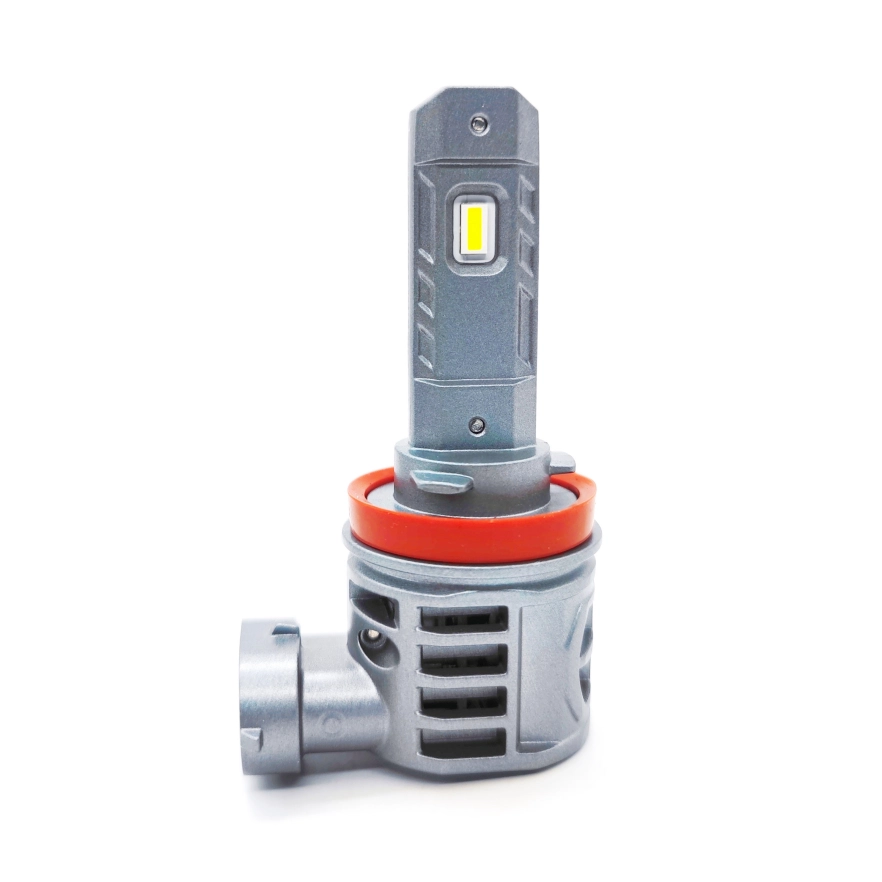
Powered by LatticePower HGL3 5530 LED chips, the EK-V2 delivers 3000LM brightness at 30W. Its all-in-one design and fan-cooled system ensure reliable performance and efficient cooling.
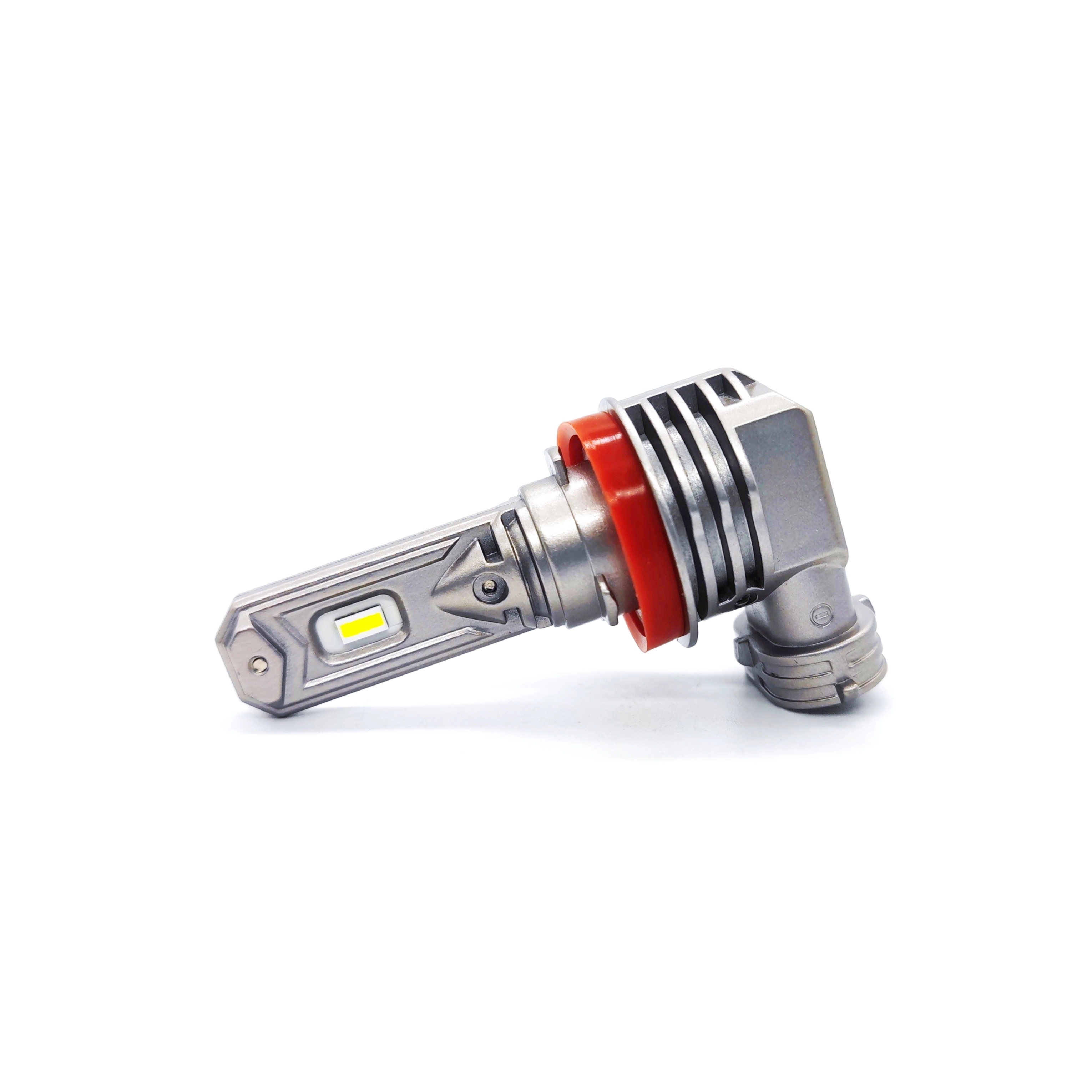
Powered by LatticePower HGL3 5530 LED chips, the V1 delivers 2000LM output in a compact all-in-one design. Fanless cooling provides silent, reliable, maintenance-free performance.
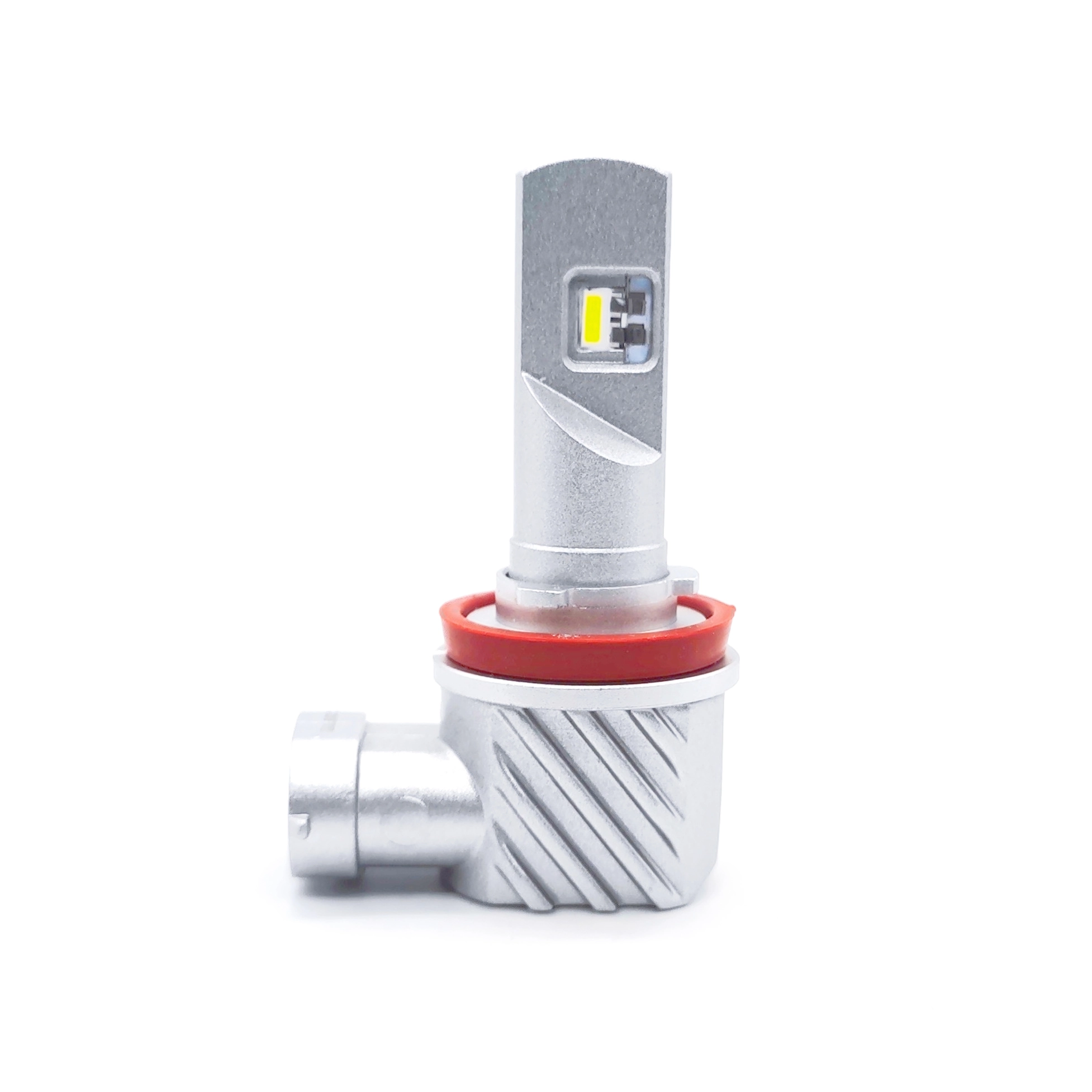
EKLIGHT V3 LED headlight bulb features TST chip technology and fanless design, ensuring efficient heat separation, stable brightness and reliable long-lasting performance.
EKLIGHT delivers innovative, high-quality LED lighting solutions trusted by global partners.
We empower businesses with reliable products that enhance performance and drive success.
Contact EKLIGHT
Address : Building C, Dehuiwanggang Industrial Zone, No. 38 Wanggang Industrial three road, Baiyun district, Guanghzou, Guangdong province, China.
© 2026 EKLIGHT. All Rights Reserved.
EKLIGHT
EK
EK
EK
EK