


Quality-Control Tests for Fan-Cooled LED Headlight Bulbs

A fan-cooled LED headlight bulb should be evaluated as a complete thermal, optical, electrical, mechanical, and environmental system rather than as a high-lumen light source alone. Professional quality control normally includes LED junction-temperature monitoring, airflow and fan verification, photometric beam testing, voltage protection, vibration and shock exposure, moisture and dust resistance, electromagnetic compatibility, acoustic checks, accelerated aging, and production traceability. Buyers should compare test methods, acceptance limits, sample sizes, and corrective-action records before approving a supplier. Requirements may also depend on vehicle type, retrofit application, destination-market regulations, headlamp design, and whether the product is intended for road use or off-road use.
How to Validate Thermal and Optical Performance
Thermal-load testing and heat dissipation
Thermal management is the first control point for an actively cooled LED retrofit. LED output, color stability, driver reliability, and service life are all influenced by operating temperature. A credible test begins with a controlled ambient condition and records input voltage, input current, LED-board temperature, heat-sink temperature, fan speed, and stabilized luminous output. The test should run until the temperature curve reaches a stable plateau rather than stopping after a short demonstration period.
The evaluation should include the actual lamp housing, dust cap, adapter ring, connector, and vehicle-style installation space. A bulb that performs well in open air may experience restricted airflow inside a sealed headlamp. Engineers should therefore test both unrestricted and representative installation conditions. Thermal imaging can identify hot spots, while thermocouples or calibrated resistance sensors can provide repeatable reference measurements. The supplier should define the maximum permitted temperature at the LED substrate, driver components, and connector terminals, then document what happens when the cooling fan slows or stops.
Fan reliability and fail-safe behavior
The miniature fan is a wear component, so its performance requires more than a simple spin check. Incoming inspection should verify starting voltage, operating current, rotational speed, bearing noise, airflow direction, connector polarity, and dimensional compatibility. End-of-line inspection should confirm that the fan starts consistently at the lowest specified supply voltage and continues operating during voltage fluctuation.
A useful failure-mode test deliberately blocks or disconnects the fan and measures the product response. Depending on the design, the driver may reduce power, issue a diagnostic signal, or shut down to protect the LED module. The important procurement question is whether the product fails in a controlled way instead of continuing at an unsafe thermal load. Fan endurance should be combined with thermal cycling and vibration because bearing wear, solder fatigue, and connector loosening can interact in real vehicle conditions.
Photometric and beam-pattern verification
High advertised lumens do not guarantee useful road illumination. The complete lamp must be measured in a suitable goniophotometer or headlamp photometric system to assess luminous intensity, beam cutoff, hot spots, dark zones, glare, color temperature, and left-right consistency. Testing should use the intended headlamp housing and a repeatable installation position because small changes in emitter location can alter the focal relationship with the reflector or projector.
For procurement, the most valuable records are often the beam images and candela distribution rather than a single lumen number. Buyers should ask whether the supplier controls LED placement with mechanical references, whether each bulb is checked for rotational orientation, and whether the product is screened for excessive upward light. Regulatory approval is application-specific. In the United States, vehicle lighting requirements are addressed through NHTSA Federal Motor Vehicle Safety Standards, while many export programs use UNECE requirements such as UNECE vehicle regulations. A supplier should never imply that a generic retrofit is automatically compliant in every market.
Electrical, Environmental, and Mechanical Qualification
Input protection and driver validation
Automotive electrical systems expose LED drivers to cold-crank events, load dumps, reverse polarity, transient spikes, alternator ripple, and unstable battery voltage. A qualification plan should define the operating range and verify constant-current regulation throughout that range. Testing should include overvoltage, undervoltage, short circuit, open circuit, reverse-polarity protection, thermal shutdown, restart behavior, and connector insulation.
Driver validation also needs to examine electromagnetic emissions and immunity. A poorly filtered switching circuit can interfere with radio reception, vehicle communication systems, or nearby electronics. Buyers should request the applicable test method, frequency range, equipment configuration, and pass or fail criteria rather than accepting a general statement such as EMC tested. The IEC CISPR 25 standard is widely referenced for radio-disturbance characteristics of vehicles and components, although the final requirement depends on the vehicle manufacturer and destination market.
Vibration, shock, and connector retention
Headlamp bulbs operate in a high-vibration environment exposed to road impact, engine movement, and thermal expansion. Mechanical qualification should cover random vibration, sinusoidal vibration where specified, mechanical shock, and repeated installation cycles. The test fixture should reproduce the mounting orientation and support points used by the target headlamp rather than clamping the product in a way that eliminates normal movement.
After exposure, inspectors should check for cracked housings, fan imbalance, loose heat sinks, displaced LED boards, solder fractures, damaged insulation, and changes in beam alignment. Connector retention is equally important. A lamp that remains electrically functional but develops intermittent contact can create flicker, diagnostic faults, or a complete lighting failure. Pull-force checks, terminal inspection, and mating-cycle tests help confirm that the harness interface is suitable for distribution at scale.
Water, dust, salt, and temperature cycling
Environmental tests should reflect the installation environment and the enclosure design. Moisture exposure may include humidity, water spray, condensation, and temporary immersion where relevant. Dust testing is important when a cooling fan draws air through or around the lamp assembly. The ISO 20653 road-vehicle ingress-protection framework provides a reference for dust and water protection classifications, but the claimed rating must match the tested configuration.
Temperature cycling reveals problems that a steady-state test can miss. Repeated transitions between low and high temperatures can create seal movement, condensation, solder fatigue, lens stress, and changes in fan lubrication. Salt-spray or cyclic-corrosion testing may be appropriate for exposed metal parts and coastal or winter-road applications. The relevant ISO 16750 environmental testing family can help structure vehicle-component qualification, while the product specification should identify exact severities and durations.
| Control area | Recommended evidence | Procurement risk reduced |
|---|---|---|
| Thermal performance | Stabilized temperature curve, LED-board readings, fan-stop response, and installation-condition results | Premature lumen depreciation, driver failure, and heat damage |
| Optical output | Beam map, candela distribution, cutoff image, color consistency, and sample-to-sample comparison | Glare, poor visibility, nonuniform illumination, and returns |
| Electrical durability | Voltage-transient report, polarity test, current regulation data, and EMC results | Flicker, radio interference, vehicle faults, and unsafe shutdown |
| Environmental sealing | Documented dust, water, humidity, and temperature-cycle method | Corrosion, condensation, short circuits, and field degradation |
| Mechanical integrity | Vibration, shock, connector retention, and post-test inspection records | Loose components, intermittent operation, and beam misalignment |
| Production consistency | Incoming inspection, end-of-line records, lot coding, and corrective-action history | Batch variation, difficult recalls, and warranty exposure |
Building a Supplier Acceptance and Audit Program
From laboratory qualification to production control
Type testing proves that a design can meet a defined requirement; it does not prove that every shipment will be identical. A B2B acceptance plan should separate design validation, pilot-lot approval, and routine production inspection. The plan may specify minimum luminous intensity, maximum current deviation, fan-start performance, dimensional tolerances, connector checks, cosmetic standards, and packaging requirements.
Sampling should be risk-based and documented. Critical characteristics such as LED alignment, driver protection, and fan operation may require 100% end-of-line verification, while destructive environmental tests may be performed by lot or at scheduled intervals. Every test record should identify the product revision, component lot, operator, equipment calibration status, date, and disposition. This information supports root-cause analysis when a distributor reports flicker, noise, dimming, or premature failure.
Questions buyers should ask before approval
Supplier evaluation should focus on evidence and repeatability. Buyers should ask which tests are performed in-house, which are conducted by independent laboratories, and whether the report covers the exact part number and revision being purchased. It is also important to verify whether published lumen figures are measured at the LED, at the bulb, or after thermal stabilization in a headlamp.
Other useful questions include: What is the fan bearing design and expected operating life? How is fan blockage detected? What happens during a voltage transient? Is the driver potted, conformally coated, or mechanically protected? How are LED position and rotation controlled? What is the change-control process for LEDs, fans, phosphors, drivers, and packaging? A supplier that answers these questions with controlled documents is more likely to protect product consistency after the initial order.
Using total cost of ownership as the decision metric
The lowest unit price can become expensive when warranty replacements, installation labor, returns, customer complaints, and reputational damage are included. A total-cost model should compare expected service life, failure rates, installation time, packaging protection, technical support, and replacement logistics. Stable thermal performance can preserve light output, while accurate beam control can reduce complaints that are incorrectly attributed to vehicle headlamp condition.
For fleets and distributors, field data should feed back into supplier reviews. Track return reasons, vehicle applications, ambient conditions, installation errors, fan noise reports, and time to failure. A quarterly quality review can then distinguish product defects from incompatible housings or incorrect installation. This evidence supports better SKU selection and reduces the risk of scaling an unqualified retrofit across multiple markets.
Why EKLIGHT Is a Practical Automotive Lighting Partner
Manufacturing depth and quality orientation
EKLIGHT brings more than 16 years of dedicated expertise in the automotive lighting industry and manufactures a broad range of LED automotive products. Our quality approach is built around controlled design, disciplined manufacturing, and product verification aligned with the performance risks faced by distributors, brand owners, installers, and fleet operators.
Our engineering and manufacturing teams focus on the details that influence field reliability: thermal paths, driver stability, LED positioning, mechanical fit, connector quality, optical consistency, and production traceability. This partner-focused approach helps buyers move beyond marketing claims and establish a repeatable qualification process for each vehicle platform and destination market.
Product coverage for different lighting programs
EKLIGHT supports programs involving led headlight bulbs, Exterior & Interior Bulbs, Bi-LED Projector Lenses, Mini Projector LED Bulbs, and Driving Lights. This product breadth allows project owners to coordinate multiple lighting categories with one experienced manufacturing partner while maintaining application-specific requirements for heat management, beam performance, packaging, and installation.
For actively cooled headlamp products, the commercial value lies in combining adequate airflow, dependable driver design, optical positioning, and quality-control documentation. For interior and exterior replacement bulbs, consistency, polarity protection, fitment, and stable color are often decisive. Projector lenses and driving lights require additional attention to optical geometry, mounting strength, and illumination distribution. A product portfolio is valuable when it is supported by engineering discipline rather than treated as a list of interchangeable parts.
Continuous innovation with buyer-focused support
Innovation is central to EKLIGHT’s development program. Each year, our team invests in new LED lighting technologies so partners can respond to changing vehicle platforms, customer expectations, and competitive market conditions. Development work is most useful when it is connected to measurable improvements such as better thermal efficiency, more consistent beam control, lower driver stress, improved installation compatibility, or stronger environmental resistance.
Our reputation is based on consistent quality, continuous innovation, and a commitment to partner success. Buyers can use EKLIGHT’s technical discussions to define target vehicles, operating conditions, validation requirements, packaging needs, and private-label objectives before mass production. That process helps align product capability with commercial requirements and gives distributors a clearer basis for forecasting warranty exposure and return rates.
Recommended approval workflow with EKLIGHT
A disciplined project can begin with application data: bulb base, headlamp model, available installation space, dust-cap constraints, target market, voltage system, and expected operating environment. The next stage should review samples through thermal stabilization, optical measurement, fan behavior, electrical protection, installation fit, and environmental checks. Once the specification is approved, a pilot lot can confirm production consistency before the purchasing team releases larger volumes.
This workflow gives buyers a transparent way to compare technical performance and commercial value. It also creates a documented baseline for future engineering changes. When a component or process changes, the agreed test matrix can be repeated proportionally, protecting the approved performance profile and reducing surprises in the field.
For authoritative background, buyers can consult ISO road-vehicle environmental test information, NHTSA vehicle-lighting guidance, and the UNECE World Forum for Harmonization of Vehicle Regulations before finalizing market-specific claims. These sources do not replace product testing or legal review, but they help procurement teams structure a more credible compliance conversation.
Frequently Asked Questions
What is the most important test for a fan-cooled LED headlight bulb?
Thermal-load testing is one of the most important tests because it verifies LED-board temperature, heat-sink performance, stabilized light output, fan operation, and the product response if airflow is restricted or the fan stops.
Why is a lumen rating insufficient when comparing LED headlight bulbs?
A high lumen rating does not guarantee useful road illumination. Buyers should also review the beam map, candela distribution, cutoff image, color consistency, LED positioning, and performance after thermal stabilization in the intended headlamp housing.
Which electrical tests should an automotive LED bulb supplier provide?
The supplier should provide evidence covering operating-voltage range, overvoltage, undervoltage, reverse polarity, short circuit, thermal shutdown, restart behavior, current regulation, voltage transients, and applicable electromagnetic compatibility testing.
How can buyers verify cooling-fan reliability?
Buyers should review fan starting voltage, operating current, rotational speed, airflow direction, bearing design, noise, vibration exposure, thermal cycling, endurance results, and the product response during fan blockage or disconnection.
Do environmental ratings automatically prove that a retrofit bulb is suitable for every vehicle?
No. Environmental ratings apply to a defined configuration and test method. Suitability also depends on headlamp housing space, dust-cap design, vehicle voltage behavior, installation orientation, market regulations, and the compatibility of the bulb with the original optical system.
What production documents should a B2B buyer request?
A buyer should request design-validation reports, pilot-lot results, incoming inspection criteria, end-of-line test records, calibration information, lot coding, change-control procedures, packaging specifications, and corrective-action history for relevant product revisions.
What product categories does EKLIGHT manufacture?
EKLIGHT manufactures led headlight bulbs, Exterior & Interior Bulbs, Bi-LED Projector Lenses, Mini Projector LED Bulbs, and Driving Lights, supported by more than 16 years of automotive lighting industry expertise and ongoing LED technology development.

M6 is a high-performance LED lighting solution for headlight retrofit and external working lights. With 9-16V wide voltage, 50W low beam and 60W high beam output, IP68 waterproof protection, and customizable color temperature, it supports OEM/ODM customization for various vehicle applications.
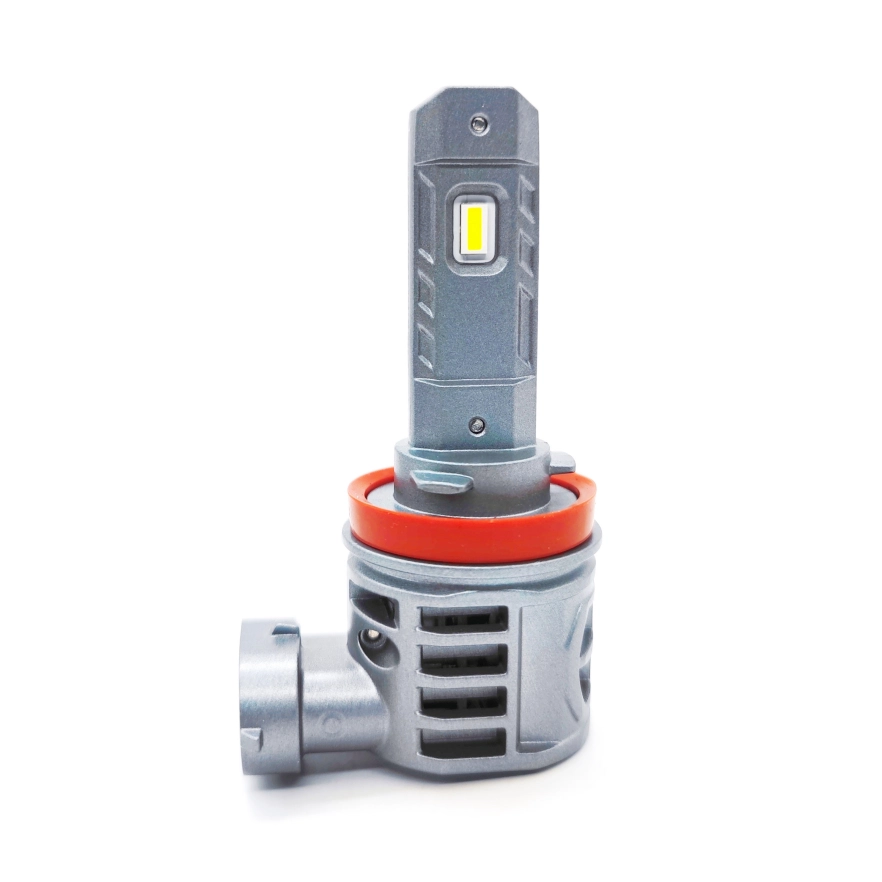
Powered by LatticePower HGL3 5530 LED chips, the EK-V2 delivers 3000LM brightness at 30W. Its all-in-one design and fan-cooled system ensure reliable performance and efficient cooling.
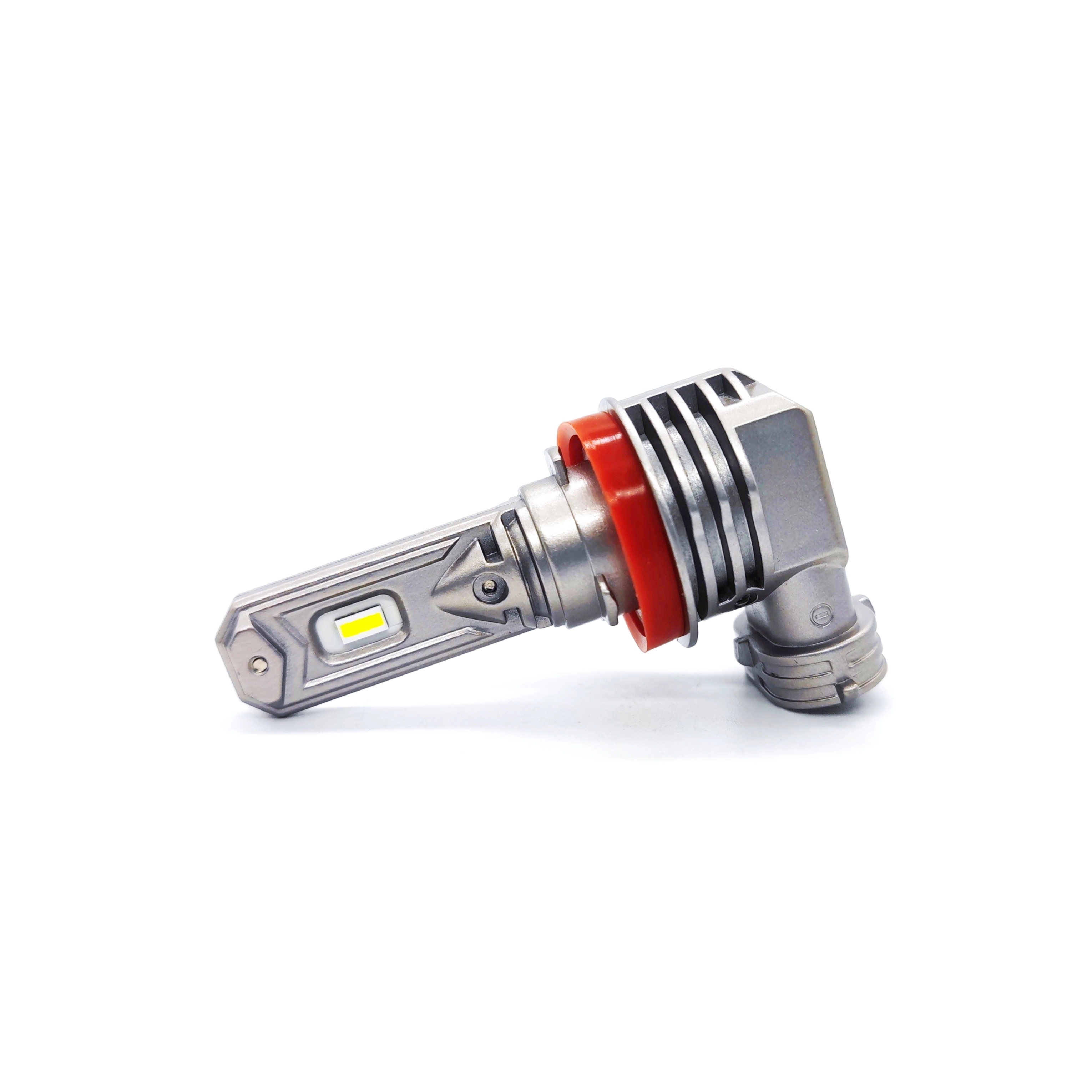
Powered by LatticePower HGL3 5530 LED chips, the V1 delivers 2000LM output in a compact all-in-one design. Fanless cooling provides silent, reliable, maintenance-free performance.
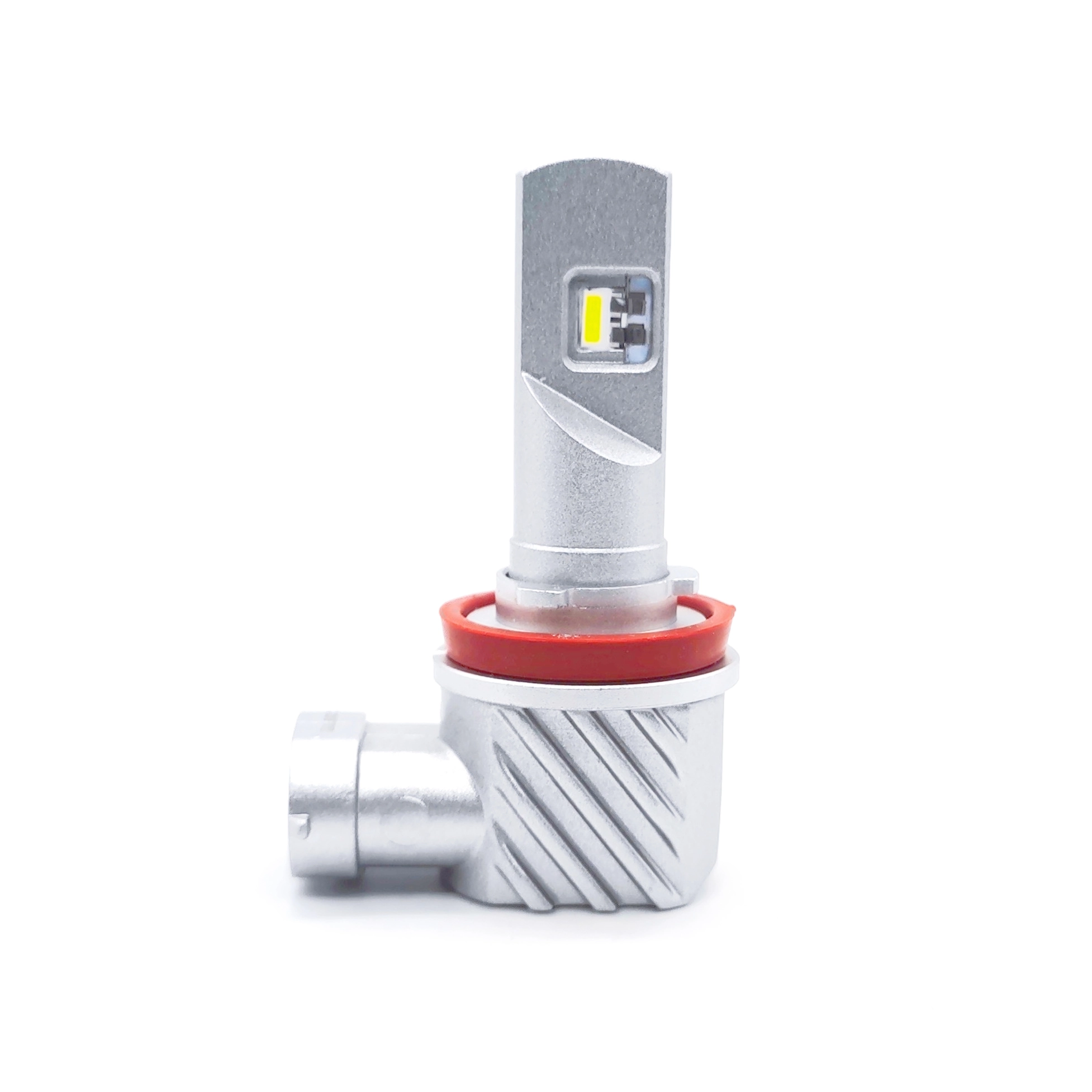
EKLIGHT V3 LED headlight bulb features TST chip technology and fanless design, ensuring efficient heat separation, stable brightness and reliable long-lasting performance.
EKLIGHT delivers innovative, high-quality LED lighting solutions trusted by global partners.
We empower businesses with reliable products that enhance performance and drive success.
Contact EKLIGHT
Address : Building C, Dehuiwanggang Industrial Zone, No. 38 Wanggang Industrial three road, Baiyun district, Guanghzou, Guangdong province, China.
© 2026 EKLIGHT. All Rights Reserved.
EKLIGHT
EK
EK
EK
EK