


Fan Speed, Airflow and Their Effect on LED Headlight Performance

Fan speed and airflow are critical thermal-management variables in modern automotive lighting. In an LED headlamp, electrical energy is converted into visible light and heat; if that heat is not transferred away efficiently, the LED junction temperature rises, causing lower luminous output, color shift, driver stress, accelerated component aging, and possible protective dimming. A fan-cooled led headlight bulb can improve heat removal in compact retrofit applications, but its real performance depends on the complete cooling system rather than motor speed alone. Buyers should evaluate airflow volume, static pressure, heat-sink design, fan durability, acoustic output, dust resistance, installation clearance, and compliance with applicable vehicle-lighting requirements before approving a product.
How Thermal Air Management Shapes LED Headlamp Output
Why junction temperature matters
The LED junction is the semiconductor region where light is generated. As junction temperature increases, most high-power LED packages experience reduced luminous flux and lower conversion efficiency. Excessive heat also places greater stress on phosphor materials, solder joints, printed circuit boards, wire bonds, and electronic drivers. In practical terms, a lamp that appears bright during a short showroom demonstration may deliver a weaker and less stable beam after prolonged operation in a hot engine compartment.
Thermal performance should therefore be assessed as a steady-state condition, not only through a cold-start brightness measurement. A credible supplier should identify the operating temperature range, test duration, input voltage, ambient temperature, and measurement method used for its lumen and thermal claims. These details help procurement teams distinguish repeatable engineering data from peak output figures that are difficult to reproduce in real vehicles.
Airflow is a heat-transfer process, not simply fan rotation
A cooling fan moves air across a heat sink, but the amount of useful heat removed depends on the interaction between airflow and the mechanical structure. Fins that are too tightly spaced can restrict passage and increase pressure demand. Fins that are too widely spaced may provide insufficient surface area. The fan must also overcome resistance from the bulb base, dust screen, rear cap, wiring, and the vehicle headlamp housing.
For this reason, a higher revolutions-per-minute rating does not automatically mean lower LED temperature. A smaller fan operating at high speed may produce considerable noise while delivering limited air through a restrictive heat sink. A better design matches fan performance to system impedance, uses an appropriately sized thermal path, and directs air over the hottest components instead of circulating air inside a confined cavity.
Air temperature and installation environment change the result
Cooling systems reject heat into the surrounding air. When the headlamp housing is exposed to high under-hood temperatures, hot ambient conditions, low vehicle speed, or extended operation, the temperature difference available for heat transfer becomes smaller. A fan can maintain airflow, but it cannot cool the LED below the temperature of the air entering the system.
Vehicle installation also affects performance. A retrofit lamp may have adequate cooling on an open test bench but lose effectiveness when installed behind a sealed dust cap with limited rear clearance. Buyers should request vehicle-fitment validation, especially for compact headlamp assemblies, motorcycles, commercial vehicles, and off-road equipment where vibration, dust, water splash, and thermal cycling are severe.
Fan Speed, Heat Sinks and Reliability Trade-Offs
Comparing active and passive cooling architectures
Passive systems use aluminum heat sinks, copper thermal paths, or braided heat pipes to conduct and radiate heat without moving parts. They are generally quiet and can offer strong long-term reliability when sufficient installation space is available. Their limitation is that compact housings may not provide enough surface area to dissipate heat at the required power level.
Active systems add a fan to increase convective heat transfer. This approach can support higher optical power in a smaller package, making it useful for certain replacement lamps and projector modules. The trade-offs include bearing wear, motor failure, dust ingress, acoustic noise, electromagnetic compatibility considerations, and the need for adequate airflow clearance. A robust product architecture treats the fan as one part of the thermal chain rather than as a substitute for proper heat conduction.
What happens when fan speed is too low or too high
Insufficient fan speed may cause heat accumulation around the LED board and driver. The immediate symptoms can include progressive brightness reduction, thermal throttling, unstable color temperature, or a lamp that performs well only during the first few minutes of use. Low speed can result from an underspecified motor, voltage drop in the vehicle circuit, controller limitations, bearing friction, or obstruction caused by dust and installation components.
Excessive fan speed can create its own problems. Noise may be unacceptable for passenger vehicles, while high motor current can increase electrical load and driver temperature. Fast rotation can also accelerate bearing wear and generate vibration that affects soldered connections or fan balance. The optimum operating point is the lowest stable speed that keeps the LED junction and driver within their specified thermal range under the intended duty cycle.
Reliability requires more than a laboratory brightness test
Automotive products experience vibration, humidity, temperature changes, electrical transients, and contamination. The ISO 16750 series addresses environmental conditions and testing for electrical and electronic equipment in road vehicles, making it a useful reference when discussing qualification plans with suppliers. It does not replace vehicle-specific validation, but it helps buyers ask structured questions about temperature, mechanical loads, chemical exposure, and electrical conditions.
Testing should include long-duration operation, repeated start-stop cycles, fan obstruction scenarios, voltage variation, thermal shock, vibration, and noise evaluation. A product that remains bright for a short time is not necessarily suitable for fleet, commercial, or export programs. Procurement teams should request batch-level quality records and failure-analysis procedures rather than relying only on marketing specifications.
| Cooling approach | Typical advantage | Typical limitation | Buyer evaluation priority |
|---|---|---|---|
| Passive aluminum heat sink | No fan noise or moving-part failure mode | Requires sufficient surface area and rear clearance | Thermal resistance, housing fit, sustained output |
| Fan-assisted heat sink | Higher convective heat transfer in compact spaces | Noise, dust, bearing wear, and motor reliability | Airflow under restriction, fan life, acoustic performance |
| Heat-pipe-assisted design | Transfers heat away from a concentrated LED location | Higher mechanical complexity and cost | Bond quality, bending tolerance, thermal cycling |
| Oversized passive or remote cooling module | Strong thermal margin for high-power applications | May create packaging and installation challenges | Vehicle compatibility, service access, total system cost |
The table compares design tendencies rather than universal performance values. Actual results depend on LED package selection, drive current, heat-sink material, ambient conditions, housing geometry, and test methodology. Buyers should compare products using the same input voltage, stabilized temperature, operating duration, and photometric measurement procedure.
Procurement Standards for Automotive LED Cooling Performance
Specify measurable requirements instead of vague brightness claims
Project owners should define the required beam performance, operating voltage, maximum permissible LED and driver temperature, expected service life, acoustic limit, ingress protection target, and environmental duty cycle. Terms such as ultra-bright, turbo cooling, or high-speed fan are not sufficient purchasing criteria because they do not describe the operating point or durability margin.
For road-going applications, optical conformity is as important as thermal output. The National Highway Traffic Safety Administration vehicle-lighting guidance provides a useful regulatory reference for the United States, while regional programs may require different approval markings and beam specifications. LED replacement products should be evaluated for beam cutoff, glare, aiming stability, color, and compatibility with the original reflector or projector. More light at the source does not guarantee a safer beam on the road.
Assess fan and driver compatibility with the vehicle electrical system
Automotive electrical systems are not perfectly stable laboratory power supplies. Alternator behavior, start-stop events, pulse-width modulation, reverse polarity, load-dump conditions, and electromagnetic interference can affect both the LED driver and fan controller. The ISO 26262 functional-safety framework is relevant to safety-related vehicle electrical and electronic systems, although the specific applicability to a lighting product depends on the vehicle program and system architecture.
Buyers should ask whether the product includes current regulation, polarity protection, thermal protection, transient protection, and a validated EMC design. The driver should maintain stable LED current without excessive ripple, while the fan should start reliably across the specified voltage range. Clear wiring instructions and connector quality are also important because poor installation can create resistance, localized heating, intermittent operation, or premature failure.
Use lifecycle cost as the decision model
The lowest unit price may produce the highest total cost if early failures lead to warranty replacements, technician labor, customer complaints, or vehicle downtime. A lifecycle evaluation should include purchase price, installation time, return rate, warranty exposure, energy consumption, expected operating hours, and availability of replacement components. For distributors, consistent binning and low batch variation are especially important because unpredictable color or brightness differences can damage channel reputation.
Quality documentation should cover incoming-material control, LED bin management, solder-process control, fan inspection, driver testing, photometric checks, aging tests, and final visual inspection. Suppliers that can provide traceability from components to finished units give project owners stronger control over field issues and corrective actions.
How EKLIGHT Supports Reliable Automotive Lighting Programs
Engineering depth for thermal and optical product selection
EKLIGHT has more than 16 years of expertise in the automotive lighting industry and specializes in manufacturing a broad range of high-quality LED automotive products. Our engineering and manufacturing approach considers the relationship between LED power, thermal transfer, airflow, driver behavior, optical geometry, and vehicle installation. This system-level perspective helps buyers select a product that performs consistently beyond a short-duration brightness demonstration.
Our commitment to quality is built into product development and production control. We focus on stable materials, controlled assembly, repeatable testing, and performance consistency so that brand owners, distributors, installers, and vehicle project teams can reduce avoidable warranty risk. Where an active cooling architecture is appropriate, evaluation should include fan operation, airflow restrictions, acoustic behavior, and long-term reliability rather than fan speed alone.
A product portfolio aligned with diverse vehicle applications
EKLIGHT supplies led headlight bulbs for replacement and upgrade programs, along with Exterior & Interior Bulbs for broader vehicle illumination requirements. Our Bi-LED Projector Lenses support projects that require integrated high- and low-beam optical performance, while Mini Projector LED Bulbs address compact retrofit spaces where packaging and beam control are major concerns. Driving Lights extend the portfolio into auxiliary forward-lighting applications for vehicles that require additional road visibility in suitable off-road or work environments.
Each product category involves different thermal and optical priorities. A compact projector bulb may require highly controlled heat evacuation in a restricted enclosure. A driving-light assembly may prioritize environmental sealing and vibration resistance. Interior and exterior bulbs may require compact packaging, stable color, and broad vehicle compatibility. Product selection should therefore be matched to the vehicle platform, duty cycle, local regulations, and target customer segment.
Innovation and partner-focused manufacturing
Innovation is central to our development strategy. EKLIGHT invests in new LED lighting technologies each year so partners can respond to changing customer expectations and competitive market requirements. Development work is most valuable when it translates into measurable benefits such as stable output, improved packaging efficiency, better beam precision, lower failure risk, easier installation, or stronger compatibility across vehicle platforms.
Our partner-focused approach supports more than a product transaction. We work with project owners and distributors to clarify application requirements, select suitable product configurations, manage quality expectations, and build dependable supply relationships. With consistent quality, continuous innovation, and automotive lighting specialization, EKLIGHT is positioned to support private-label programs, distribution portfolios, retrofit channels, and vehicle-focused lighting projects.
For buyers comparing active-cooled LED lamps, the most useful next step is a structured technical review. The review should cover target vehicles, headlamp housing dimensions, operating voltage, required beam pattern, thermal test data, fan specifications, environmental conditions, packaging, warranty terms, and production capacity. This process gives procurement teams a defensible basis for choosing a solution that balances brightness, reliability, noise, installation practicality, and total ownership cost.
Contact EKLIGHT to review your vehicle lighting requirements and explore suitable LED headlight bulbs, Exterior & Interior Bulbs, Bi-LED Projector Lenses, Mini Projector LED Bulbs, and Driving Lights for your project.
Frequently Asked Questions
Does a higher fan speed always make an LED headlight brighter?
No. Higher revolutions per minute do not automatically produce better lighting performance. Useful cooling depends on fan pressure, heat-sink geometry, airflow resistance, ambient temperature, and installation clearance. The optimum speed is the lowest stable speed that keeps the LED junction and driver within their specified thermal range.
Why does LED headlight brightness decrease after extended operation?
Brightness can decrease when heat accumulates around the LED board and driver. Rising junction temperature may reduce luminous output, trigger thermal throttling, shift color temperature, and accelerate component aging. A short cold-start brightness test may not represent steady-state vehicle performance.
Are passive heat sinks more reliable than fan-assisted cooling?
Passive systems avoid moving-part failure, fan noise, and bearing wear, but they require sufficient surface area and rear clearance. Fan-assisted systems can provide stronger convective cooling in compact spaces but require evaluation of dust, motor durability, acoustic output, vibration, and airflow under restriction.
What should buyers request when evaluating an actively cooled LED headlamp?
Buyers should request operating temperature data, test duration, input voltage, ambient conditions, airflow or fan specifications, acoustic results, environmental testing, driver protection details, vehicle-fitment validation, and batch-level quality records. Fan speed alone is not an adequate specification.
Can a sealed headlamp dust cap reduce cooling performance?
Yes. A sealed cap, restricted rear housing, wiring, or dust screen can increase airflow resistance and reduce the amount of air passing through the heat sink. A lamp that performs well on an open bench may operate at a higher temperature after installation, so vehicle-specific validation is important.
Why is beam pattern as important as LED brightness?
A higher source lumen value does not guarantee a safer road beam. Reflector or projector compatibility, cutoff precision, glare control, aiming stability, and regional lighting requirements must also be evaluated. Optical conformity should be considered alongside thermal and electrical performance.

M6 is a high-performance LED lighting solution for headlight retrofit and external working lights. With 9-16V wide voltage, 50W low beam and 60W high beam output, IP68 waterproof protection, and customizable color temperature, it supports OEM/ODM customization for various vehicle applications.
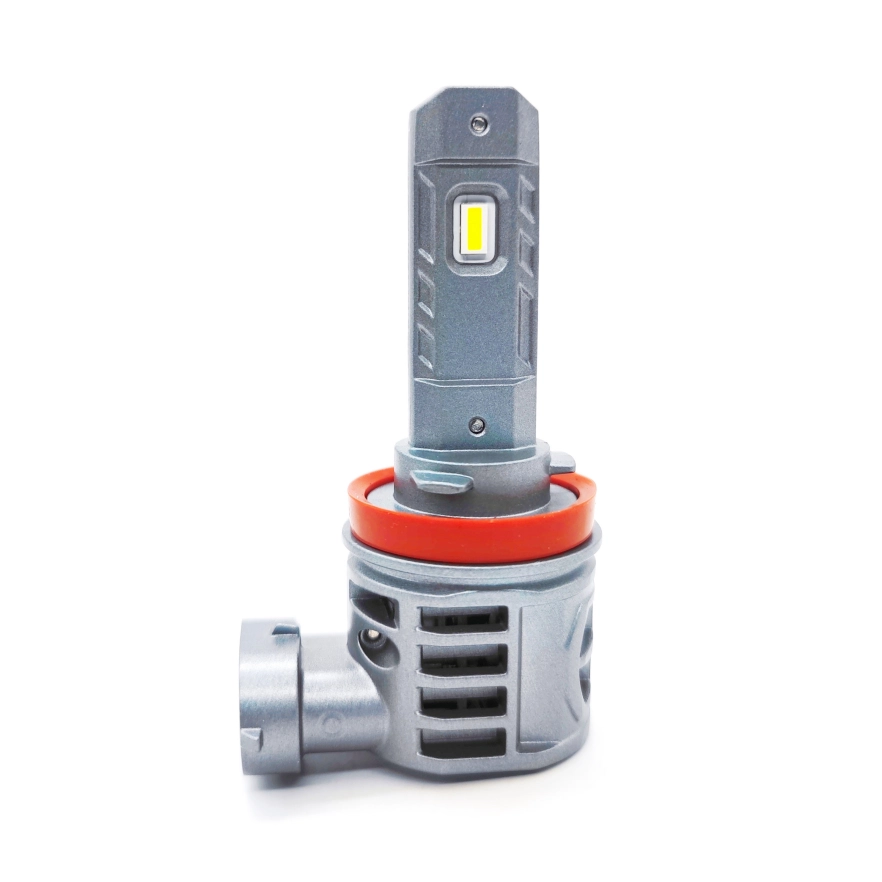
Powered by LatticePower HGL3 5530 LED chips, the EK-V2 delivers 3000LM brightness at 30W. Its all-in-one design and fan-cooled system ensure reliable performance and efficient cooling.
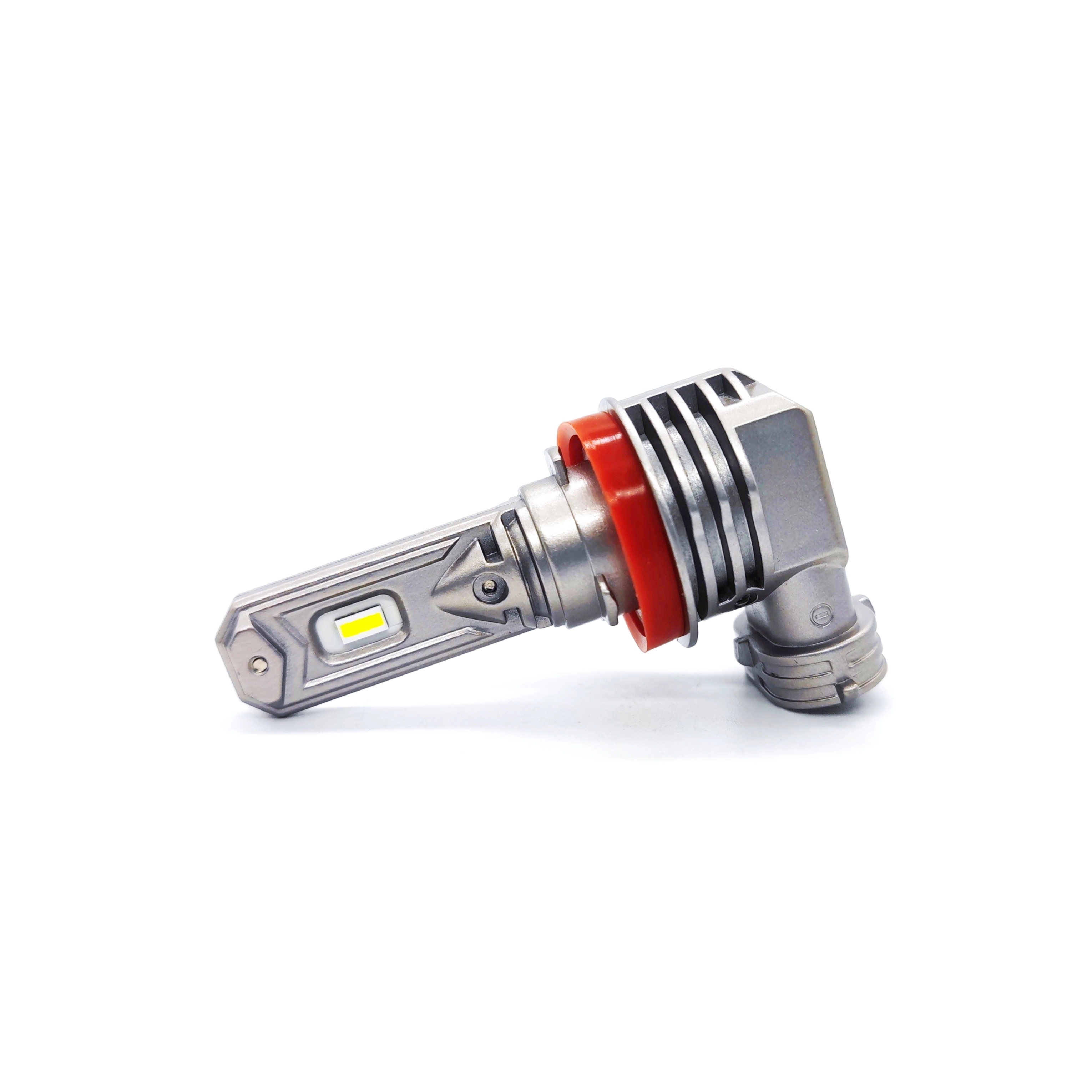
Powered by LatticePower HGL3 5530 LED chips, the V1 delivers 2000LM output in a compact all-in-one design. Fanless cooling provides silent, reliable, maintenance-free performance.
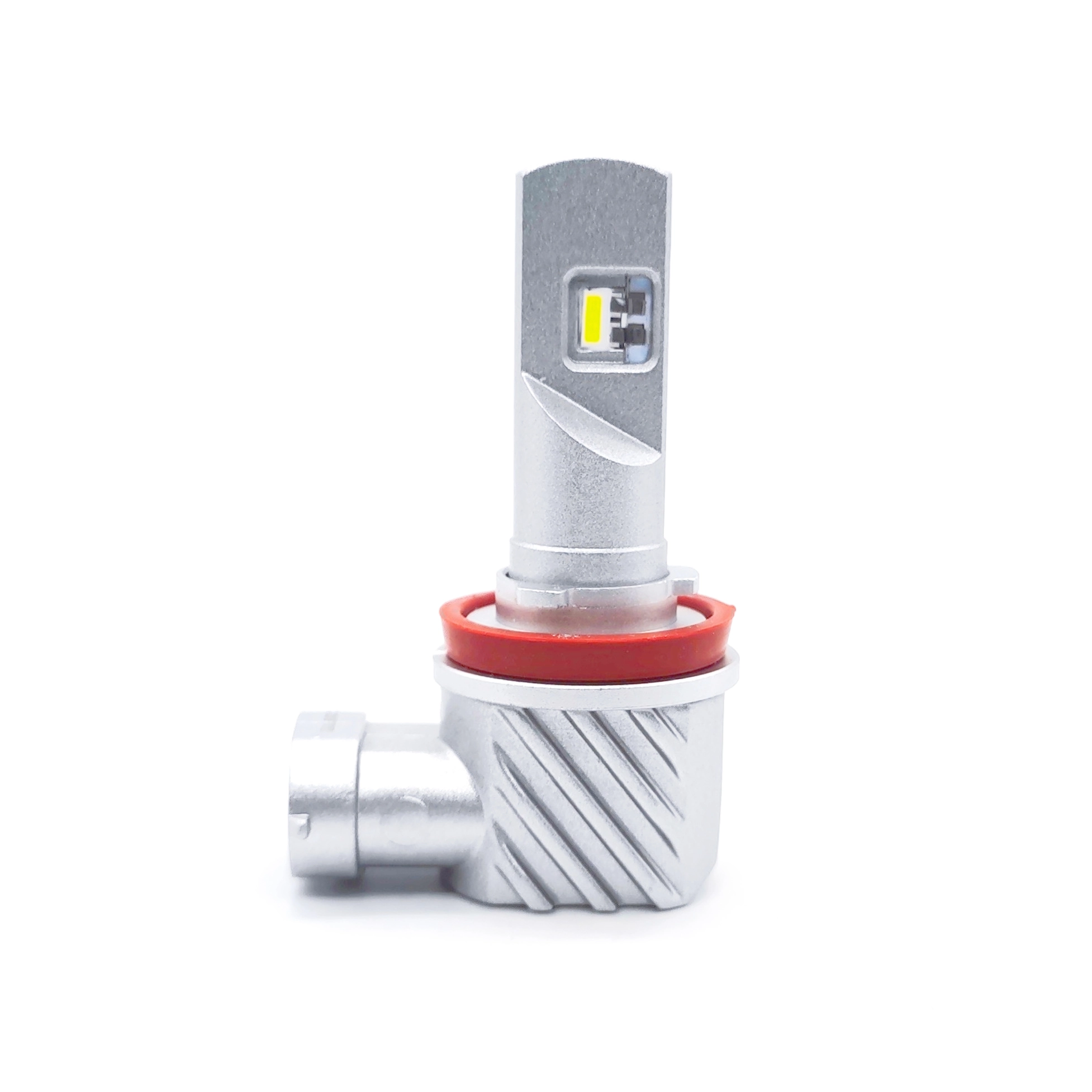
EKLIGHT V3 LED headlight bulb features TST chip technology and fanless design, ensuring efficient heat separation, stable brightness and reliable long-lasting performance.
EKLIGHT delivers innovative, high-quality LED lighting solutions trusted by global partners.
We empower businesses with reliable products that enhance performance and drive success.
Contact EKLIGHT
Address : Building C, Dehuiwanggang Industrial Zone, No. 38 Wanggang Industrial three road, Baiyun district, Guanghzou, Guangdong province, China.
© 2026 EKLIGHT. All Rights Reserved.
EKLIGHT
EK
EK
EK
EK