


Choosing Mini LED Bulbs for Headlights With Limited Rear Clearance

Choosing a mini led headlight bulb for a headlamp with limited rear clearance requires a dimensional, optical, thermal, and electrical assessment rather than a simple lumen comparison. The correct compact LED retrofit must fit behind the dust cap, preserve the original filament or arc position, dissipate heat in the available space, communicate correctly with the vehicle control system, and produce a compliant beam pattern. For B2B buyers, the most important evaluation points are bulb length, base geometry, fan or passive cooling design, power stability, CAN bus compatibility, photometric consistency, installation repeatability, warranty support, and supplier quality controls. This approach helps distributors, retrofit workshops, fleet operators, and vehicle project owners reduce returns, glare complaints, premature failures, and avoidable installation labor.
Compact Headlamp LED Selection for Restricted Housing Depth
Measure the complete installation envelope
Rear clearance is the distance between the bulb mounting flange and the nearest obstruction, which may include a dust cover, wiring connector, ballast, structural brace, washer reservoir, or engine component. Measurements should include the available diameter as well as the axial depth. A bulb may fit through the reflector opening yet fail when the connector or cooling assembly is installed. Buyers should record the original bulb’s overall length, mounting-seat position, base type, connector orientation, and the clearance required for service access.
Dimensional verification is especially important for compact projector systems and tightly packaged headlamp assemblies. The useful measurement is not simply the advertised bulb length; it is the complete installed envelope, including the heat sink, flexible braid, fan housing, driver box, cable bend radius, and locking collar. A supplier should provide a dimensioned drawing or three-dimensional installation data rather than relying on a generic statement such as “fits most vehicles.” Sample fitting on representative housings should be completed before a production purchase order is released.
Protect the optical focal position
Headlamp reflectors and projector modules are designed around a precise light-source location. If the LED chips sit too far forward, too far backward, or at the wrong rotational angle, the system can develop dark zones, uncontrolled foreground light, reduced reach, or excessive glare. A compact replacement therefore needs chip placement that closely replicates the geometry of the original halogen filament or other approved light source.
For distributors and installers, beam evaluation should include a wall pattern, cutoff sharpness, hot-spot location, left-right symmetry, and high-beam distribution. Photometric testing under recognized regulations is more reliable than judging brightness by eye. Depending on the target market and vehicle application, procurement teams may need to review requirements related to headlamp construction and beam performance under UN ECE Regulation No. 112 or applicable national rules. A high-output emitter does not automatically produce a safe or road-legal headlamp.
Confirm the base and locking system
Limited rear clearance often makes installation more difficult because the bulb must be inserted at an angle or locked through a narrow service opening. The mounting collar should match the original application accurately, with stable tolerances and a locking feature that prevents rotation during vibration. Adjustable collars can improve application coverage, but they must retain repeatable chip orientation after adjustment.
Procurement specifications should identify the bulb base, connector, polarity behavior, retaining spring interaction, dust-cover clearance, and whether the driver is integrated or remote. A remote driver may solve a depth problem at the bulb but create a packaging problem elsewhere. A short integrated design may simplify installation, although it can increase thermal concentration. The best configuration depends on the housing, duty cycle, and available airflow.
Engineering Checks for Heat, Electronics, and Vehicle Compatibility
Evaluate heat management in a confined space
LED efficiency does not eliminate heat; a substantial portion of input power becomes thermal energy that must move away from the junction and surrounding components. In a shallow headlamp, the cooling assembly may be close to the dust cap or other heat-sensitive parts. Buyers should examine the thermal path from LED substrate to heat sink, the material and surface area of the heat sink, the fan or flexible-braid arrangement, and the expected temperature under real operating conditions.
Fan-cooled products can provide strong heat transfer in a compact package, but the fan introduces moving parts, acoustic considerations, dust exposure, and a potential failure mode. Passive cooling can offer simpler long-term reliability, but it requires enough surface area and airflow. Neither approach should be selected solely from a catalog image. Suppliers should disclose operating temperature ranges, thermal protection behavior, lumen maintenance expectations, and test conditions. A credible validation program uses temperature logging inside representative lamp housings rather than measuring only in open air.
Match electrical behavior to the vehicle platform
Modern vehicles may monitor bulb current, apply pulse-width modulation, or perform a cold diagnostic check. An LED replacement with a different electrical load can trigger dashboard warnings, flicker, delayed startup, or intermittent shutdown. Buyers should determine whether the application requires an integrated decoder, external load module, anti-flicker circuit, or vehicle-specific programming.
Electrical compatibility also includes input-voltage range, transient protection, reverse-polarity protection, electromagnetic compatibility, connector sealing, and driver stability. Vehicle electrical environments can experience voltage variation and transient events, so a project specification should reference suitable automotive environmental testing. The ISO 16750 automotive environmental standard addresses electrical, mechanical, climatic, and chemical loads relevant to road vehicles. It does not certify every aftermarket bulb, but it provides a useful framework for defining validation requirements.
Compare meaningful performance data
Catalog brightness is often stated as theoretical lumens per bulb, while useful road illumination depends on optical alignment, beam control, thermal stability, and the condition of the reflector or projector. Buyers should request measured output, color temperature, power draw, current range, startup time, and lumen maintenance under specified test conditions. Color temperature should also be selected according to the application: a very high Kelvin rating may appear whiter but can reduce visual comfort in rain, haze, or snow.
| Evaluation area | Preferred procurement evidence | Risk if ignored |
|---|---|---|
| Rear clearance | Dimensioned drawing and sample installation | Dust-cover interference or incomplete locking |
| Optical alignment | Beam images, photometric results, and chip-position data | Glare, dark zones, or reduced usable reach |
| Thermal control | Housing temperature records and protection strategy | Output depreciation, driver failure, or shortened life |
| Electrical compatibility | Input range, EMC data, CAN bus or decoder information | Flicker, warning messages, or intermittent operation |
| Quality consistency | Incoming inspection, traceability, and end-of-line testing | Batch variation, warranty claims, and rework |
| Regulatory suitability | Market-specific compliance documentation | Sales restrictions or unsafe road performance |
Procurement and Validation Strategy for Automotive Lighting Projects
Build an application-specific test plan
A practical validation process begins with a representative vehicle or lamp sample. The test plan should cover mechanical fit, dust-cap closure, connector retention, beam pattern, startup behavior, thermal performance, vibration resistance, moisture exposure, and repeated service removal. For fleet or distributor programs, testing should include the most restrictive housing in the application range rather than only the easiest installation.
Photometric and compliance requirements vary by market, product category, and whether the replacement is intended for road use, off-road use, or display and work-light applications. The UN ECE Regulation No. 48 installation requirements provide an important reference for vehicle lighting installation in markets that adopt UNECE regulations. Buyers should obtain local legal review before positioning an aftermarket product as a road-legal replacement.
Calculate total cost instead of unit price
The lowest purchase price can become expensive when installation labor, returns, customer complaints, and inconsistent batches are included. Total cost of ownership should consider the bulb, decoder or adapter requirements, technician time, packaging, replacement rate, warranty handling, inventory complexity, and documentation. A compact design that installs without removing additional vehicle components may generate measurable savings across a distributor or workshop network.
Supplier evaluation should also cover minimum order quantities, sample lead times, tooling charges, private-label options, spare-parts availability, production capacity, and change-control procedures. A reliable manufacturer communicates when an LED package, driver component, fan, coating, or connector changes. Uncontrolled component substitutions can alter brightness, color, thermal performance, or electromagnetic behavior even when the product name remains unchanged.
Use quality documentation that supports scale
For enterprise purchasing, product data should be supported by lot identification, inspection records, incoming component controls, aging tests, electrical safety checks, and final functional testing. Buyers should distinguish between a factory quality system and a single product certificate. The ISO 9001 quality management standard offers a recognized framework for process control, corrective action, customer requirements, and continual improvement.
Documentation should be usable by sales teams, installers, and after-sales departments. A complete technical package may include installation drawings, application notes, connector diagrams, troubleshooting guidance, warranty terms, packaging specifications, and beam-test examples. This reduces dependence on informal technical advice and helps a distributor maintain consistent installation standards across regions.
Why EKLIGHT Is a Practical Partner for Compact LED Headlamp Programs
Automotive lighting experience and product breadth
EKLIGHT has more than 16 years of expertise in the automotive lighting industry and specializes in manufacturing a broad range of high-quality LED automotive products. Our portfolio supports different project requirements, from compact replacement applications to complete lighting upgrades. Relevant categories include LED headlight bulbs, Exterior & Interior Bulbs, Bi-LED Projector Lenses, Mini Projector LED Bulbs, and Driving Lights.
This product breadth is valuable when a buyer manages several vehicle platforms or wants one qualified supplier for multiple lighting categories. A shallow reflector housing may require a compact bulb, while another application may perform better with a projector lens or a dedicated driving light. Our engineering and product teams can assess the intended housing, installation envelope, beam objective, and commercial positioning before recommending a configuration.
Quality control designed for dependable supply
Our commitment to quality is built into the manufacturing process, with products developed to meet rigorous performance and reliability expectations. For B2B programs, consistent production matters as much as the performance of the first sample. Stable component sourcing, controlled assembly, functional checks, optical inspection, and traceable production records help reduce variation between batches.
EKLIGHT’s partner-focused approach also supports practical implementation. Buyers can request product specifications, application samples, packaging solutions, and technical information needed by installers or regional distributors. This structured communication helps identify clearance limitations early, select the correct driver arrangement, and reduce avoidable engineering changes after launch.
Innovation aligned with changing market demand
Innovation is central to our development strategy. Each year, we invest in new LED lighting technologies so partners can respond to changing vehicle platforms, customer expectations, and automotive lighting market requirements. Development priorities may include more compact mechanical structures, improved optical control, more stable thermal performance, and broader compatibility with modern vehicle electronics.
Choosing EKLIGHT means selecting more than a replacement component. It means working with a manufacturer that combines industry experience, product development capability, quality commitment, and commercial support. For distributors, brand owners, retrofit specialists, and project investors, this combination can improve launch readiness, protect brand reputation, and create a more predictable return on lighting inventory.
Recommended buyer checklist before order approval
- Confirm the exact lamp type, housing depth, dust-cap dimensions, and connector position.
- Request a full installed-envelope drawing rather than only the LED body length.
- Verify chip alignment, beam performance, color range, and intended market use.
- Review thermal data in a representative closed headlamp housing.
- Check input-voltage range, CAN bus behavior, flicker control, and transient protection.
- Approve a sample installation and define acceptance criteria before mass production.
- Confirm warranty scope, lot traceability, change-control policy, and after-sales support.
Frequently Asked Questions
How should buyers measure rear clearance before selecting a compact headlamp LED bulb?
Buyers should measure the complete installed envelope behind the mounting flange, including the heat sink, fan or flexible braid, driver box, cable bend radius, locking collar, dust cover, and nearby vehicle components. Both axial depth and available diameter should be recorded, and a sample should be tested in the representative lamp housing.
Why is LED chip position important in a replacement headlamp bulb?
Reflectors and projector modules are designed around a precise light-source location. If the LED chips sit too far forward, backward, or at the wrong rotational angle, the system can develop glare, dark zones, uncontrolled foreground light, or reduced reach. Beam-pattern testing should therefore confirm cutoff sharpness, hot-spot location, and left-right symmetry.
Can a compact LED replacement cause flickering or dashboard warnings?
Yes. Modern vehicles may monitor bulb current, use pulse-width modulation, or perform cold diagnostic checks. A replacement with a different electrical load can cause flicker, warning messages, delayed startup, or intermittent shutdown. Buyers should verify input range, CAN bus behavior, decoder requirements, polarity protection, transient protection, and electromagnetic compatibility.
Is fan cooling or passive cooling better when rear clearance is limited?
The correct choice depends on the housing, duty cycle, and available airflow. Fan cooling can provide strong heat transfer in a compact package but introduces moving parts and dust exposure. Passive cooling can simplify long-term reliability but requires sufficient surface area and airflow. Thermal tests should be performed inside a representative closed headlamp housing.
What documents should a B2B buyer request from an automotive lighting supplier?
A buyer should request dimensioned installation drawings, application notes, connector diagrams, electrical specifications, thermal data, beam-test results, warranty terms, production traceability, inspection records, and change-control procedures. Quality-system evidence such as ISO 9001 certification can also help evaluate the supplier’s process controls.
Why should total cost of ownership be considered instead of unit price?
Total cost includes the bulb, adapters or decoders, installation labor, return rates, warranty handling, inventory complexity, and replacement costs. A compact design that installs without removing additional vehicle components can reduce technician time and improve the economics of a distributor or fleet program.

M6 is a high-performance LED lighting solution for headlight retrofit and external working lights. With 9-16V wide voltage, 50W low beam and 60W high beam output, IP68 waterproof protection, and customizable color temperature, it supports OEM/ODM customization for various vehicle applications.
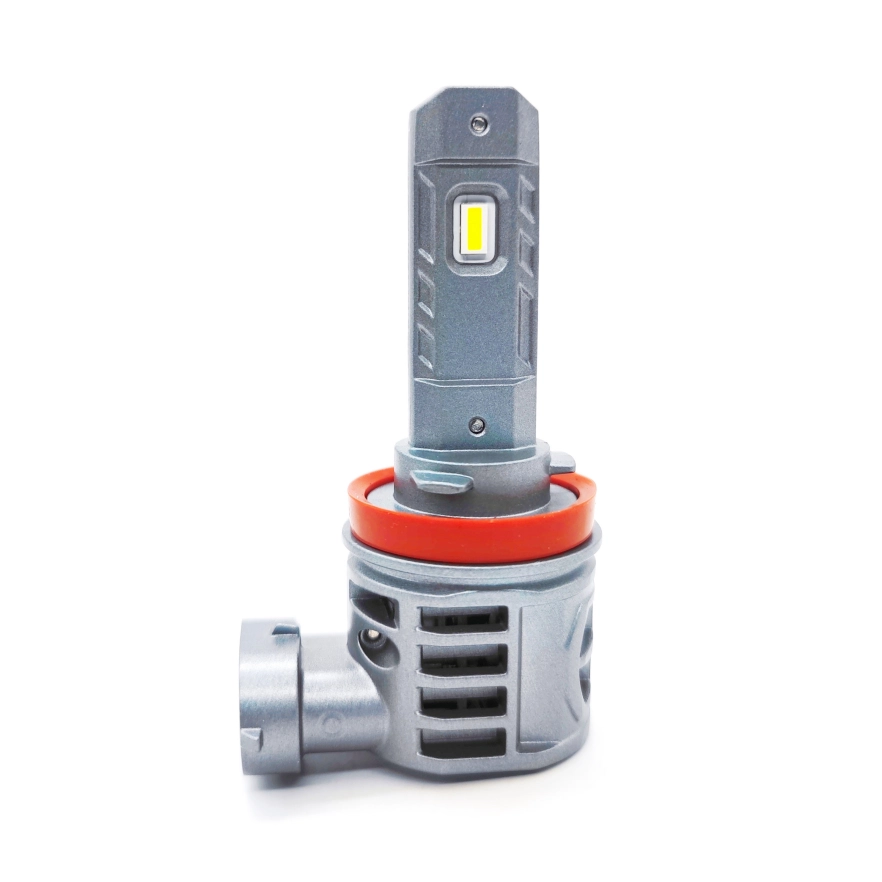
Powered by LatticePower HGL3 5530 LED chips, the EK-V2 delivers 3000LM brightness at 30W. Its all-in-one design and fan-cooled system ensure reliable performance and efficient cooling.
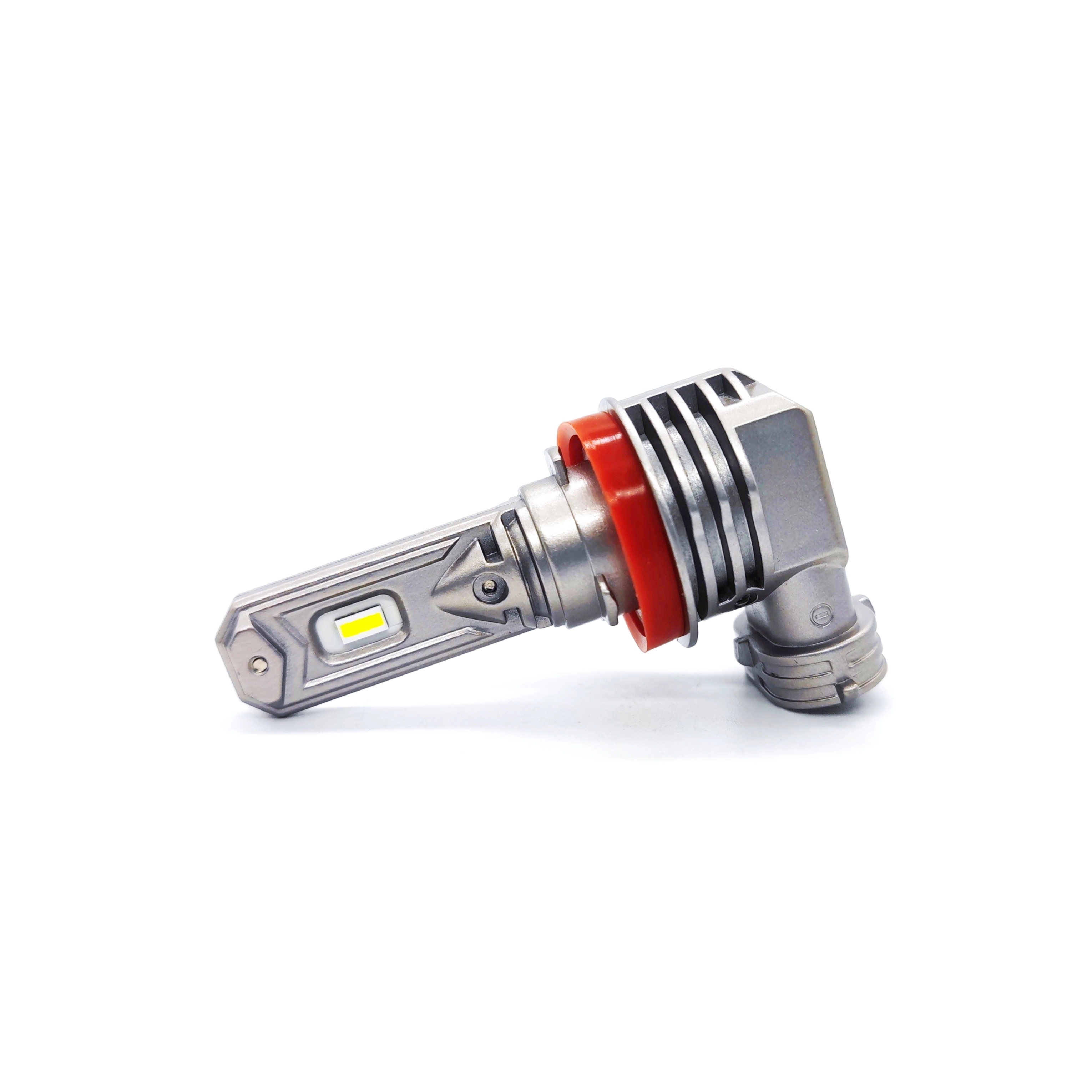
Powered by LatticePower HGL3 5530 LED chips, the V1 delivers 2000LM output in a compact all-in-one design. Fanless cooling provides silent, reliable, maintenance-free performance.
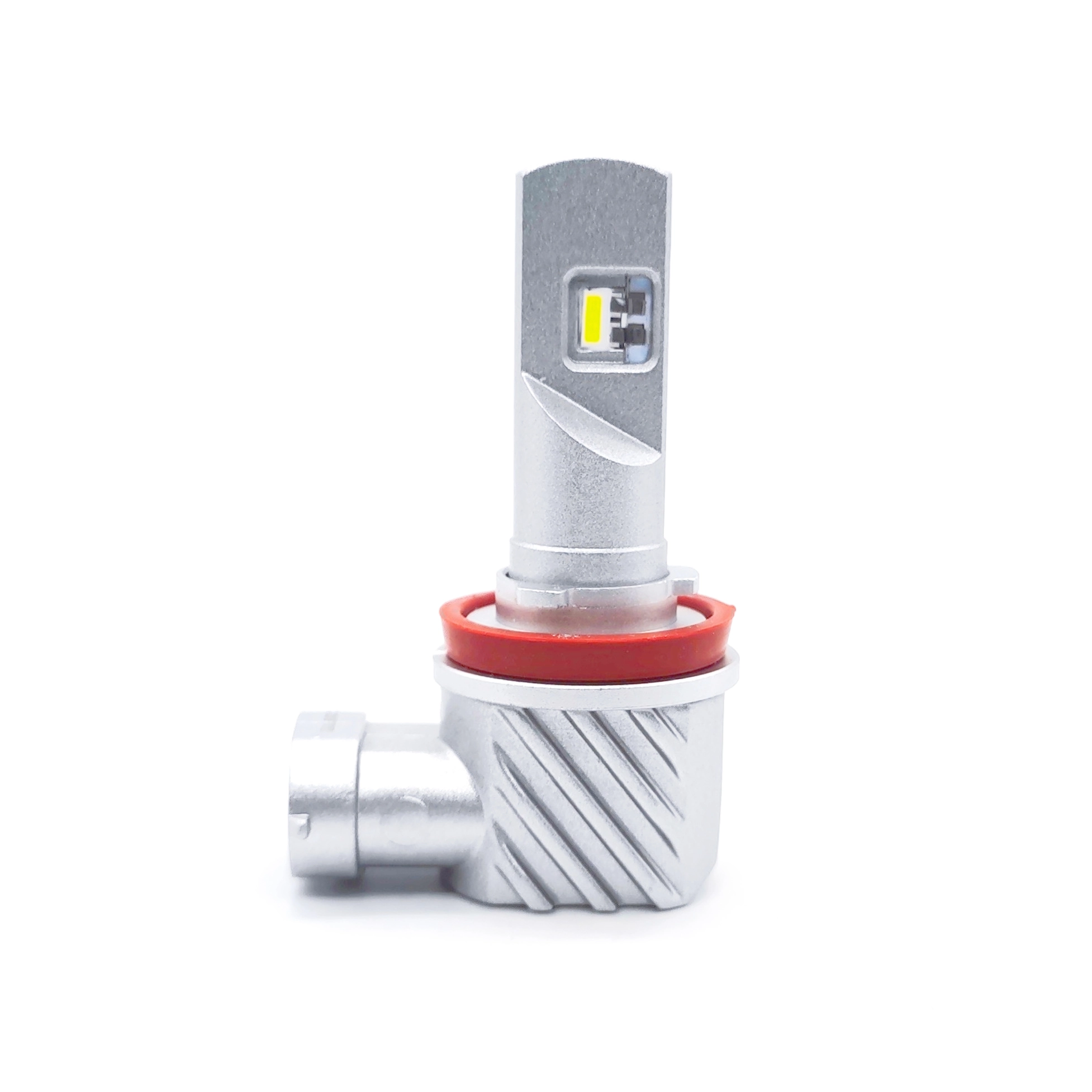
EKLIGHT V3 LED headlight bulb features TST chip technology and fanless design, ensuring efficient heat separation, stable brightness and reliable long-lasting performance.
EKLIGHT delivers innovative, high-quality LED lighting solutions trusted by global partners.
We empower businesses with reliable products that enhance performance and drive success.
Contact EKLIGHT
Address : Building C, Dehuiwanggang Industrial Zone, No. 38 Wanggang Industrial three road, Baiyun district, Guanghzou, Guangdong province, China.
© 2026 EKLIGHT. All Rights Reserved.
EKLIGHT
EK
EK
EK
EK